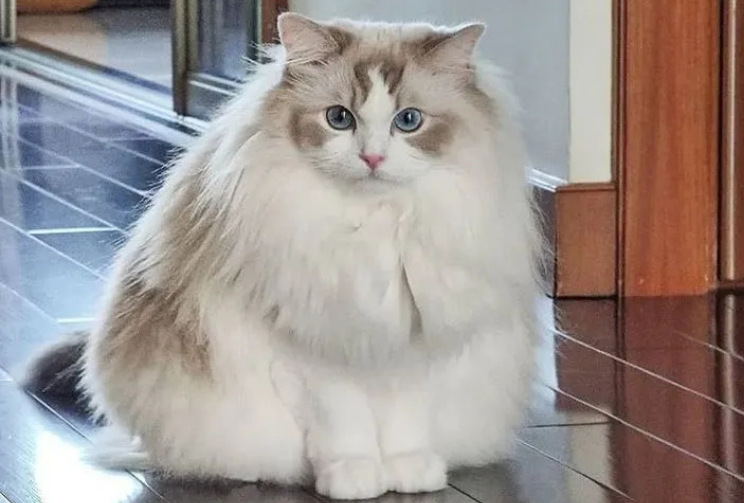
Ragdolls are famous for their blue eyes, silky coats and relaxed nature. Here's where the breed came from, how big they really get, the patterns and colours, the health tests to ask about, and what it takes to care for one in an Australian home.
The Ragdoll is one of the most recognisable pedigree cats in Australia. It has a soft, semi-long coat, a pointed colour pattern like a Siamese, and large blue eyes. It also has a reputation as one of the most relaxed and people-friendly breeds you can own.
Advertisement
This guide covers where the breed came from, what Ragdolls look like and how big they really get, their temperament, grooming and daily care, the health problems to ask a breeder about, and how to choose a Ragdoll kitten.
Where the Ragdoll came from
The Ragdoll is a young breed. It was developed in the 1960s in Riverside, California, by a breeder called Ann Baker. Her foundation cat was Josephine, a white, non-pedigree longhaired cat. Baker bred from Josephine's kittens and from other cats with the look and temperament she wanted, and the first Ragdolls were registered in 1965.
Baker trademarked the Ragdoll name and set up her own registry, the International Ragdoll Cat Association, with strict rules for her breeders. In 1975 a group led by Denny and Laura Dayton, who had bought their first breeding pair from Baker in 1969, broke away to work towards recognition by the mainstream cat registries. The standard their group developed is the basis of the standard used by the major registries today.
Ragdolls reached the UK in 1981, and the Governing Council of the Cat Fancy recognised the breed nine years later. Australian breeders and cat councils now register Ragdolls, and the breed is a familiar sight at Australian cat shows.
Where the name comes from
The name refers to the way the early cats were said to go limp, like a rag doll, when picked up. Plenty of Ragdolls do relax completely when held, but not all of them. Some stories that circulated about the early cats, including claims that Ragdolls don't feel pain, are myths. The Governing Council of the Cat Fancy is clear that Ragdolls respond to pain just like any other cat. That matters, because a calm cat can still be hurt, sick or frightened, and it may simply show it less.
What a Ragdoll looks like
Coat
The Ragdoll coat is semi-long, silky and dense, with a fuller ruff around the neck and a long, plumed tail. It's softer and less woolly than many longhaired coats, which makes it easier to care for, but it still mats if it's neglected, particularly during a moult.
The three patterns
Every Ragdoll is a pointed cat. The body is pale, and colour is concentrated on the "points": the face, ears, legs and tail. That colouring is temperature sensitive, which is also how Siamese colouring works. Pigment develops in the cooler parts of the body. On top of that, Ragdolls come in three patterns:
- Colourpoint. Classic pointed colouring with no white. The mask, ears, legs, paws and tail are all coloured.
- Mitted. Pointed like a colourpoint, but with white "mittens" on the front paws, white back legs, and a white chin, bib, chest and belly.
- Bicolour. A white inverted "V" on the face, plus white on the bib, chest, belly and legs. The ears, the rest of the mask and the tail stay coloured.
The six colours
The point colour can be seal (a dark brown), blue, chocolate, lilac, red or cream. Each of these also comes in tortie (tortoiseshell), tabby, sometimes called lynx, and tortie tabby versions. You'll see names like "blue mitted" or "seal lynx bicolour", which simply combine the colour, any tabby or tortie marking, and the pattern.
Kittens are born white
Ragdoll kittens are born white or nearly white, because they develop in the warmth of the womb. Their points start to appear in the first days and weeks. The full coat and colour take a long time to develop: Ragdolls are slow to mature, and many don't reach full size and coat until about three or four years old. Colour often deepens with age, so ask to see adult cats of the colour you like if you want to know how your kitten will look as an adult.
Eyes
Ragdolls have blue eyes. A deep, vivid blue is prized in show cats, but the shade varies from cat to cat.
How big do Ragdolls get?
Ragdolls are often described as giants. They are a large, heavy-boned breed, and many males are big cats. The Governing Council of the Cat Fancy says males often weigh more than 6 kg and females typically weigh 4 to 6 kg.
Real-world weights are more modest than the reputation, though. A 2025 study by the Royal Veterinary College looked at the veterinary records of more than 21,000 Ragdolls in the UK. The median adult weight was 4.97 kg for males and 3.83 kg for females. That's heavier than the average domestic cat, but a long way short of the 9 kg figures you'll see in some breed descriptions.
If you'd like a truly large cat, the Maine Coon is the bigger breed. See our guides to the Maine Coon and to whether the Maine Coon is the largest domestic cat breed.
Whatever its size, a Ragdoll should be lean. Obesity was one of the most common problems recorded in the UK study, and it was more common in males than females. Use your vet's body condition scoring rather than the scales alone to judge whether your cat is the right weight.
Temperament
Breeders and owners describe Ragdolls in very similar terms:
- Relaxed and easy to handle. Most Ragdolls tolerate being picked up, carried and groomed well, which is one reason the breed is popular with families.
- Affectionate. Many Ragdolls follow their people from room to room, greet them at the door and like to be close by. They are often called "puppy-like" for that reason.
- Gentle. Ragdolls are generally not rough players and rarely use their claws in play.
- Playful, but not hyperactive. They enjoy play, especially with wand toys and puzzle feeders, but most are less driven to climb and leap than very active breeds. Ragdoll kittens and young adults still have bursts of energy. See our guide to Ragdoll zoomies.
- Quiet. Most Ragdolls have soft voices and aren't especially talkative.
Why are Ragdolls so affectionate?
There's no single gene for a friendly cat. A Ragdoll's temperament comes from a mix of the breed's genetics, decades of breeders selecting calm, friendly cats, and the kitten's early experiences. Kittens that are handled gently by several different people in their first weeks of life, and get used to normal household sounds, grow into more confident, sociable adults. That early socialisation is one of the most important things a good breeder does.
It also means that temperament varies. A Ragdoll from a breeder who raises kittens in the house and handles them every day is much more likely to have the classic Ragdoll nature than one raised in a shed.
Ragdolls and children, other cats and dogs
A Ragdoll's tolerance makes it a good match for many families. Supervise young children, teach them to pick up and hold a cat properly, and give the cat places to retreat to. Ragdolls generally get along with other cats and cat-friendly dogs when they're introduced slowly.
Do Ragdolls mind being alone?
Ragdolls are sociable cats and tend to be happiest with company. One Ragdoll can do well in a home where someone is around for much of the day. If your house is empty for long hours, consider two cats, and make sure the cat has toys, climbing spaces and window views to keep it busy.
Ragdolls and Australian homes
Keep your Ragdoll indoors or contained
Ragdolls are trusting, which makes them vulnerable outdoors. A cat that walks up to strangers, dogs and cars is at risk. Most Ragdoll breeders require buyers to keep their cat indoors or with access to a secure cat enclosure, and an increasing number of Australian councils have cat curfews or 24-hour containment rules anyway. See our guide to cat laws in Australia and our guide to cat enclosures and catios.
An indoor Ragdoll needs things to do. Give it high perches, scratching posts, a window to watch from and regular play. Our guides to interactive cat toys and cat scratching posts and cat trees have ideas. Many Ragdolls also accept a harness. See our guide to cat harnesses.
Heat
A thick coat and a summer heatwave don't mix well. Keep your Ragdoll indoors on hot days, make sure it has cool places to lie, keep water bowls in several spots, and don't leave it in an enclosure without shade. Regular brushing helps by removing loose undercoat.
Grooming
The Ragdoll coat is easier to look after than many longhaired coats, but it does need regular care.
Advertisement
- Brush at least weekly. A wide-toothed metal comb and a soft slicker brush work well. Pay attention to the areas that mat first: behind the ears, under the front legs, the belly and the "trousers" on the back legs.
- Brush more often during a moult. Ragdolls shed more heavily at the change of seasons, and the coat mats quickly if loose hair isn't removed.
- Check the back end. Longhaired cats can get faeces caught in the fur. A tidy trim around the bottom, done by a groomer or your vet if you're not confident, keeps things clean.
- Trim claws, check ears and look after teeth. Dental disease was the most common group of problems in the UK Ragdoll study, so tooth brushing and regular dental checks are worth the effort.
Start grooming early so your kitten learns to enjoy it. Our guide to the best cat brushes for Ragdoll cats compares tools.
Ragdolls are not hypoallergenic. No cat breed is. See are Ragdoll cats hypoallergenic? for more.
Food
Feed a complete and balanced cat food suited to your cat's life stage, in measured portions. Because Ragdolls keep growing for several years, many breeders keep them on kitten food for longer than usual. Ask your breeder and your vet what they recommend.
Ragdolls are not especially active, so it's easy to overfeed them. Weigh meals, count treats, and use puzzle feeders to slow eating and add activity. See our guide to how often to feed your cat for portions and routines.
Health
Ragdolls are generally healthy cats, but there are a few conditions to know about.
Hypertrophic cardiomyopathy
Hypertrophic cardiomyopathy (HCM) is a disease in which the heart muscle thickens. It can lead to heart failure, blood clots and sudden death. HCM is the most common heart disease in cats generally, and Ragdolls have a specific inherited form.
In 2007 researchers identified a mutation in the MYBPC3 gene, known as R820W, that causes HCM in Ragdolls, and a DNA test followed. Cats with two copies of the mutation are at high risk of developing severe disease, often at one to two years of age. In one study, more than half of Ragdolls with two copies didn't survive to five years old. Cats with one copy are less likely to be affected and may live a normal lifespan, but they can pass the mutation on.
A responsible breeder:
- DNA tests breeding cats for the R820W mutation, and can show you the results for your kitten's parents.
- Never breeds from cats with two copies.
- Doesn't mate two carriers, because about a quarter of their kittens would have two copies.
A clear DNA result doesn't guarantee a healthy heart. It only rules out that one mutation, and cats can still develop HCM for other reasons. Many breeders also have their breeding cats' hearts checked by ultrasound (echocardiography). If your vet ever hears a heart murmur or an abnormal rhythm, follow up promptly.
Kidney and urinary problems
Kidney disease was the leading recorded cause of death in the 2025 UK Ragdoll study, accounting for about one death in five, mostly in older cats. Ragdolls have also been reported as over-represented among cats with urate bladder stones.
Watch for drinking or urinating more, weight loss, straining in the litter tray, or blood in the urine, and see your vet if you notice any of them. A cat that is straining and producing little or no urine needs to be seen urgently. Encouraging water intake, for example by feeding some wet food and offering several water bowls or a fountain, is good for any cat's urinary health. See our guides to why cats don't drink water and to cats peeing outside the litter tray.
Other common problems
In the UK study, the most commonly recorded problems in Ragdolls were dental disease, diarrhoea and other gut problems, obesity, overgrown claws and skin problems. None of these are unique to the breed, and most can be prevented or managed with good everyday care and regular vet checks. See our guide to how to tell if your cat is sick.
Lifespan
The same 2025 study found a median age at death of 12.85 years for Ragdolls, which the researchers described as in line with most other cat breeds. Many Ragdolls live well into their teens. Earlier, smaller studies reported lower figures, which the authors of the newer study suggest may have been biased by the breed's growing popularity, since a rapidly growing breed has a young population.
Choosing a Ragdoll kitten
Find a registered breeder
The safest source of a Ragdoll kitten is a breeder registered with a recognised cat council. Members agree to follow their council's rules and code of ethics, and their kittens come with pedigree papers. Contact your state's cat councils or a Ragdoll breed club for a list of breeders. Good breeders often have waiting lists and are happy to talk to you even when they have no kittens available.
Questions to ask
- Have the parents been DNA tested for the Ragdoll HCM mutation, and can I see the results?
- Have the parents had heart ultrasounds?
- Can I meet the mother, and see where the kittens are raised?
- How are the kittens socialised?
- What vaccinations, worming and flea treatment will the kitten have had?
- Will the kitten be microchipped and desexed before it leaves, or is desexing part of the contract?
- What food is the kitten eating?
- Will you take the cat back if I can't keep it?
When kittens go home
Registered breeders usually keep Ragdoll kittens until about 12 weeks or older. That gives the kitten time to learn from its mother and littermates and to get through its first vaccinations. Be wary of anyone offering younger kittens.
What it costs
Ragdolls from registered breeders are not cheap, because health testing, vet care and raising kittens properly cost money. Ongoing costs, including food, litter, vet visits, insurance and grooming tools, add up over a cat's lifetime. Our guide to why Ragdoll cats are so expensive explains what goes into the price.
Be cautious of very cheap kittens, kittens offered without papers, and sellers who won't let you visit. They may be from untested parents, or the advertisement may be a scam.
Adopting an adult Ragdoll
Adult Ragdolls and Ragdoll crosses sometimes come up for adoption through rescue groups, shelters and breeders rehoming retired breeding cats. An adult cat's personality is already settled, which can make it easier to find a good match. Our guide to kittens for adoption in Melbourne lists shelters and rescue groups.
Frequently asked questions
Do Ragdolls really go limp when you pick them up?
Many relax completely when held, which is where the name comes from, but it varies. Not every Ragdoll is floppy, and the trait doesn't mean the cat can't feel pain.
Are Ragdolls good indoor cats?
Yes. Their calm nature suits indoor life well, and their trusting personality makes them vulnerable outdoors. Give an indoor Ragdoll plenty of play, climbing spaces and company.
How long do Ragdolls live?
A large UK study found a median age at death of 12.85 years, and many live longer. Good weight control, dental care and regular vet checks all help.
Do Ragdolls shed?
Yes. They shed year-round, more heavily during seasonal moults. Weekly brushing, and more frequent brushing during a moult, keeps shedding and mats under control.
When is a Ragdoll fully grown?
Ragdolls mature slowly. Many don't reach their full size and coat until about three or four years old.
What's the difference between a mitted and a bicolour Ragdoll?
A mitted Ragdoll has a fully coloured mask with white mittens on the front paws, white back legs and a white chin and belly. A bicolour has more white, including a white inverted "V" on the face and white on all four legs.
Should I get a Ragdoll kitten tested for HCM?
Ask the breeder whether the parents have been DNA tested for the R820W mutation. If both parents are clear, the kitten can't have inherited that mutation. If one parent is a carrier, ask whether the kitten itself has been tested.
Advertisement