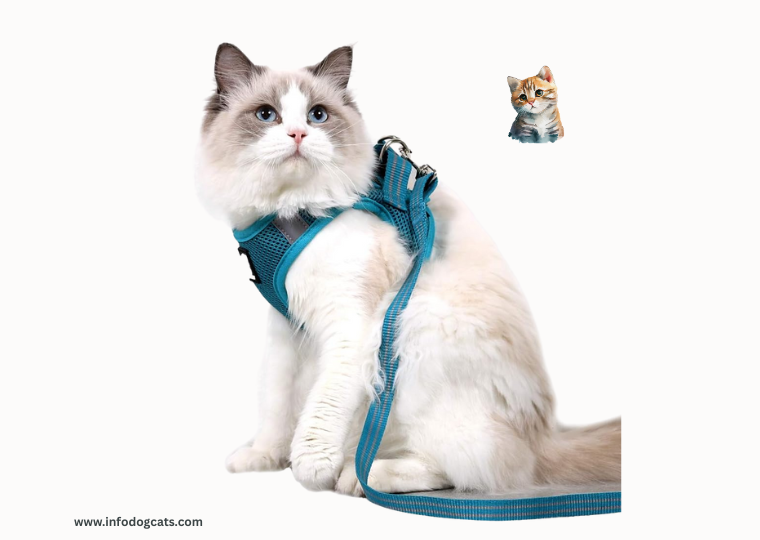
Some cats love supervised outings on a harness, and some never will. Here's how to tell whether your cat is a good candidate, how to choose and fit a harness, a step-by-step training plan, and the safety rules for taking a cat outside in Australia.
With more Australian councils requiring cats to stay on their owner's property, many owners are looking for safe ways to give their cats time outside. A harness and lead is one option. Some cats take to it happily and enjoy exploring the garden or a quiet park. Others find it stressful, and are better off with a catio.
Advertisement
This guide covers whether harness walking suits your cat, the types of harness, how to fit one, a step-by-step training plan, and how to stay safe outdoors.
Is harness walking right for your cat?
The case for and against
A harness can give an indoor cat new sights, smells and exercise, and in the ACT a cat on a harness and lead under your control counts as contained. Many owners find it a good way to share time outdoors with their cat.
But not every cat enjoys it. RSPCA Australia's policy is that a cat may be walked on a leash and harness outside the owner's property under direct supervision, but it doesn't generally recommend it. It points out that outdoors, cats meet unfamiliar smells and frightening things such as dogs, strangers, loud noises and traffic, which many cats find threatening.
Cats aren't dogs. They don't usually walk alongside you. A "walk" with a cat is more often a slow, cat-led exploration of a small, familiar area.
Which cats are good candidates?
Cat Protection's harness training factsheet suggests that only relaxed, outgoing cats are good candidates. Signs your cat may enjoy harness outings:
- It's confident and curious around new things and visitors.
- It's interested in the outdoors and sits at windows watching.
- It tolerates handling and being picked up.
- It's healthy, vaccinated and treated for parasites.
Harness walking probably isn't for your cat if it's anxious, hides from visitors, panics at loud noises, or is elderly and unwell. Busy areas with heavy traffic or lots of off-lead dogs aren't suitable for any cat.
Kittens
Kittens often accept a harness more easily than adult cats, so it's worth starting harness training indoors early. Cat Protection advises not taking a kitten outside, even on a harness, until it has finished its full course of vaccinations, at around six months of age.
Types of cat harness
H-style harness
An H-style harness has a strap around the neck and a strap around the chest, joined by a strap along the back. It's light, adjustable, and leaves most of the body free. It's a good choice for slim cats and cats that dislike being covered.
Figure-8 harness
A figure-8 harness is made of two loops in a figure eight, one around the neck and one around the chest. It's simple and light, but can tighten when pulled, and some cats can wriggle out of it.
Vest harness
A vest or jacket harness wraps around the chest and closes with Velcro or buckles. It spreads pressure over a larger area, and many owners find it harder for a cat to escape from. Some cats dislike the feeling of being wrapped, while others find it calming. Vests can be hot in an Australian summer, so choose a breathable mesh fabric.
What to look for
- Adjustable straps at the neck and chest, so you can get a snug fit.
- The lead attachment on the back, between the shoulder blades, not at the neck.
- Lightweight, breathable material.
- Reflective trim, if you might be out at dusk.
- A lead about 1.5 to 2 metres long. Avoid retractable leads, which can give a startled cat too much slack before you can stop it.
Never attach a lead to a cat's collar. Cat Protection warns that the tension from pulling can injure a cat's neck. Breakaway collars are also designed to release, so a cat on a collar and lead could simply slip free.
How to fit a harness
- Snug, not tight. You should be able to fit one or two fingers under the straps, but no more.
- Check the neck strap. It should sit at the base of the neck, not up near the ears.
- Check the chest strap. It should sit just behind the front legs.
- Test it indoors. Gently pull backwards on the harness at several angles. If your cat can back out of it, tighten the straps or try a different style.
- Recheck often in growing kittens, and after your cat has been wearing it for a while, as straps can loosen.
Step-by-step harness training
Go at your cat's pace. Cat Protection and RSPCA Queensland both stress that harness training takes time, and that sessions should be short. Stop and go back a step if your cat shows signs of stress: flattened ears, a low or twitching tail, crouching, hiding or trying hard to escape.
Step 1: Introduce the harness
Leave the harness near your cat's bed or food bowl for a few days, so it becomes a familiar object. Reward your cat with a treat when it sniffs or investigates it.
Step 2: Touch and drape
Gently touch your cat with the harness, then drape it over its back for a moment, followed by a treat. Repeat over a few sessions.
Step 3: Put it on, briefly
Put the harness on and fasten it, then immediately give a treat or start a meal. Cat Protection suggests leaving it on for about 10 minutes at first, then removing it with another treat. Many cats freeze, crouch or flop over the first few times they wear a harness. That's normal. Distract your cat with treats or a wand toy, and keep sessions short until it starts moving normally.
Step 4: Increase the time
Gradually leave the harness on for longer, while your cat eats, plays and moves around. Supervise your cat whenever it's wearing a harness, and never leave it on unattended.
Step 5: Add the lead indoors
Clip on the lead and let your cat drag it around while you supervise. Then pick up the lead and follow your cat around the house, keeping it loose. Practise gently guiding your cat with light pressure and treats, but never drag it.
Step 6: The first trip outside
Choose a quiet, calm time, and start in your own garden or another enclosed, familiar space. Carry your cat outside in your arms or a carrier, rather than letting it walk out the door, which helps prevent it learning to bolt. Let your cat explore at its own pace, and keep the first trips to a few minutes.
Step 7: Build up slowly
Advertisement
Gradually extend the time and the area. Many cats are happiest in their own garden and never need to go further. If you do go further afield, choose quiet places with no off-lead dogs.
Is your cat enjoying it?
Watch your cat's body language on every outing, and let it guide how far and how long you go.
Signs your cat is relaxed
- walking with its tail held up or loosely out behind it
- sniffing, exploring and rolling on the grass
- ears forward or relaxed, with normal-sized pupils
- stopping to sit and watch the surroundings calmly.
Signs your cat is stressed
- crouching low to the ground, or creeping along with its belly down
- ears flattened sideways or back
- a tail tucked under, held low, or lashing
- wide pupils, hissing or growling
- pulling hard back towards the door, or trying to climb up you.
A stressed cat isn't learning to enjoy the outdoors. End the session calmly, and next time go back to a quieter place or a shorter outing. Our guide to cat body language and sounds explains more of these signals.
What to bring on an outing
- Treats, to reward calm behaviour and to distract your cat if needed.
- A towel or a carrier, so you can pick up and contain your cat quickly if something frightens it.
- Water on warm days.
- Your phone, with your vet's number saved.
Caring for the harness
Check the harness before every outing. Look for frayed straps, worn stitching, cracked buckles and Velcro that no longer grips firmly, and replace the harness if any part is damaged. Wash it regularly according to the care instructions, and let it dry completely before use. Store the harness and lead out of reach between outings, as a cat can chew the straps or get tangled in the lead.
Staying safe outdoors in Australia
- Stay with your cat at all times. Never tie a cat to anything and leave it, even for a moment. A frightened cat can tangle itself or slip the harness, and a tethered cat can't escape from a dog.
- Watch for dogs. If a dog approaches, pick up your cat calmly and move away.
- Mind the heat. Avoid the hottest part of the day, carry water, and stay off hot paving and sand, which can burn paws.
- Watch for snakes in warmer months, especially in long grass and bushland.
- Check for ticks. Paralysis ticks are a serious risk along Australia's east coast, and only a limited number of products are registered to protect cats against them. Ask your vet about tick prevention, and check your cat all over for ticks after every outing. See our guide to flea treatment for cats.
- Protect wildlife. Don't let your cat stalk or catch birds and lizards. Keep it away from bushland reserves, and check local rules, since some councils restrict cats in certain areas.
- Keep identification on. Your cat should be microchipped with up-to-date details, and can wear an ID tag on a breakaway collar under the harness. See our guide to cat collars.
- Know your local rules. Containment rules vary by council. See our guide to cat laws in Australia.
If your cat panics
If your cat panics outside, don't pull on the lead. Kneel down, speak calmly, and gently pick it up or wrap it in a towel, then take it inside. Next time, go back to a calmer, more familiar place and shorter sessions.
Alternatives to harness walking
If your cat doesn't enjoy the harness, there are other ways to provide outdoor time and enrichment:
- A catio or cat enclosure gives safe outdoor time without supervision. See our guide to cat enclosures and catios.
- Cat-proof fencing that stops cats climbing out of the yard.
- A pet stroller, which lets a cat watch the world from an enclosed space.
- Window perches and cat trees that give indoor cats a view and height. See our guide to cat scratching posts and cat trees.
- Daily play with wand toys and puzzle feeders. See our guide to interactive cat toys.
Frequently asked questions
Can you train any cat to walk on a harness?
Not every cat. Relaxed, confident and curious cats are the best candidates. Anxious or shy cats may never enjoy it, and are usually happier with a catio and indoor enrichment.
Why does my cat flop over when I put a harness on?
Many cats freeze or flop over the first few times they wear a harness, because the feeling is unfamiliar. Keep sessions short, use treats and play to distract your cat, and it usually starts moving normally after a few sessions.
What's the most escape-proof cat harness?
Many owners find a well-fitted vest harness the hardest to escape from, but fit matters more than style. Test the fit indoors by gently pulling backwards at different angles.
How long does harness training take?
It varies. Some cats accept a harness in a few days, others take weeks, and some never enjoy it. Go at your cat's pace, with short, positive sessions.
Can I use a collar instead of a harness?
No. Never attach a lead to a cat's collar. Pulling can injure the neck, and a breakaway collar is designed to release.
Is walking a cat on a harness legal?
In most areas, yes, as long as you supervise your cat. In the ACT, a cat on a harness and lead under your control counts as contained. Check your council's rules, since some areas restrict cats in reserves.
Advertisement