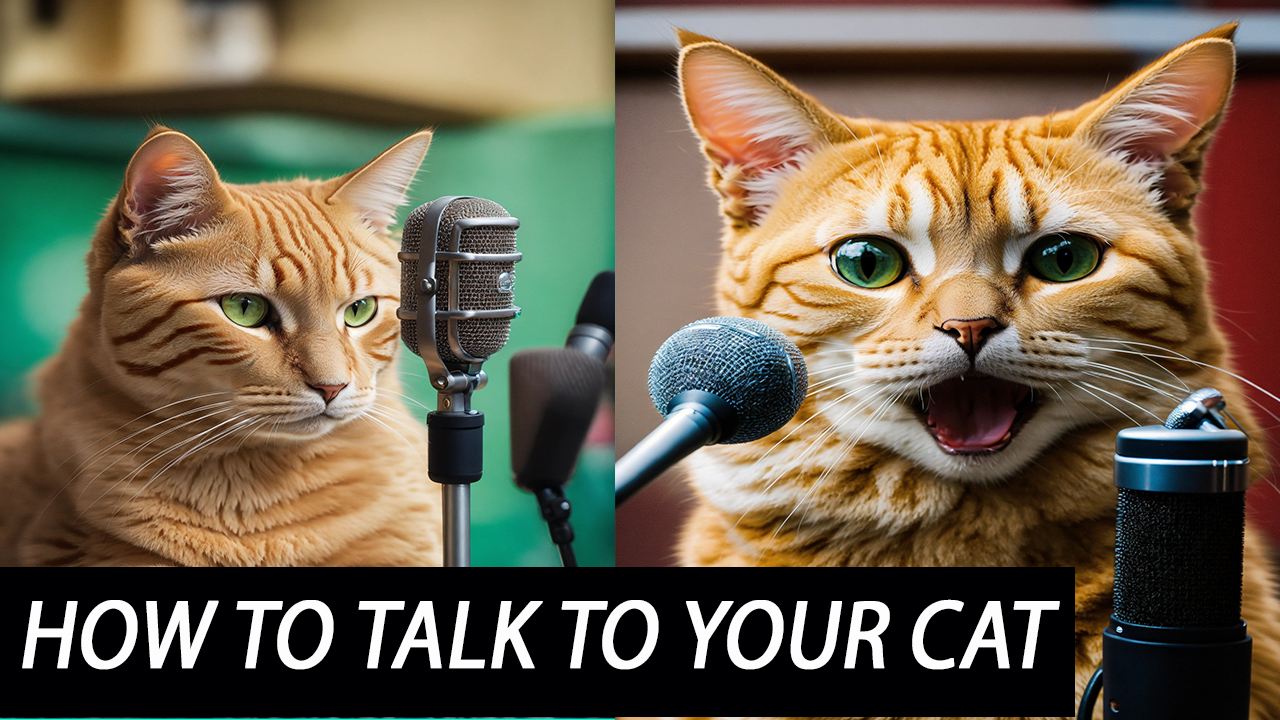
Cats say a lot without words. Here's how to read your cat's tail, ears, eyes and posture, what its meows, purrs, chirps and hisses mean, how to talk back in ways it understands, and how the 3-3-3 rule helps a newly adopted cat settle in.
Cats communicate constantly. Most of it is silent, through the tail, ears, eyes, whiskers and posture, with scent and touch doing a lot of the work too. Sounds such as meows, purrs, trills and hisses add to the message.
Advertisement
Learning to read these signals makes it easier to know when your cat wants attention, when it wants to be left alone, and when something is wrong. This article explains how to read your cat's body language and sounds, how to talk to your cat in ways it understands, and how the 3-3-3 rule can help a newly adopted cat settle in.
Read the whole cat
No single signal tells the whole story. A twitching tail can mean focus, irritation or excitement depending on what the ears, eyes and body are doing, and on what's happening around the cat. Look at the whole cat, and at the situation, before deciding what it's saying.
As a rough guide:
- A relaxed cat has a loose body, ears forward or slightly to the side, soft or half-closed eyes, whiskers relaxed, and a tail held loosely.
- An alert or interested cat has ears pricked forward, eyes wide, whiskers pushed forward and a still or slowly moving tail.
- A worried or frightened cat crouches low, tucks its tail around or under its body, turns its ears sideways or flattens them, and has wide pupils.
- An angry or defensive cat may arch its back, fluff up its fur, stand side-on, flatten its ears back, and hiss or growl.
The tail
The tail is one of the easiest signals to read.
- Held straight up, often with a slight hook at the tip: a friendly greeting. Research on cat behaviour has linked the tail-up signal to friendly approaches between cats, and cats often greet people the same way.
- Low, or tucked under the body: nervous, frightened or submissive.
- Puffed up like a bottlebrush: frightened or startled. The cat is trying to look bigger.
- Slow, gentle swishing: focused, often while watching something it might chase.
- Fast flicking, lashing or thumping: irritated or overstimulated. If you're patting your cat and its tail starts to lash, stop.
- Wrapped around you or another cat: friendly, like putting an arm around someone.
- Quivering while held upright: often excitement when greeting you. Some cats also do this when spraying, so look at the context.
The ears
Cats' ears move independently and change position quickly.
- Forward and upright: relaxed, interested or alert.
- Swivelling: listening to sounds in different directions.
- Turned sideways ("aeroplane ears"): unsure, irritated or anxious.
- Flattened back against the head: frightened or defensive. A cat with flattened ears may lash out if pushed.
The eyes
- Slow blinking: a friendly, relaxed signal. A 2020 University of Sussex study found cats were more likely to slow-blink back at people who slow-blinked at them. You can use this to greet your cat.
- Half-closed, soft eyes: relaxed and comfortable.
- Wide open with big pupils: excitement, fear or arousal, or simply dim light. Read the ears and body too.
- A hard, unblinking stare: a challenge or a threat, more common between cats than towards people. Avoid staring at a cat you don't know.
- Looking away: often a polite way of avoiding conflict.
Whiskers and face
- Whiskers relaxed and out to the side: calm.
- Whiskers pushed forward: interested, hunting or investigating.
- Whiskers pulled back flat against the face: frightened or defensive.
The flehmen response, where a cat sniffs something and then holds its mouth slightly open with its upper lip raised, can look like a sneer. It isn't disgust. The cat is drawing the scent towards a special organ in the roof of its mouth, the vomeronasal organ, to analyse it more closely.
Body posture
- Lying on its back with the belly showing: relaxed and trusting, usually not an invitation for a belly rub.
- Loaf position, paws tucked under: relaxed, but ready to move.
- Crouched low with weight back: nervous, ready to run.
- Arched back and side-on stance: frightened and trying to look bigger.
- Rolling over and stretching when you arrive: a friendly greeting.
- Rubbing against you: marking you with its scent, from glands on the cheeks, chin and forehead, and saying you belong to its group.
- Kneading: contentment, a behaviour carried over from kittenhood.
Cat sounds and what they mean
Meowing
Kittens meow to get their mother's attention. Adult cats rarely meow at each other, and most adult meowing is directed at people. Cats learn which meows get results, so each cat ends up with its own "vocabulary" for its owner.
- Short, mid-pitched meow: a greeting or "hello".
- Repeated meows: excitement, or insistence.
- Long, drawn-out meow: a demand, often for food, or to be let somewhere.
- Low-pitched, drawn-out yowl: complaint, distress, or, in undesexed cats, a mating call.
A cat that suddenly meows much more than usual, especially an older cat at night, should see a vet. Overactive thyroid, high blood pressure, pain and age-related confusion can all cause extra vocalising. Our article on why your cat meows so much covers other causes.
Purring
Purring usually means a cat is relaxed and content, but cats also purr when they're stressed, in pain, giving birth or close to death. It seems to be a self-soothing sound as well as a social one. Our article on what your cat's purring means explains more.
Trilling and chirping
A short, rolling, rising sound, often used as a greeting or to get you to follow the cat. Mother cats use similar sounds with their kittens.
Chattering
The rapid clicking or chattering sound cats make while watching birds through a window is a sign of excitement and frustration at seeing prey they can't reach.
Hissing and spitting
A clear warning: back off. The cat is frightened or defensive. Give it space.
Growling
A low, rumbling warning, often given before an attack or when a cat is guarding something. Don't approach.
Yowling and caterwauling
Advertisement
Loud, long calls. In undesexed cats, this is usually about mating. In desexed cats it can mean distress, territorial disputes with cats outside, or, in older cats, confusion or illness.
How to "talk" to your cat
You won't learn to speak cat, but you can communicate in ways your cat understands.
- Use a calm, quiet voice. Cats learn the sound of your voice and the tone you use at feeding, play and quiet times.
- Use its name for good things. A study from Japan found that pet cats can tell their own name from other similar words. Saying it before meals, treats and play gives the name a positive meaning.
- Slow-blink. Look at your cat with soft eyes and blink slowly. Many cats will answer the same way.
- Offer your hand rather than reaching. Hold out a relaxed hand and let the cat decide whether to sniff, rub or move away.
- Answer the meows that matter. If you respond every time your cat meows at 4 am, it will learn that meowing at 4 am works. Respond to the meows you want more of.
- Respond to warnings. If your cat flattens its ears, lashes its tail or growls, stop what you're doing. Respecting a warning is one of the best ways to build trust.
- Watch for patterns. Over time, you'll learn your own cat's signals: the meow at the fridge, the stare at the door, the head-butt that means "pay attention to me".
Our article on how to bond with your cat has more on building trust.
Scent: the hidden conversation
Much of what cats say to each other is in scent, which we can't detect. Cats leave scent by rubbing their cheeks on objects and people, by scratching, which leaves scent from glands in their paws as well as visible marks, and through urine and faeces.
That's why changes to a cat's scent environment, such as new furniture, a move, new carpet or a new pet, can be unsettling, and why a cat may rub against everything after you've cleaned. Give a cat in a new space familiar bedding that smells of home.
The 3-3-3 rule for a newly adopted cat
Many shelters and rescue groups use the 3-3-3 rule as a rough guide to how a newly adopted cat settles in. It isn't a scientific rule, and every cat is different. Confident cats can settle in a day or two, while shy or older cats may take six months or more. But it's a useful way to set realistic expectations.
The first 3 days: decompressing
The cat is in a strange place, with new smells, sounds and people. It may hide, eat little, and not use the litter tray normally.
- Set up one quiet room with food, water, a litter tray, a bed, a scratching post and places to hide.
- Visit often, sit quietly and let the cat come to you.
- Don't force contact or pull the cat out of its hiding place.
- Keep other pets and visitors away for now.
The first 3 weeks: settling in
The cat starts to learn the household routine and explore more. Its personality starts to show, and it may test boundaries.
- Keep meals, play and quiet times consistent.
- Gradually give it access to more of the house.
- Start short daily play sessions.
- Begin slow introductions to other pets. Our article on warning signs when introducing cats explains how.
The first 3 months: feeling at home
By around three months, many cats feel settled, understand the routine and have bonded with their people. You'll see the cat's true personality. Some behaviour problems also show up around this time as the cat becomes confident enough to show them. Address them early, with your vet or a behaviourist if needed.
If you're about to adopt, our list of kittens for adoption in Melbourne covers shelters and rescue groups.
Reading cats that live together
In a multi-cat home, body language tells you how the cats really get on.
Signs of a friendly relationship:
- Grooming each other, especially around the head and neck.
- Rubbing heads and bodies against each other as they pass.
- Sleeping touching each other.
- Greeting each other with tails up and touching noses.
- Playing in turns, with neither cat repeatedly trying to escape.
Signs of quiet tension:
- One cat staring at another, or blocking a doorway, the food bowl or the litter tray.
- One cat avoiding rooms, hiding, or waiting until the other leaves before eating.
- Hissing, growling or swatting when they pass each other.
- Toileting outside the tray, or over-grooming.
Tension between cats is often silent, and it's easy to miss. Giving each cat its own food and water station, litter tray, bed and high resting spots, in separate parts of the house, reduces competition and makes life calmer for everyone.
When body language means see a vet
Some changes in behaviour and body language point to illness or pain rather than mood:
- Hiding much more than usual, or no longer greeting you.
- Sitting hunched with the eyes half-closed for long periods.
- Growling or hissing when touched in one spot.
- A sudden increase in vocalising, especially at night in an older cat.
- Changes in grooming: a scruffy coat or over-grooming.
Cats are good at hiding pain, so trust your instincts when your cat seems "not right".
Frequently asked questions
What does it mean when a cat's tail is straight up?
It's a friendly greeting. A cat with its tail held upright, often with a slight hook at the tip, is pleased to see you.
Why does my cat meow at me but not at other cats?
Adult cats rarely meow at each other. Most adult meowing is aimed at people, and cats learn which meows get a response from their owners.
Does purring always mean a cat is happy?
No. Most of the time it does, but cats also purr when stressed, unwell or in pain.
What does it mean when my cat slow-blinks at me?
It's a relaxed, friendly signal. Slow-blink back.
How long does it take a rescue cat to settle in?
The 3-3-3 rule is a rough guide: three days to decompress, three weeks to learn the routine, and three months to feel at home. Some cats are quicker and some take longer.
Why does my cat bite me when I pat it?
It has had enough. Watch for a lashing tail, rippling skin and ears turning back, and stop patting before it gets to that point.
Advertisement