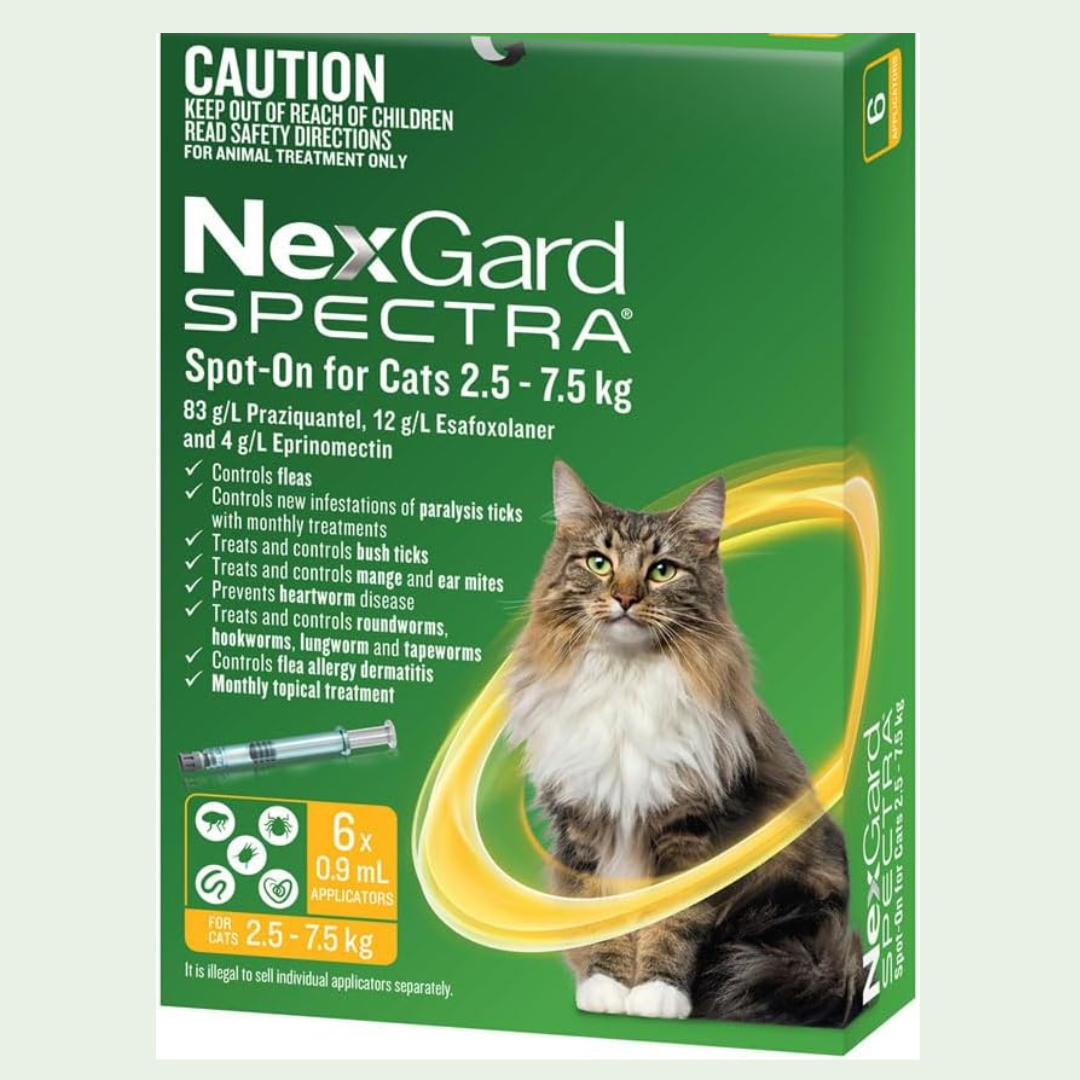
The best flea treatment is the one that suits your cat, covers the parasites in your area, and is used properly alongside treating your home. Here's how flea products work, what to look for on the label, paralysis tick protection, and the mistakes that make treatments seem to fail.
Fleas are one of the most common parasites of cats in Australia, and even strictly indoor cats can get them. There's no single "best" flea treatment for every cat. The right product depends on your cat's age and weight, whether it goes outside, whether you live in a paralysis tick area, which other parasites you want to cover, and what your cat will let you give it.
Advertisement
This guide explains how fleas live, how flea products work, what to look for on the label, how to protect cats from paralysis ticks, how to treat your home, why flea treatments sometimes seem to fail, and the dog products that can kill cats.
Why fleas matter
Fleas cause more than itching:
- Flea allergy dermatitis. Some cats are allergic to flea saliva. It's one of the most common skin conditions in cats, causing intense itching, redness, scabs and hair loss, often on the back, belly and inner thighs. An allergic cat can react to just a few bites.
- Tapeworm. The flea tapeworm (Dipylidium caninum) is passed on when a cat swallows an infected flea while grooming. You may see small, rice-like segments around your cat's bottom or in its bedding. A cat that has tapeworm has swallowed fleas.
- Anaemia. Heavy flea burdens can cause anaemia in kittens and small or sick cats, because fleas feed on blood.
How the flea life cycle works
Understanding the life cycle explains why flea control takes time.
- Adult fleas live on your cat, feed on its blood and lay eggs.
- Eggs fall off your cat into the environment, especially where it rests and sleeps.
- Larvae hatch and live in carpets, bedding, cracks in floorboards and shaded outdoor areas.
- Pupae form cocoons, which can lie dormant for weeks or months until warmth, vibration or carbon dioxide signal that a host is nearby.
- New adults then hatch and jump onto your cat.
The highest numbers of eggs, larvae and pupae are found where pets spend the most time, such as their beds and favourite furniture. That's why new fleas can keep appearing for weeks after you start treatment, even when the product is working.
Types of flea treatment for cats
Spot-on treatments
Spot-ons are liquids applied to the skin on the back of the neck, where the cat can't lick them off. Depending on the product, they last from one month to around three months. Many spot-ons also cover other parasites, such as intestinal worms, heartworm, ear mites or ticks.
Tablets and chews
Some flea treatments come as tablets or chews. They're useful for cats that are bathed often, or that react to spot-ons, but you need to be able to get your cat to take them.
Fast-acting tablets
Nitenpyram tablets (sold as Capstar) start killing adult fleas on a cat within about 30 minutes, but they only kill adult fleas and the effect is short-lived, around a day. They don't kill eggs or larvae, or protect against new fleas. They're useful for a heavy infestation, alongside a long-acting preventative.
Collars
Medicated flea and tick collars release an active ingredient over several months. If you use one, make sure it's registered for cats and has a release mechanism. See our guide to cat collars.
Sprays, shampoos and powders
Flea shampoos kill fleas on the cat at the time, but don't give lasting protection. They're mostly useful for young kittens or very heavy infestations, under veterinary advice. Most cats don't enjoy being bathed. See our guide to why cats hate water.
What the active ingredients do
Flea products are grouped by their active ingredients. Your vet can explain the differences, but these are the main groups you'll see on Australian cat products:
- Isoxazolines, such as fluralaner, sarolaner and esafoxolaner. A newer group of long-acting ingredients that kill fleas and ticks. Some are combined with other ingredients that control worms.
- Imidacloprid. An older, widely used spot-on ingredient that kills adult fleas. Some products combine it with moxidectin, which adds worm and heartworm control.
- Selamectin. A spot-on ingredient that controls fleas and some worms and mites.
- Fipronil. An older ingredient found in spot-ons and sprays, which kills fleas and some ticks.
- Insect growth regulators, such as methoprene or pyriproxyfen. These stop flea eggs and larvae developing, and are often combined with an adult flea killer.
- Nitenpyram. A fast-acting, short-lived tablet that kills adult fleas.
Combination products are convenient, but don't double up. Using two products that contain the same type of ingredient, or giving a combined flea and worm product as well as a separate wormer, can mean overdosing or wasting money. Ask your vet which parasites your cat actually needs cover for.
How to choose a flea treatment
When you compare products, check the label for:
- Registered for cats. Only ever use a product that's registered for cats in Australia. Never use a dog product. (See the warning below.)
- Your cat's weight and age. Products are dosed by weight band, and have a minimum age and weight. Weigh your cat, and use the right band for kittens.
- What it covers. Fleas only, or also ticks, worms, heartworm or mites?
- Paralysis tick protection, if you live on the east coast. Check whether the label specifically includes paralysis ticks for cats.
- How long it lasts, and how often you'll need to reapply it.
- How it's given. Choose a form you can give reliably, every time.
- Any health issues. Talk to your vet before using a flea product on a pregnant or nursing cat, a very young kitten, or a cat with a medical condition or history of seizures.
Buy flea products from a vet clinic or a reputable Australian pet retailer. Be wary of very cheap online products of unknown origin, which may be counterfeit, expired or not registered in Australia.
Paralysis ticks
The paralysis tick (Ixodes holocyclus) lives along Australia's east coast, from north Queensland through New South Wales. A related species, Ixodes cornuatus, occurs further south in Victoria and Tasmania. Paralysis ticks release a toxin that causes progressive paralysis, and it can be fatal without treatment.
Advertisement
Prevention
Only a limited number of products are registered in Australia to protect cats against paralysis ticks. In a study published in Parasites & Vectors, a single treatment of fluralaner spot-on (sold as Bravecto Spot-On for Cats) provided 100% efficacy against paralysis ticks for at least 84 days. Ask your vet which products are registered for paralysis tick control in cats, and keep treatments up to date all year in high-risk areas.
No product is 100% reliable on its own. If your cat goes outside, search it for ticks every day. Run your fingers slowly over the whole body, paying attention to the head, neck, ears, chin, under the collar, between the toes and under the legs.
Signs of tick paralysis
See a vet urgently if your cat shows any of these signs, especially in a tick area:
- wobbly or weak back legs
- a changed, hoarse or weak meow
- vomiting, gagging or retching
- noisy, grunting or laboured breathing, or coughing
- lethargy, or not wanting to jump.
Signs can appear or worsen for 24 to 48 hours after a tick is removed. If you find a tick, remove it with fine tweezers or a tick removal tool, keep it for identification, and call your vet, even if your cat seems well. With prompt treatment, most cats recover.
Treating your home
Treating the cat is only part of flea control. Because most of the flea population lives in the environment as eggs, larvae and pupae, you also need to treat your home.
- Treat every cat and dog in the household with a product suitable for its species, at the same time.
- Wash bedding in hot water, and dry it on a hot cycle, every week during an infestation. Our guide to cat beds has more on keeping bedding clean.
- Vacuum thoroughly and often, including under furniture, along skirting boards and in your car. The vibration also encourages pupae to hatch, so the new fleas meet the treatment on your cat sooner. Empty the vacuum outside afterwards.
- Consider a household flea spray containing an insect growth regulator, if your vet recommends one. Keep pets and people out of treated rooms until it's dry, and follow the label.
- Treat outdoor areas where your cat rests, such as a catio, and keep them clean.
Expect to keep going for two to three months or more. New fleas will keep hatching from pupae in your home during that time, but they'll be killed when they jump onto your treated cat.
Why flea treatments seem to fail
If your cat still has fleas after treatment, the product usually isn't the problem. Common reasons include:
- New fleas hatching. Pupae in your home keep hatching for weeks.
- Not treating every pet, so untreated animals keep the life cycle going.
- Gaps between doses. A treatment that's applied late lets fleas breed again.
- Wrong application. A spot-on applied to the fur instead of the skin, or to a spot the cat can lick, won't work properly.
- Bathing too soon. Check the label for how long to wait before and after bathing.
- The wrong weight band, especially for kittens that are growing.
- An untreated environment.
If fleas persist after you've fixed all of these, talk to your vet about a different product.
Never use dog flea products on cats
This is the most important rule in flea control. Many dog flea and tick products contain permethrin, which is highly toxic to cats and can be fatal. Even a small amount, such as a cat grooming a recently treated dog, can cause tremors, twitching and seizures.
If you think your cat has been exposed to a dog product, wash it off with mild detergent and lukewarm water if you can do so safely, and take your cat to a vet immediately. You can also call the Animal Poisons Helpline on 1300 869 738.
Fleas and indoor cats
Indoor cats can still get fleas. Fleas can come in on people's clothing and shoes, on other pets, from visiting animals, or from a new home where pets lived before. Many vets recommend year-round flea prevention for indoor cats too, especially in multi-pet households. Ask your vet what suits your cat's risk. If your cat uses a catio, keep it clean and dry, and treat it as part of your home. See our guide to cat enclosures and catios.
Frequently asked questions
What is the most effective flea treatment for cats?
There's no single best product for every cat. Modern long-acting spot-ons and tablets are very effective when used correctly, and the right choice depends on your cat, its risks and what you can give reliably. Ask your vet.
Is there anything that kills 100% of fleas?
No product instantly kills every flea on a cat and in the home. A fast-acting tablet kills most adult fleas on the cat quickly, but fleas in the environment will keep hatching. Combining a long-acting preventative with home treatment is what works.
How often should I treat my cat for fleas?
As often as the label says, which ranges from monthly to about every three months depending on the product. Set a reminder so doses don't lapse.
Can I use my dog's flea treatment on my cat?
No. Many dog products contain permethrin, which can kill cats. Only use products registered for cats.
Do indoor cats need flea treatment?
Many vets recommend it, because fleas can be carried indoors. Ask your vet about your cat's risk.
How do I know if my cat has fleas?
Look for scratching, overgrooming, small dark specks ("flea dirt") in the fur, especially near the base of the tail, and live fleas. Comb the dirt onto damp white paper. If the specks turn red-brown, it's digested blood, and your cat has fleas.
Does my cat need a wormer too?
Cats with fleas are at risk of flea tapeworm. Some flea products include worm control. Ask your vet whether your cat needs a separate wormer. See our guide to how to tell if your cat is sick.
Advertisement