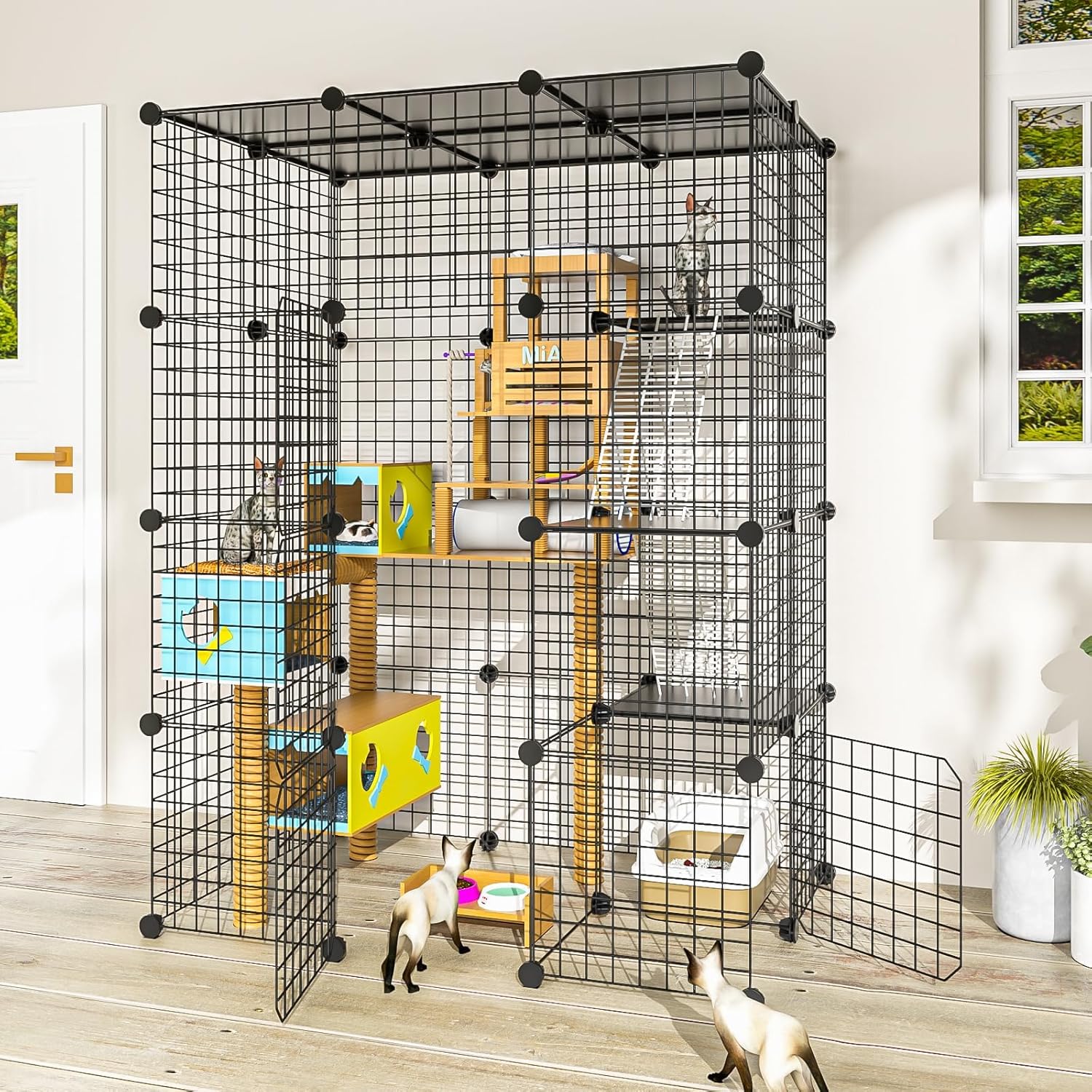
A catio gives a contained cat fresh air, sunshine and things to watch, without the risks of roaming. Here's why containment is worth it, the main types of enclosure, how to plan size, location, mesh and shade, what to put inside, and how to keep it safe in an Australian summer.
More Australian cats than ever are kept at home, whether because of council containment rules, concern for wildlife, or simply to keep them safe. A cat enclosure, often called a catio, is one of the best ways to give a contained cat fresh air, sunshine and stimulation.
Advertisement
This guide covers why containment is worth it, the main types of cat enclosure, how to plan size, location and materials, what to put inside, safe plants, cat-proof fencing, indoor playpens, and how to keep an enclosure safe and comfortable through an Australian summer.
Why contain your cat?
Your cat's safety
The RSPCA lists the risks for roaming cats as injury, getting lost or stolen, fights, infectious diseases such as feline immunodeficiency virus (FIV), and death in traffic. FIV spreads mainly through bites from cat fights. A Murdoch University study estimated that outdoor pet cats live at least two to three years less, on average, than contained pet cats.
Wildlife
Each roaming pet cat kills an estimated 110 native animals a year, and most of that prey is never brought home, so owners rarely see it. See our guide to feral cats in Australia.
The law
Containment is increasingly a legal requirement. In the ACT, cats born on or after 1 July 2022 must be contained 24 hours a day, and many councils in other states have night curfews or 24-hour containment rules. See our guide to cat laws in Australia.
Happy contained cats
Contained cats can be just as happy as roaming cats, if their needs are met. The RSPCA highly recommends giving contained cats access to a safe, escape-proof outdoor enclosure or fenced garden. A catio is the easiest way to do that.
Types of cat enclosure
Window boxes
A small mesh box attached to the outside of a window, which the cat reaches from inside. Good for apartments and small spaces, and often easy to remove when you move.
Balcony enclosures
Mesh or netting that encloses an apartment balcony. Check your strata or body corporate rules and your lease first, and use fixings that won't damage the building.
Lean-to catios
An enclosure built against the wall of the house, with access through a window or a cat flap in a door or wall. One of the most popular designs, because the cat can come and go as it likes.
Freestanding enclosures
A separate structure in the garden, either flat-pack or custom built. Some connect to the house with a mesh tunnel, which also gives your cat a fun walkway.
Modular and flat-pack kits
Many companies sell modular panels that you can arrange to fit your space and extend later. They're a good option for renters and people who don't want to build from scratch.
Cat-proof fencing
Instead of a separate enclosure, you can cat-proof part or all of your backyard. Options include fence-top rollers that spin when a cat tries to climb over, and angled mesh or netting along the top of the fence. Check every possible escape route, including trees, sheds and gates near the fence.
Indoor cat playpens
Large indoor pens or "cat cages" with several levels are useful for short-term situations, such as introducing a new cat, recovering from surgery, fostering kittens, or keeping a cat safe during renovations. They're not a substitute for a full indoor home with outdoor access, and cats shouldn't be confined in a small pen for long periods.
Planning your enclosure
Size
Bigger is better. A cat enclosure needs enough room to walk, climb, jump and get away from other cats. Think in three dimensions: height matters more to cats than floor area, so a tall enclosure with several levels gives far more usable space. In multi-cat homes, make it big enough for every cat to keep its own distance.
Location
- Sun and shade. Choose a spot with both, so your cat can move between them through the day. In much of Australia, avoid full western sun in summer.
- Shelter from wind and rain. A wall of the house on one side gives good shelter.
- Something to watch. A view of the garden, birds or the street keeps your cat interested.
- Away from the fence line. Advice drawing on RSPCA guidance suggests keeping freestanding enclosures at least 2 m from the boundary fence, which also reduces conflict with neighbours' cats.
- Easy access. A direct connection to the house, through a window or cat flap, means your cat can use the enclosure whenever it likes, within safe hours.
Mesh
Use strong, rigid wire mesh rather than flimsy netting, especially if your cat is determined or there are dogs or foxes nearby. The weave needs to be tight enough to stop your cat getting out and other animals getting in. Councils and conservation groups recommend wildlife-friendly mesh, which has small enough openings that birds and small animals can't get caught in it.
Roof
An enclosure needs a roof. Cats are expert climbers and jumpers. A roof also keeps other cats and wildlife out. A partly solid roof, such as polycarbonate sheeting, gives shade and rain protection while letting light through.
Floor
Pavers, decking, concrete or artificial turf are easy to clean. A section of real grass, a sandpit for digging, or pots of cat grass make the space more interesting. If the floor is soil or grass, bury mesh along the base, or fix the frame to a concrete edge, so your cat can't dig out.
Planning approval
Small structures often don't need council approval, but rules vary. Check with your council before building a large or permanent enclosure, especially if it's attached to the house, near a boundary, or in a heritage area. Renters should get the landlord's permission.
What to put inside
The RSPCA's catio advice recommends shade, covered areas, hiding spots, elevated platforms, water, a litter tray, cat grass and scratching surfaces. Include:
- Shelves and platforms at different heights, connected by ramps or steps.
- Hiding places, such as a covered box or cat house. See our guide to cat beds.
- Scratching surfaces, such as a sisal post, an untreated log or timber. See our guide to cat scratching posts and cat trees.
- Fresh water, in a heavy bowl in the shade, changed daily.
- A litter tray or digging area, especially if your cat spends long periods outside.
- Cat grass and safe plants to nibble and sniff.
- Hammocks and beds for lounging.
- Toys, rotated regularly. See our guide to interactive cat toys.
Advertisement
Safe and unsafe plants
Plants make an enclosure much more interesting, but choose carefully.
- Safe options include cat grass (usually oat, wheat or barley grass), catnip and cat thyme, which many cats enjoy. Check that any other plant is non-toxic to cats before using it.
- Never use lilies. All parts of true lilies (Lilium) and daylilies (Hemerocallis), including the pollen and the water in the vase, can cause fatal kidney failure in cats. Keep them out of the house as well as the catio.
- Avoid toxic plants generally, and check any plant you're unsure about with your vet.
- Avoid chemicals. Don't use snail bait, fertilisers, herbicides or insecticides in or near the enclosure.
Keeping cats comfortable in Australian weather
Heat
Australian summers can make an enclosure dangerous. Cats can overheat, especially older, overweight, flat-faced and longhaired cats.
- Provide deep shade at all times of day, not just in the morning.
- Bring your cat inside on very hot days.
- Keep water in several shady spots.
- Avoid dark metal surfaces and solid roofing that traps heat.
- Watch for signs of heat stress: panting, drooling, restlessness, weakness or vomiting. Heat stress is an emergency. Move your cat somewhere cool and call your vet.
Cold and rain
Give your cat a dry, sheltered, draught-free spot with bedding. In cold areas, bring your cat in at night.
Night time
Many councils require cats to be inside at night, and the enclosure is safest during the day. Close the cat flap at night if your enclosure isn't fully secure against foxes and other animals.
Safety checklist
- No gaps anywhere. Check corners, joins, the base and where the enclosure meets the house.
- No sharp wire ends or protruding screws.
- Doors that close firmly and can't be pushed open by your cat.
- Stable shelves and platforms that won't tip.
- No toxic plants or chemicals inside or within reach.
- Shade and water at all times.
- Regular checks for damage after storms, and repairs before you let your cat out.
- Supervision for the first few days, until you're confident the enclosure is secure.
Introducing your cat to the enclosure
Many cats rush straight out, but some are cautious. Let your cat explore at its own pace. Open the door and let it come out when it's ready. Put a familiar bed, a few treats and a favourite toy inside. Spend time out there with your cat at first. If your cat has always roamed, the change may take time. Our guide to cat laws in Australia has tips on helping a roaming cat adjust to containment.
Costs and DIY options
Cat enclosures range from a simple window box to a large, custom-built catio. You don't need to spend a lot to make a big difference.
- Start small. A window box or a small lean-to gives your cat outdoor time while you work out what it uses.
- Use what you have. A pergola, verandah or side passage can often be enclosed with mesh more cheaply than building from scratch.
- Buy modular. Modular kits can be extended later as your budget allows.
- Build it yourself. A timber frame covered in rigid wire mesh is a manageable DIY project for many people. Use treated timber only where your cat can't chew it, fix the mesh securely with staples or battens, and cover sharp wire ends.
- Check for local programs. Some councils run catio workshops, rebates or advice programs to encourage containment. Ask yours.
Solving common problems
My cat won't go into the enclosure
Make it inviting. Put a favourite bed, toys and treats inside, feed meals near the entrance, and spend time out there yourself. Some cats need a few weeks to feel confident.
My cats fight in the enclosure
Add more space, more levels and more hiding places, so each cat can keep its distance. Provide more than one entrance if you can. See our guide to warning signs when introducing cats.
Neighbourhood cats visit the enclosure
A cat outside the mesh can stress the cat inside. Block the view at ground level with solid panels or plants along the bottom, and talk to your neighbours about their cat.
Other ways to give indoor cats outdoor time
- Harness walks. Some confident cats enjoy supervised outings on a harness. See our guide to cat harnesses.
- A pet stroller. An enclosed stroller lets a cat watch the world safely. See our review of a double pet stroller.
- Window perches, which give indoor cats a sunny lookout.
Frequently asked questions
Do cats like catios?
Most cats love them. A catio gives fresh air, sunshine, smells, sounds and things to watch, which make indoor life much richer.
How big should a cat enclosure be?
As big as you can manage. Height matters more than floor area to cats, so build up, with several levels. Allow more space for more cats.
Can I leave my cat in the catio all day?
If the enclosure has shade, shelter, water, a litter tray and secure construction, many cats spend much of the day there. Bring your cat inside in extreme heat or cold, and at night if your council requires it.
Do I need council approval for a catio?
Often not for small structures, but rules vary. Check with your council for large or permanent enclosures, structures attached to the house, or anything near a boundary.
Is a cat enclosure enough exercise?
It helps, but cats also need daily play with their people. Combine an enclosure with play, climbing spaces indoors, and puzzle feeders.
Can I build a catio if I'm renting?
Yes, if your landlord agrees. Freestanding, window box and modular kits can usually be taken with you when you move.
Advertisement