Indoor cats need to hunt, even if it's only a feather on a string. Here's how cats play and why they get bored, the types of toy that work best, what science says about catnip, silver vine and laser pointers, cheap toys you can make, and how to keep play safe.
With more Australian councils requiring cats to be contained, more cats than ever live mostly or entirely indoors. Indoor life is safer for cats and for wildlife, but it takes away the chance to hunt. Play fills that gap. The right toys, used the right way, keep an indoor cat fit, confident and much less likely to get bored and destructive.
Advertisement
This guide covers how cats play and why they lose interest in toys, the types of toy that work best, what research says about catnip, silver vine and laser pointers, cheap toys you can make at home, how to play so your cat stays interested, and toy safety.
Why play matters for indoor cats
Cats are predators. Even well-fed cats keep their hunting instincts. The American Association of Feline Practitioners and the International Society of Feline Medicine list the opportunity for play and predatory behaviour as one of the five "pillars" of a healthy environment for cats. Their guidelines say toys on their own aren't enough: cats need people to play with them, and chances to "hunt" for food.
When those needs aren't met, cats can become stressed or bored. Signs include:
- attacking ankles, hands or other pets
- night-time activity, yowling or zoomies
- scratching furniture or knocking things off benches
- overeating and weight gain
- overgrooming or other repetitive behaviours
- sleeping excessively and seeming flat.
These signs can also have medical causes, so check with your vet if they appear suddenly. See our guide to how to tell if your cat is sick.
How cats play, and why they get bored
Play copies the hunt
A cat's hunting sequence goes something like this: watch, stalk, chase, pounce, catch, bite and "kill", then eat. Good play lets a cat go through the same steps. A toy that moves like prey, hides, then darts away, and can finally be caught, is far more satisfying than one that just sits on the floor.
Cats get used to toys quickly
A study of adult cats by Sarah Hall, John Bradshaw and Ian Robinson, published in 2002, found that cats played less and less with the same toy over repeated sessions, as they got used to it. When the researchers swapped in a toy with different colours, the cats played intensely again. In other words, cats don't necessarily lose interest in play. They lose interest in a toy that no longer seems new.
That's why rotating toys works so well. Put most toys away, bring out a few at a time, and swap them every few days.
The types of toy that work best
Wand toys
A wand toy is a stick with a feather, fabric strip or small toy on a string or wire. It's the single most useful toy for an indoor cat, because you control the movement and can make it act like prey.
- Move it away from your cat, not towards it. Prey runs away.
- Mix fast movements with pauses. Let the toy hide behind furniture or under a towel, then peek out.
- Imitate different prey: a bird fluttering in the air, a mouse scurrying along the floor, an insect twitching in one spot.
- Let your cat catch it regularly. A cat that never wins loses interest.
Always put wand toys away after play. The string or elastic can be swallowed or wrap around a cat's neck or legs.
Puzzle feeders and food toys
Puzzle feeders make a cat work for its food by rolling, pawing or reaching into holes. They slow down fast eaters, add activity to mealtimes, and give a sense of hunting. The AAFP's feeding guidelines recommend puzzle feeders and foraging-style feeding for pet cats, and note that they can help with stress-related problems and weight control.
Start with an easy puzzle so your cat succeeds, then make it harder. You can feed some or all of your cat's daily food this way. See our guide to how often to feed your cat.
Kicker toys
Kicker toys are long, soft toys that a cat can hold with its front paws and kick with its back legs, just as it would with prey. Many are filled with catnip or silver vine. They're good for solo play and for cats that play rough, because they direct bunny kicks away from your arms.
Balls, springs and small toys
Light balls, plastic springs and small furry mice are good for batting and chasing. Cats often play with them alone, especially at night. Ping-pong balls in an empty bath are a classic. Choose toys too large to swallow.
Track toys and tunnels
Track toys with a ball trapped in a circular track let a cat bat without losing the ball under the fridge. Tunnels and paper bags give places to hide and ambush, which many cats love.
Electronic and moving toys
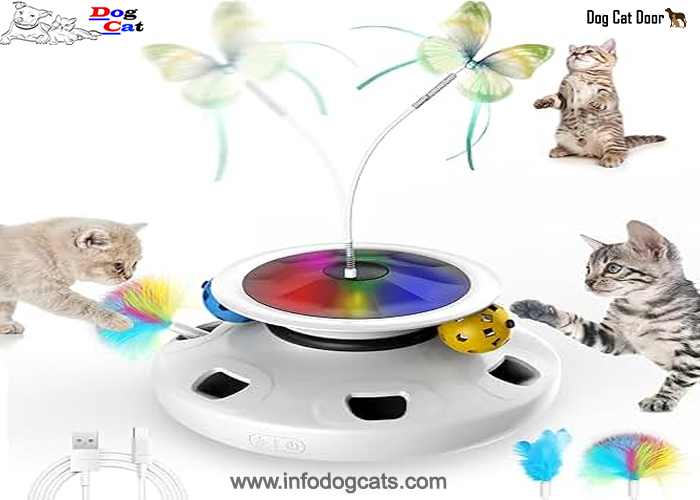
Battery-operated toys that move, flutter or hide a feather can be entertaining, especially for short periods when you're busy. Most cats lose interest if the movement is too predictable, so rotate them and use them alongside, not instead of, play with you.
Crochet and handmade toys
Soft crochet toys can be filled with catnip or silver vine and are easy to wash and replace. See our guide to crochet cat toys for patterns. Make sure stitching is tight, with no loose yarn ends.
Catnip, silver vine and other plants
Catnip
Catnip (Nepeta cataria) contains nepetalactone, the compound that produces the familiar response: sniffing, rolling, rubbing, licking and sometimes zooming around. The effect usually lasts a few minutes, after which cats tend to lose interest for a while.
Not every cat responds. In a 2017 study of 100 domestic cats published in BMC Veterinary Research, about two-thirds responded to catnip. The response is inherited. Kittens generally don't respond until they're at least a few months old.
Silver vine and other alternatives
The same 2017 study tested other plants. Almost 80% of the cats responded to silver vine (Actinidia polygama), and about half responded to Tatarian honeysuckle and valerian root. Most of the cats that ignored catnip responded to silver vine, and about one in three responded to Tatarian honeysuckle.
If your cat doesn't care about catnip, a silver vine stick or powder is worth trying. Use these plants occasionally, as a treat, so they stay exciting.
Is catnip safe?
Catnip and silver vine are considered safe for cats in normal amounts. Eating a lot of the plant may upset a cat's stomach. Some cats become over-excited or aggressive under the influence, so give catnip to cats separately if they don't get along.
Laser pointers: use them carefully
Advertisement
Many cats love chasing a laser dot, but it can't be caught. A 2021 survey of 618 cat owners by Lori Kogan and Emily Grigg found that cats whose owners used laser pointers more often were more likely to show repetitive behaviours, such as chasing lights and shadows or staring at lights. The survey can't show cause and effect, but the authors said it supports concerns about laser toys and called for more research.
If you use a laser:
- keep sessions short
- never shine it in your cat's eyes
- finish by moving the dot onto a real toy or treat your cat can catch
- use it alongside wand toys and other toys, not as the only form of play.
Cheap and DIY toys
Good toys don't have to cost much. Many cats prefer these to anything from a shop:
- Cardboard boxes. Cut holes in the sides for hiding and ambushing. Several boxes taped together make a fort.
- Paper bags. Cut off the handles first.
- Scrunched paper balls, or the cardboard tube from a toilet roll.
- A toilet roll puzzle feeder. Fold in the ends of a cardboard tube with a few dry biscuits inside, or stand tubes upright in a shoebox and hide treats in them.
- A sock kicker. Stuff an old sock with fabric scraps and a pinch of catnip, and tie the end off securely.
- A DIY wand. Tie a strip of fleece to a stick or ruler. Put it away after play.
- A treasure hunt. Hide treats or small portions of dry food around the house for your cat to find.
Avoid hair ties, rubber bands, ribbon, string, tinsel and plastic bag handles as toys. Cats love them, but they're among the most dangerous things a cat can swallow.
How to play so your cat stays interested
- Play little and often. Several short sessions a day work better than one long one. Stop while your cat is still keen, rather than when it's exhausted. Young, active cats may need more.
- Play before meals. Hunt, catch, eat, then groom and sleep is the natural sequence. A play session before dinner, especially in the evening, can help a cat sleep at night. See our guide to cats waking you up at night.
- End with a catch. Let your cat catch the toy at the end, then offer a treat or meal.
- Rotate toys. Keep most toys out of sight and swap them every few days.
- Watch your cat's style. Some cats love chasing things on the ground, others love leaping for things in the air. Some prefer feathers, others prefer furry toys. Follow your cat's preferences.
- Use toys, not hands. Never encourage a kitten to play with your hands or feet. It's cute in a kitten and painful in an adult cat.
- Include older cats. Senior cats still enjoy play, but they may prefer slower, ground-level games. Adapt the game rather than stopping.
Play for multi-cat homes
In homes with more than one cat, give each cat its own play time. A confident cat may take over the game while a shyer cat watches. Using two wand toys at once, or playing in different rooms, helps. Play can also reduce tension between cats, because it burns energy that might otherwise go into chasing each other. If you're introducing a new cat, see our guide to warning signs when introducing cats.
Toy safety
- Swallowed string is an emergency. String, thread, ribbon, tinsel, dental floss and similar items can cause a "linear foreign body" that bunches up the intestines and may need surgery. If you see string hanging from your cat's mouth or bottom, don't pull it. Go to a vet straight away.
- Check toys regularly. Throw away toys with loose parts, exposed stuffing, loose eyes or bells, or frayed strings.
- Store wand toys away after every session.
- Choose toys too big to swallow.
- Supervise new toys at first, especially electronic toys with small parts or batteries.
Beyond toys
Toys work best as part of an enriched home. Indoor cats also need places to climb and scratch, windows to watch from, comfortable resting places and, ideally, safe outdoor access in a catio. See our guides to cat scratching posts and cat trees, cat beds, and cat enclosures and catios. Many cats also enjoy walks on a harness. See our guide to cat harnesses.
Frequently asked questions
What is the best toy for an indoor cat?
For most cats, a wand toy used by a person. It lets your cat go through the whole hunting sequence. Puzzle feeders and kicker toys are good additions for solo play.
How long should I play with my cat each day?
Aim for at least two short sessions a day, every day, and stop while your cat is still interested. Young and active cats often need more.
Why has my cat stopped playing with its toys?
It may simply be used to them. Put the toys away for a while and rotate them. A sudden loss of interest in play, especially in an older cat, can also be a sign of pain or illness, so check with your vet.
Is catnip safe for kittens?
It's not harmful, but most kittens won't respond to it until they're a few months old.
What if my cat doesn't like catnip?
Try silver vine. In a 2017 study, most of the cats that didn't respond to catnip responded to silver vine.
Are laser pointers bad for cats?
Used carefully, they can be part of play. Keep sessions short, never shine the laser in your cat's eyes, and always finish with a toy or treat your cat can catch.
What toys are dangerous for cats?
Anything long and thin that can be swallowed, including string, ribbon, tinsel, hair ties and rubber bands, and toys with small parts that can come loose.
Advertisement