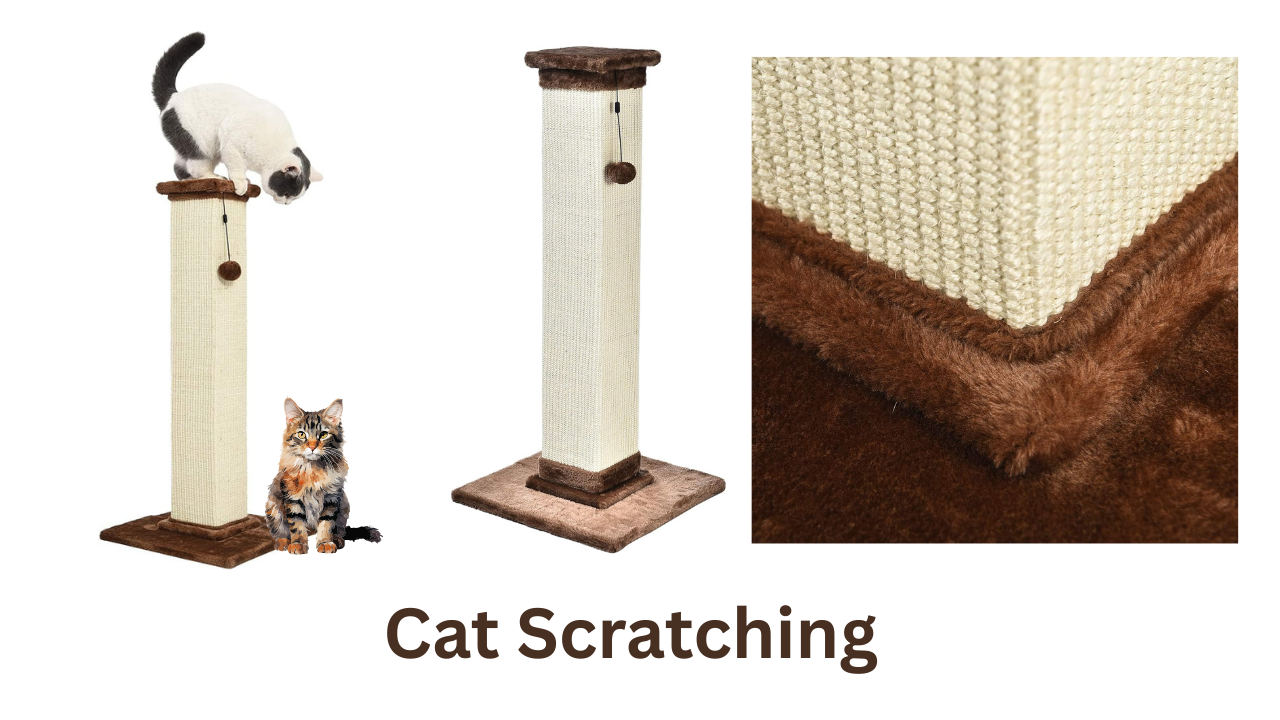
Scratching is normal, necessary cat behaviour. The trick is giving your cat something better than the sofa. Here's what research says cats prefer, how to choose and place a scratching post or cat tree, DIY options, and how to redirect a cat that's scratching furniture.
Every cat needs to scratch. It isn't bad behaviour, and it can't be trained out of a cat. What you can do is give your cat a scratching post it prefers to your furniture, in the place it wants to scratch. With more Australian cats living indoors, good scratching posts and cat trees have become essential furniture.
Advertisement
This guide covers why cats scratch, what research says about the posts cats actually use, materials, sizes and placement, how to choose a safe cat tree, DIY options, and how to stop a cat scratching the furniture.
Why cats scratch
Cats scratch for several reasons. International Cat Care describes the first three:
- Claw care. Dragging the front claws down a surface loosens and removes the worn outer layer of each claw, revealing a sharp new claw underneath. You'll often find these discarded claw husks near a scratching post.
- Scent marking. Glands between the pads of the paws produce a scent unique to each cat. Scratching leaves that scent, along with visible marks, as a message to other cats.
- Stretching and exercise. Scratching exercises the muscles of the front legs, shoulders and back. Many cats scratch straight after waking up.
- Excitement. Many cats also scratch when they're excited, for example when you come home or at dinner time.
Because scratching is partly about marking territory, cats tend to scratch prominent places in the home, such as near doorways, the sofa where the family sits, and the spots where they sleep.
What research says about the posts cats use
A 2016 internet survey of 4,331 cat owners, published in the Journal of Feline Medicine and Surgery by Wilson and colleagues, looked at which scratching posts cats actually used. The researchers found:
- Rope was the most used material when it was offered, although carpet was the material owners offered most often.
- Height mattered. Cats used their preferred surface more when the post was a simple upright post, or a cat tree with two or more levels, at least about 90 cm (3 feet) high.
- Narrower bases were used more than very wide ones.
- Variety helped. Inappropriate scratching decreased as the number of different types and styles of post in the home increased.
The survey was based on owners' reports, so it shows associations rather than proof, but it fits what many owners and vets see.
Choosing a scratching post
Material
- Sisal rope. Rough, durable and the most popular choice for posts. It gives a satisfying grip for vertical scratching.
- Sisal fabric. Woven sisal cloth wrapped around a post or board. Many cats like it because the claws catch and pull in long strokes, and it shreds less than rope.
- Cardboard. Corrugated cardboard scratchers are cheap, and many cats love them, especially for horizontal scratching. They wear out quickly and need replacing.
- Wood. Some cats like to scratch logs, untreated timber or tree bark. A solid timber post or a log in a catio can be a hit.
- Carpet. Common on cat trees, but in the 2016 survey, rope was used more often than carpet when it was offered.
If you're not sure what your cat likes, look at what it's scratching now. A cat that scratches the side of the sofa likes a vertical, fabric-like surface. A cat that scratches the doormat or rug may prefer a horizontal scratcher.
Height
A scratching post should be tall enough for your cat to stretch out fully, with its front legs extended above its head. For most adult cats, that means a post of at least about 90 cm. Large breeds, such as Maine Coons and Ragdolls, need taller posts.
Stability
A post that wobbles or tips over when a cat leans on it will be avoided, and may frighten the cat away from posts altogether. Look for a heavy, wide-enough base, or fix the post to a wall. Give it a firm shove in the shop. If it moves, your cat won't trust it.
Orientation
Most cats scratch vertical surfaces, but many also scratch horizontally, on floors, rugs and mats. Some like angled scratchers. Offering both vertical and horizontal options covers most cats' preferences.
Where to put scratching posts
Placement is as important as the post itself. International Cat Care warns that a post put somewhere convenient for you but not visited by your cat is guaranteed to be ignored.
- Near where your cat sleeps, because many cats scratch as soon as they wake up.
- Near furniture your cat is already scratching. Put the new post right in front of or next to the scratched spot.
- In the main living areas, where the family spends time. A post hidden in the laundry won't satisfy a cat's urge to mark its territory.
- Near entrances, if your cat scratches near doors.
- In several places. One post is rarely enough, especially in multi-cat homes or larger houses.
Cat trees
A cat tree combines scratching posts with platforms, perches, beds and hideaways. For an indoor cat, a good cat tree provides exercise, a lookout, a safe retreat and somewhere to sleep, all in one piece of furniture.
Why height matters to cats
Many cats feel safest when they can see their surroundings from above. In multi-cat homes, extra height gives cats more space to share, because they can use vertical territory rather than competing for floor space. A cat tree by a window, where your cat can watch birds and the street, is often the most used spot in the house. See our guide to cat beds for more on resting places.
Choosing a cat tree
- Stability first. A tall tree needs a heavy, wide base, or a wall anchor. Floor-to-ceiling trees are held in place by tension against the ceiling and can be very stable if fitted correctly.
- Match it to your cat's size. Large and heavy cats need thick posts, solid platforms and strong fixings. Check the maximum weight rating.
- Platforms big enough to lie on. Cats like platforms they can stretch out on. Very small perches go unused.
- Sturdy scratching surfaces. Sisal-wrapped posts that are tall enough to stretch on.
- Replaceable parts. Scratching posts wear out. Trees with replaceable posts last much longer.
- Easy access for older cats. Senior and arthritic cats need low steps and ramps. See our guide to why your cat is limping for the signs of arthritis.
- Washable covers. Removable cushions and covers make cleaning easier.
Advertisement
Wall shelves and climbing walls
Wall-mounted shelves, steps and bridges create a climbing route without taking up floor space, which suits apartments. Fix them securely into wall studs, space them so your cat can step or jump comfortably between them, and add a non-slip surface.
Outdoor and catio scratchers
In a catio or enclosure, use materials that cope with the weather, such as untreated timber, logs or outdoor-grade sisal, and give your cat shade and shelter. See our guide to cat enclosures and catios.
DIY scratching posts and cat towers
You don't need to spend a lot. Some simple DIY options:
- Sisal rope post. Wrap sisal rope tightly around a sturdy timber post, fixing it at the top and bottom, and screw the post to a heavy, wide base. Glue sparingly and let any glue cure fully before your cat uses it.
- Cardboard scratcher. Cut strips of corrugated cardboard, stack them on edge, and bind them tightly in a box or frame.
- Log scratcher. A clean, untreated log or thick branch, stable on its base, makes a natural scratching post.
- Wall shelves. Solid timber shelves fixed to wall studs, covered with carpet offcuts or sisal mat for grip.
- Bookcase tower. A sturdy bookcase anchored to the wall, with some shelves cleared and cushioned, can become a cat climbing tower.
Whatever you build, check that it's stable, has no sharp edges, protruding nails or staples, and uses non-toxic materials. Avoid loose strings, ribbons or small decorations that a cat could chew off and swallow.
Stylish cat furniture
Cat furniture doesn't have to be an eyesore. Timber, neutral fabrics and modern designs blend into most homes, and colourful designs can be a feature. Choose on safety, stability and what your cat will use first, and style second.
How to stop a cat scratching the furniture
Redirect, don't punish
Never punish a cat for scratching. It doesn't stop the urge, and it can make your cat afraid of you. Instead, make the furniture less appealing and the post more appealing.
- Put a post right next to the scratched spot, and match the material and orientation your cat prefers.
- Make the post attractive. Rub a little catnip or silver vine on it, play with a wand toy around and up the post, and reward your cat with a treat or praise when it scratches the post. See our guide to interactive cat toys for more on catnip and silver vine.
- Make the furniture less attractive for a while. Cover the scratched area with a throw, a plastic furniture guard or double-sided tape.
- Move the post gradually to a more convenient spot once your cat is using it, if you need to.
- Be patient. It can take a few weeks for a new habit to form.
Trim the claws
Regular claw trimming reduces damage and helps prevent overgrown claws, especially in older cats, which may scratch less and need more frequent trims. Ask your vet to show you how. Our guide to Ragdoll cats notes that overgrown claws were among the most common problems recorded in Ragdolls in a large UK study.
Declawing isn't an option
Declawing is the surgical removal of the end bones of a cat's toes. It's painful, and it removes part of the cat's natural behaviour. Australian vets don't perform it except for genuine medical reasons, such as treating a damaged or diseased toe.
When scratching is a sign of stress
A sudden increase in scratching, especially around doors and windows, can be a sign that your cat feels its territory is threatened, for example by a new pet or a cat outside. Our guide to why your cat is scratching at the window explains more. Talk to your vet or a cat behaviourist if the problem doesn't settle.
Caring for scratching posts
- Don't replace a post too soon. A shredded post looks bad to people, but it smells familiar to your cat. Replace it once it no longer gives a good grip, or move it somewhere less visible and add a new one alongside.
- Rewrap or replace worn sisal. Many posts and cat trees have replaceable posts or can be rewrapped with new rope.
- Check stability regularly. Tighten bolts and fixings on cat trees every few months.
- Vacuum platforms and wash covers to remove hair and keep fleas under control.
Frequently asked questions
What is the best material for a cat scratching post?
Sisal rope is the most popular, and in a large survey rope was the material cats used most when it was offered. Many cats also love cardboard and sisal fabric. Offer a couple of materials and see what your cat prefers.
How tall should a scratching post be?
Tall enough for your cat to stretch fully. For most adult cats that's at least about 90 cm, and taller for large breeds.
How many scratching posts does a cat need?
At least one in each main area your cat uses, and more in multi-cat homes. In the 2016 survey, inappropriate scratching decreased as homes offered more types and styles of post.
Why does my cat ignore its scratching post?
Common reasons are that it's too short, too wobbly, the wrong material, or in the wrong place. Try a taller, heavier post with a sisal surface, next to where your cat scratches now.
Do kittens need a scratching post?
Yes. Kittens start scratching early, and it's much easier to teach a kitten to use a post than to change an adult cat's habits.
Are cat trees worth it for indoor cats?
For most indoor cats, yes. A sturdy cat tree gives exercise, height, a lookout, a place to scratch and somewhere to sleep, which makes indoor life much more interesting.
Advertisement