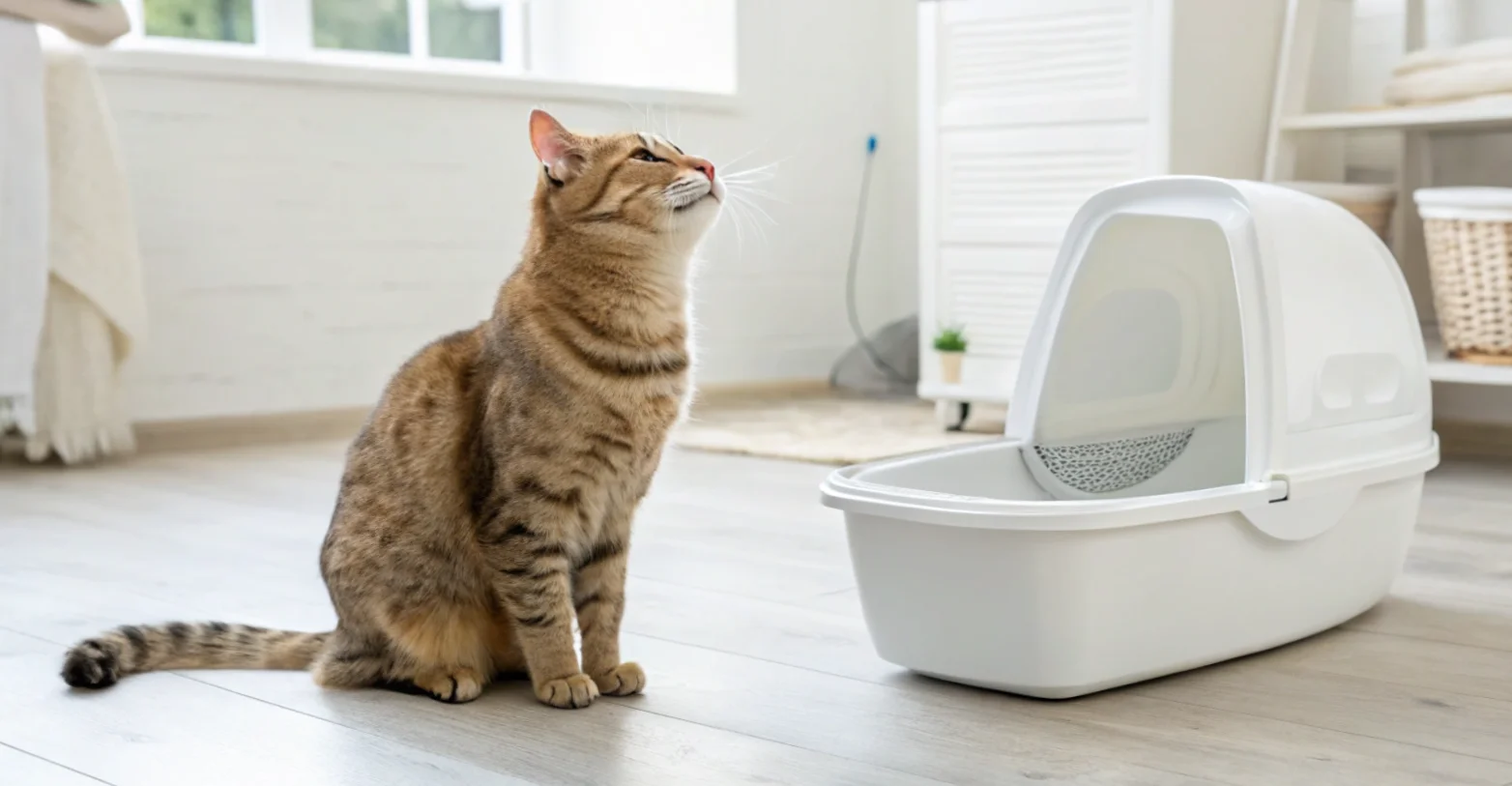
A cat that toilets outside its tray isn't being spiteful. It's telling you something is wrong with its health, its tray or its environment. Here's how to work out which, the emergency signs not to miss, and the practical changes that fix most cases.
Few cat problems are as frustrating as finding urine on the bed or faeces behind the sofa. The good news is that most cases can be solved once you find the cause.
Advertisement
The first thing to know is that your cat isn't doing it out of spite. The veterinary guidelines on house soiling from the American Association of Feline Practitioners and the International Society of Feline Medicine stress that this behaviour happens because the cat's physical, social or medical needs aren't being met, not because it's angry with you.
This guide covers the medical problems to rule out first, the emergency signs in male cats, the difference between spraying and toileting, how to set up a litter tray cats want to use, how to clean soiled areas, and how to reduce stress.
Step 1: Rule out medical problems
Always start with a vet check. Many medical problems make cats toilet outside the tray, either because using the tray hurts, because they can't get there in time, or because they need to go much more often.
Urinary problems
- Feline idiopathic cystitis (FIC). An inflammation of the bladder with no infection or other clear cause, closely linked to stress. Cats with FIC go to the tray often, pass small amounts of urine, may have blood in the urine, and often pee in other places, especially cool, smooth surfaces like baths, sinks and tiles.
- Bladder stones and crystals.
- Urinary tract infections, which are more common in older cats.
- Kidney disease, diabetes and an overactive thyroid, which make cats produce much more urine, so they may not reach the tray in time, or the tray may become too wet and dirty for them.
Emergency: a male cat that can't pee
A cat that is straining in the tray and passing little or no urine needs to see a vet immediately. This is especially urgent in male cats, whose narrow urethra can become blocked by crystals, stones or inflammation. A blocked cat can't empty its bladder, and the condition can be fatal within a day or two without treatment.
Signs include repeated trips to the tray, straining with little or nothing coming out, crying in the tray, licking the genitals, vomiting and lethargy. Owners sometimes mistake it for constipation. Don't wait overnight. Call your vet or an emergency clinic.
Problems that cause pooping outside the tray
- Diarrhoea, which can make a cat unable to reach the tray in time.
- Constipation, which makes passing faeces painful, so the cat may associate the tray with pain.
- Arthritis. Arthritis is very common in older cats. In one study, 90% of cats over 12 years old had X-ray evidence of joint disease. A cat with sore joints may struggle to climb into a high-sided tray, or to squat, and may go just outside it.
- Anal gland problems and other painful conditions around the bottom.
- Cognitive decline in elderly cats.
See our guides to how to tell if your cat is sick and why your cat is limping.
Step 2: Is it spraying or toileting?
Urine marking (spraying) and toileting are different behaviours with different causes, so it helps to know which you're dealing with.
| Spraying (marking) | Toileting outside the tray | |
|---|---|---|
| Posture | Standing, with the tail held up and often quivering | Squatting |
| Surface | Usually vertical: walls, doors, curtains, furniture | Usually horizontal: floors, beds, rugs, laundry |
| Amount | Small amounts | A normal, full amount |
| Usual cause | Stress, territory, other cats, an undesexed cat | Medical problems, the tray, the litter or the location |
Spraying is most common in undesexed cats, especially males, so desexing often helps. In desexed cats, it's usually a sign of stress or conflict, often caused by other cats inside or outside the home.
Step 3: Set up a litter tray cats want to use
The AAFP and ISFM guidelines list optimising the litter tray as one of two steps that help in every case of house soiling. The other is meeting your cat's basic environmental needs (see Step 5).
Number of trays
A common rule is one tray per cat, plus one extra, in different locations. The UK charity Cats Protection notes that this rule isn't based on hard evidence, but that many experts agree it's sound advice. In multi-cat homes, it's especially important. One cat may block another's access to a tray, so trays in separate places give every cat an alternative.
Size
Bigger is better. In a 2014 study by Guy and colleagues, 74 cats in 43 homes were given a standard tray and a larger tray 86 cm long. Most of the cats preferred the larger tray. Many commercial trays are smaller than cats would choose. A large, shallow storage box can make a good, cheap tray. As a rough guide, a tray should be at least as long as your cat from nose to the base of the tail, and preferably longer.
For large breeds, see our review of an extra-large litter tray.
Covered or open?
Some cats like the privacy of a covered tray, and others avoid them because they trap odours and leave the cat feeling cornered. If your cat is avoiding a covered tray, try removing the lid. Offering one of each lets your cat choose.
Easy access
Kittens, senior cats and cats with arthritis need a tray with a low entry. Cut down one side of a storage box if needed, or use a large baking tray or a low-sided tray.
Location
- Quiet and private, away from busy hallways, noisy appliances like washing machines, and areas where dogs or children can disturb the cat.
- Away from food, water and the cat's bed. Cats don't like to toilet where they eat or sleep.
- Not too exposed. International Cat Care notes that cats often avoid trays near cat flaps or full-length windows, where they may feel watched by cats outside.
- Easy to reach. In a multi-storey home, put a tray on each level. Don't hide the only tray in a place the cat has to cross the house to reach.
Litter
Cats can be very particular about litter. Many prefer a fine, soft, sand-like clumping litter, and many dislike strongly scented litters and deodorisers. Keep the depth to a few centimetres, enough for the cat to dig and cover.
If you want to change litter types, do it gradually, mixing the new litter into the old over a week or two, or offer the new litter in a separate tray and let your cat choose. Crystal and pellet litters suit some cats but not others. See our crystal cat litter tray review.
Advertisement
Cleaning the tray
- Scoop at least once a day, and ideally more often. Cats Protection recommends cleaning trays at least daily.
- Empty and wash the tray regularly. Use hot water and a mild, unscented detergent, and rinse well. International Cat Care warns that some disinfectants are toxic to cats.
- Avoid strong-smelling cleaners and air fresheners near the tray.
Step 4: Clean soiled areas properly
Cats are drawn back to places that smell of urine or faeces, so cleaning properly is essential.
- Blot up urine as soon as possible with paper towel. Don't rub.
- Use an enzyme-based cleaner designed for pet urine. It breaks down the compounds that cause the smell.
- Don't use ammonia-based cleaners. Ammonia smells similar to urine, and can encourage your cat to go there again.
- Rinse with water and let the area dry fully. Test cleaners on a hidden patch of fabric or carpet first.
- Make the spot less inviting while you work on the problem. Put a food bowl, a bed or a toy there, cover it with plastic or foil, or block access.
Some soft furnishings, such as heavily soiled rugs or mattresses, may need professional cleaning or replacing.
Step 5: Reduce stress and meet your cat's needs
Stress is a major factor in both urinary problems and toileting outside the tray. The AAFP and ISFM guidelines describe five "pillars" of a healthy environment for cats:
- A safe place, such as a raised or enclosed spot where the cat can retreat. See our guide to cat beds.
- Multiple, separated key resources, including food, water, trays, scratching posts, play areas and resting places, so cats don't have to compete or share.
- Opportunities for play and predatory behaviour. See our guide to interactive cat toys.
- Positive, consistent and predictable human interaction.
- An environment that respects the cat's sense of smell. Avoid strong scents, and don't clean away all the cat's own scent marks at once.
Common sources of stress
- Other cats in the home. Tension between cats is a very common cause. Signs can be subtle, such as one cat blocking a doorway or staring. See our guide to warning signs when introducing cats.
- Cats outside. A cat that sees or smells another cat through a window or door may spray near it. Block the view with window film, and discourage neighbourhood cats from your yard. See our guide to why your cat is scratching at the window.
- Changes in the home, such as moving house, renovations, new furniture, a new baby, visitors or a new pet.
- Changes in routine, or an owner being away.
Synthetic feline pheromone diffusers are sometimes recommended to help reduce stress. Results vary, and they work best alongside the other changes above.
Never punish
Never rub your cat's nose in urine or faeces, shout at it, or punish it. It doesn't teach your cat to use the tray, and it adds to the stress that's often part of the problem. It can also make your cat afraid of you, or hide when it needs to toilet.
Pooping outside the tray
Some cats use the tray for urine but not faeces, or the other way round. Some reasons:
- Pain when passing faeces, from constipation or other problems, which makes the cat associate the tray with discomfort.
- A dirty tray. Many cats won't use a tray that already has faeces in it. A second tray, or scooping more often, can help.
- A tray that's too small, so the cat hangs over the edge.
- Arthritis, which makes squatting and climbing in difficult.
- Litter it doesn't like, especially after a change.
- Diarrhoea, which can cause accidents.
If your cat strains, passes small, hard faeces, or hasn't passed faeces for more than a day or two, see your vet. Feeding some wet food and encouraging drinking can help with constipation. See our guide to why cats don't drink water.
How long does it take to fix?
It depends on the cause. A medical problem may improve quickly once treated, while a habit linked to stress or a soiled spot can take several weeks to change. Keep a diary of where and when accidents happen, along with any changes in the household. It helps you and your vet spot patterns.
If the problem continues despite a vet check and changes to the trays and environment, ask your vet about a referral to a veterinary behaviourist.
Frequently asked questions
Why is my cat suddenly peeing outside the litter tray?
A sudden change is often a sign of a medical problem, such as cystitis, a urinary infection or kidney disease, so see your vet first. If your cat is male and straining with little or no urine, treat it as an emergency.
Do cats pee outside the tray out of spite?
No. Veterinary guidelines are clear that cats toilet outside the tray because a physical, social or medical need isn't being met, not out of spite.
How many litter trays do I need?
A common guide is one per cat, plus one extra, in different locations. It's especially important in multi-cat homes.
What's the best litter for a cat that won't use the tray?
Many cats prefer a fine, unscented, clumping litter. If you change litter, offer the new one in a separate tray and let your cat choose.
Why does my cat pee on the bed?
Beds are soft, absorbent and smell strongly of their owners, which can make them attractive to a stressed or unwell cat. Rule out medical problems first, then look at the trays and any sources of stress.
Will desexing stop my cat spraying?
Desexing often reduces or stops spraying, especially in males, and it's best done before the habit starts. Desexed cats that spray are usually stressed, often by other cats.
Why does my older cat poo next to the tray?
Arthritis is a common reason. A tray with a low entry, placed where your cat doesn't have to climb stairs to reach it, often helps. See your vet about pain relief.
Advertisement