
What Maine Coons are really like to live with in Australia: their size and temperament, grooming, health screening, coping with summer heat, and how to find a registered breeder.
The Maine Coon is one of the largest domestic cat breeds, and it is often described as a gentle giant. It has a shaggy coat, lynx-tipped ears and a tail like a feather duster, but owners usually talk more about its temperament. Maine Coons are sociable, easy-going and curious, and they tend to follow their people from room to room.
Advertisement
The breed is popular in Australia, and it suits many households. It is still a big, long-haired cat with real needs: regular grooming, sturdy furniture, health screening and some planning for hot summers. This guide covers what Maine Coons are like, how to look after one here, and how to buy a kitten from a breeder who has done things properly.
Maine Coon at a glance
| Size | Males usually 6–8 kg, females 4–6 kg. Some males grow larger |
| Fully grown | At around 3–5 years |
| Lifespan | Typically 12–15 years |
| Coat | Semi-long, water-resistant double coat. Shorter on the shoulders, longer on the ruff, belly and "britches" |
| Temperament | Friendly, sociable, playful well into adulthood, affectionate without being clingy |
| Grooming | Brushing two to three times a week, more often when they moult |
| Health tests to ask about | Hypertrophic cardiomyopathy (HCM), spinal muscular atrophy (SMA), hip dysplasia |
| Legal in Australia? | Yes, in every state and territory |
Where the breed comes from
The Maine Coon is one of the oldest natural breeds in North America. It developed on farms and in port towns in the north-eastern United States, especially Maine, where it is now the official state cat. Nobody bred it for looks. The cats that survived long, snowy New England winters and earned their keep catching rodents in barns and on ships were the ones that left kittens. That is where the breed's heavy coat, big frame and tufted paws come from.
The raccoon myth and other stories
The name has led to the old story that Maine Coons are part raccoon. That is biologically impossible. The idea probably came from the bushy, often striped tail and the brown tabby colouring of many early cats. Another legend says Marie Antoinette sent her long-haired cats to America while planning an escape from the French Revolution. A third credits Viking ships.
The most likely explanation is less romantic. Long-haired cats arrived with sailors and settlers, bred with local short-haired cats, and the toughest offspring did best. Some people point to a shared ancestry with the Norwegian Forest Cat, which looks similar and adapted to a similar climate. You can read more about that breed in our Norwegian Forest Cat guide.
By the late 1800s Maine Coons were appearing at early American cat shows. Today they are bred around the world, including by registered catteries in every Australian state.
Ship cats and extra toes
Many early Maine Coons were polydactyl, which means they had extra toes. The trait was common among ship and farm cats, and the wider paw is often said to have helped them on snow and moving decks. Polydactyly still appears in some lines. Most show standards call for the usual number of toes, so many breeders select away from it. A polydactyl Maine Coon has the same temperament as any other.
How to tell if a cat is a Maine Coon
There are plenty of large, fluffy domestic cats in Australian homes and shelters. Only pedigree papers from a registered breeder confirm that a cat is a Maine Coon. These are the features breeders and judges look for.
Size and build
Maine Coons are long, muscular cats with a broad chest, a rectangular body and solid bone. Size is the first thing people notice, but length matters as much as weight. Many adults measure around a metre from the nose to the tip of the tail. Males are noticeably bigger than females. If a cat feels soft and round rather than solid, it is more likely overweight than unusually large.
For a detailed look at weights, growth and how the breed compares with Ragdolls, Norwegian Forest Cats and Savannahs, see Is the Maine Coon the largest domestic cat breed?
Coat, colours and eyes
The coat feels silky rather than woolly. It is uneven in length, longer on the ruff around the neck, on the belly and on the back of the hind legs, and shorter over the shoulders. The coat is water-resistant, which made sense in a wet, freezing climate.
Brown tabby is the classic colour, but Maine Coons come in a wide range of solids, tabbies, tortoiseshells, silvers and bicolours. Eyes are large and slightly oval, usually green, gold or copper. White cats can have blue eyes or one eye of each colour.
Ears, paws and tail
Look for large, tall ears with tufts of fur at the tips (lynx tips) and fur growing from inside the ear. The paws are big and round, with tufts between the toes that once worked like snowshoes. The tail is long and full, roughly as long as the body. In cold weather the cat wraps it around itself.
Personality and temperament
Maine Coons are often called the dogs of the cat world. Most are friendly with visitors rather than wary of them. They like to be near their people and take part in whatever is going on in the house, and they keep a kitten-like love of play well into adulthood.
Many Maine Coons are affectionate without being lap cats. A typical one will settle next to you on the couch rather than on you, greet you at the door, and follow you into the kitchen to supervise. Many attach most strongly to one person while still being friendly with the rest of the household. Owners often say males are goofier and more outgoing, while females are a little more reserved.
With children and other pets
Their patient, even temperament makes Maine Coons a common choice for families. They usually cope well with respectful children and can live happily with dogs and other cats. As with any cat, introductions should be gradual: swap scents first, then allow short supervised meetings, and give the cat somewhere high to retreat to.
Maine Coons don't like being left alone for long stretches. If everyone in your home is out all day, a second cat, a pet sitter or plenty of enrichment will help.
Intelligence and play
These are clever cats. Many learn to play fetch, open doors, work out puzzle feeders and come when called. Some learn to walk on a harness. Their brains need work as well as their bodies. A bored Maine Coon may invent its own entertainment, often at your expense.
Short daily play sessions with a wand toy, food puzzles and things to climb usually keep them content. They are active rather than hyperactive. After a good play session, most are happy to lounge nearby.
Chirps, trills and water
Maine Coons are not especially loud. Instead of meowing, many talk in chirps, trills and soft murmurs, especially when they spot birds through a window or want your attention.
Many also have an unusual interest in water. They dip a paw in the water bowl, play with a dripping tap or wander into the shower. A pet water fountain often goes down well and helps them drink more.
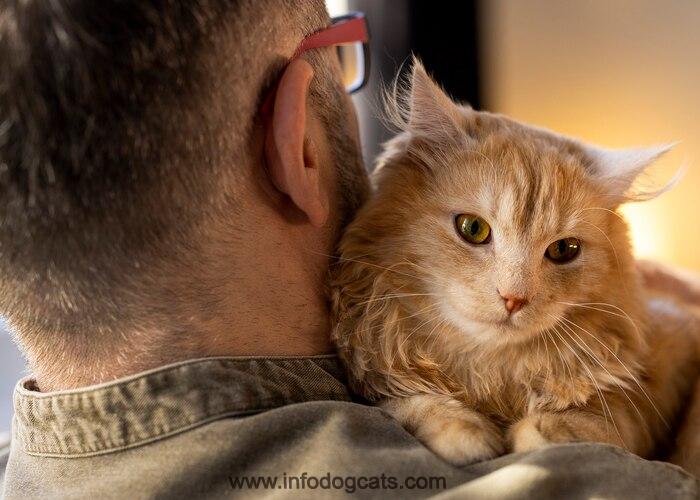
Living with a Maine Coon in Australia
Coping with Australian heat
The coat that suited New England winters needs some management in an Australian summer. Maine Coons adapt well across the country, from the tropical north to Tasmania, but heat stress is a real risk on very hot days. Keep them indoors in the hottest part of the day, ideally with air conditioning or a fan-cooled room. Make sure fresh water is always available, and give them cool places to lie, such as tiled floors or a cooling mat. Regular brushing removes the dense undercoat and helps air move through the coat. If your cat pants, seems restless or is unusually flat on a hot day, call your vet.
Indoors, catios and local rules
A Maine Coon has the same hunting instinct as any other cat, so keeping it contained protects native wildlife as well as the cat. Many Australian owners keep them indoors with access to a secure outdoor enclosure. A catio gives them fresh air and something to watch without the risks of roaming. Our guide to cat enclosures and catios covers the options.
Check your council's rules as well. Microchipping and registration are required in most states and territories. Several jurisdictions, including WA, SA, the ACT and Tasmania, also require pet cats to be desexed, and a growing number of councils have curfews or containment rules. See our overview of cat laws in Australia for more.
Space and furniture
A Maine Coon can live happily in an apartment, but it needs vertical space and sturdy furniture. A cat tree built for a 4 kg cat will wobble or tip under a large male, so look for a heavy base, wide platforms and thick posts. Wall shelves, window perches and a tall scratching post all help. Because of their length, they need a scratching post tall enough to stretch out fully. See choosing a scratching post for what to look for.
Advertisement
Plan for bigger everything: an extra-large litter tray, a bigger carrier, and a bed they can actually stretch out in.
Grooming
For a long-haired breed, the Maine Coon's coat is fairly easy to look after. Its silky texture tangles less than some other long coats, but it still needs regular attention:
- Brush two to three times a week with a wide-toothed comb, then a slicker brush or grooming rake to lift loose undercoat. Brush more often when they moult in spring and autumn.
- Check the problem areas: the ruff, armpits, belly and britches mat first. Small knots are easy to tease out. Large mats may need a groomer or vet.
- Trim nails every few weeks, and keep the fur between the toes tidy if it collects litter.
- Wipe ears when they look dirty, and check them for wax or a smell.
- Bath only when needed. Many Maine Coons tolerate water better than most cats, but a healthy coat rarely needs washing.
Start handling paws, ears and the brush while your cat is a kitten, and keep sessions short and positive. A cat that is used to grooming from an early age is far easier to manage as a large adult. Regular brushing also cuts down on hairballs and on the fur on your floors.
Feeding a large, slow-growing cat
Maine Coons grow slowly and may not reach full size until they are three to five years old. That means a long growth phase that needs good nutrition. Choose a complete and balanced diet with plenty of animal protein. Many owners feed a mix of wet and dry food so the cat gets extra water along with its meals. Some brands make breed-specific or large-breed formulas, such as Royal Canin's Maine Coon Kitten range, but a good-quality complete food suited to your cat's life stage works too.
Big cats are easy to overfeed. Weigh portions instead of guessing, follow the feeding guide on the pack as a starting point, and ask your vet whether your cat is at a healthy weight. A Maine Coon should feel solid and muscular, and you should be able to feel its ribs under a thin layer of fat. Extra weight puts strain on joints that already carry a large frame. For more on kitten nutrition, see our guide to the best wet food for Maine Coon kittens.
Health and lifespan
Maine Coons are generally robust and typically live 12 to 15 years. Some live longer with good care. Like most pedigree breeds, they have a few inherited conditions that responsible breeders screen for.
Conditions to ask the breeder about
- Hypertrophic cardiomyopathy (HCM): a disease in which the heart muscle thickens. It is the most important condition in the breed. A DNA test covers one known Maine Coon mutation. Breeders can also have breeding cats checked by heart ultrasound, because a clear DNA result does not rule out HCM completely.
- Spinal muscular atrophy (SMA): an inherited condition that causes muscle weakness in the hind legs. A DNA test is available, so two tested parents should never produce an affected kitten.
- Hip dysplasia: an abnormal hip joint that can lead to arthritis. It is more noticeable in a large, heavy breed. Keeping your cat lean reduces the strain.
Ask to see the parents' test results, not only a verbal assurance.
Everyday prevention
Most of what keeps a Maine Coon healthy is ordinary good care: an annual vet check (twice a year for seniors), vaccinations, parasite control, a healthy weight, and attention to dental health. Dental disease is common in cats and easy to overlook. Brushing with a cat toothpaste or using dental products your vet recommends helps. Learn the early signs that a cat is unwell, because cats hide pain well. Pet insurance is worth considering while your cat is young and has no pre-existing conditions.
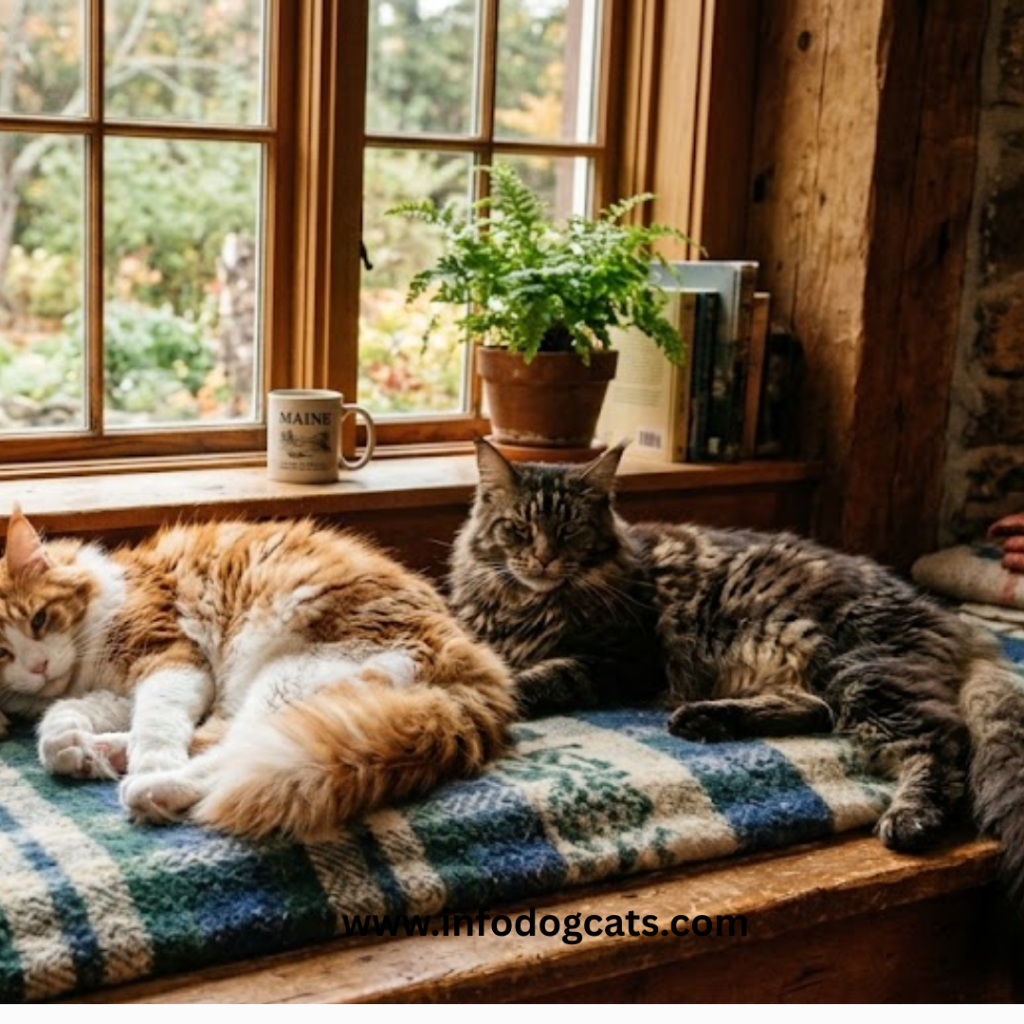
Pros and cons of owning a Maine Coon
| Pros | Cons |
|---|---|
| Friendly, sociable and usually good with children and other pets | The coat needs brushing several times a week, and they shed |
| Playful and clever, so easy to engage and train | Bored or lonely Maine Coons can become mischievous |
| Affectionate without being demanding | They don't like being left alone for long periods |
| Quiet voice: chirps and trills rather than loud meowing | Big cats need big trees, trays, carriers and food portions |
| Adapts to apartments, houses, indoor life and catios | Heat needs managing in Australian summers |
| Long-lived with good care | Inherited conditions mean you must buy from a breeder who health-tests |
| A higher purchase price than many breeds |
Buying a Maine Coon kitten in Australia
Finding a registered breeder
Start with a breeder registered with a recognised cat council. Australia has several, including the member bodies of the Australian Cat Federation (ACF) and the Coordinating Cat Council of Australia (CCCA). The councils can point you to registered Maine Coon catteries, and cat shows are a good place to meet breeders and see adult cats in person. Good breeders often have waiting lists. That is normal, and it is a good sign.
In Victoria, anyone advertising a kitten for sale must include a source number from the Pet Exchange Register. Other states have their own identification and microchipping rules, so check what applies where you live. Our Maine Coon kittens for sale page has more on finding kittens.
Because importing a cat into Australia involves strict federal conditions and quarantine, most Maine Coons here come from established local lines.
Questions to ask
- Can I meet the mother (and the father, if he lives on site) and see where the kittens are raised?
- What health testing have the parents had for HCM, SMA and hips? Can I see the results?
- Which cat council are you registered with, and will the kitten come with pedigree papers?
- Will the kitten be vaccinated, microchipped and desexed (or sold with a desexing agreement) before going home?
- Do you offer a health guarantee, and will you take the cat back if my circumstances change?
A good breeder will also ask you plenty of questions. They want to know where their kittens are going.
Red flags
Be wary of ads for "half Maine Coon" or "Maine Coon cross" kittens with no papers. They are often just large or long-haired domestic kittens advertised under a popular name. Other warning signs include a seller who won't let you visit, kittens always available, pressure to pay a deposit quickly, kittens going home before about 12 weeks, and no paperwork for health tests or registration.
What it costs
A pedigree Maine Coon from a registered breeder costs considerably more than a domestic kitten. The price reflects the parents' health testing, registration, vaccinations, microchipping and desexing. Show and breeding cats cost more again. Prices vary between breeders and states, so compare several registered catteries rather than relying on one figure.
The bigger cost is ongoing: good-quality food for a large cat, litter, a sturdy cat tree, grooming tools, annual vet care and, ideally, pet insurance. Budget for these before you commit.
Adopting instead
Pedigree cats sometimes end up in rescue, and breeders occasionally rehome retired adults. Breed clubs, rescue groups and shelters are worth contacting if you would like an adult Maine Coon whose personality is already known.
Frequently asked questions
Are Maine Coons legal in Australia?
Yes. Maine Coons are a domestic breed and are legal in every state and territory. They are not a restricted or hybrid breed. The usual local rules apply, such as microchipping, registration and, in some areas, desexing and containment. See our list of cats allowed in Australia.
How big do Maine Coons get?
Most males weigh 6–8 kg and most females 4–6 kg, though some males grow larger. Many adults measure around a metre from nose to tail tip. They keep growing until they are three to five years old.
Are Maine Coons hypoallergenic?
No. No cat breed is truly hypoallergenic, and a long coat can hold more allergen-carrying dander around the house. If you have allergies, spend time with adult Maine Coons before committing.
Can a Maine Coon live in an apartment?
Yes, as long as it has sturdy vertical space, daily play and company. They adapt well to apartment life but don't do well when left alone and bored for long periods.
Do Maine Coons like water?
Many do. Pawing at water bowls, playing with taps and joining people in the bathroom are common Maine Coon habits, although individual cats vary.
How long do Maine Coons live?
Typically 12 to 15 years, and sometimes longer. Buying from a breeder who health-tests, keeping your cat at a healthy weight, and regular vet checks all help.
Advertisement