
How to choose and feed wet food for a Maine Coon kitten in Australia: reading the label, protein and hydration, how often to feed, safe food swaps, and when to move to adult food.
Maine Coon kittens grow quickly in their first year and keep growing for several years after that. What you feed them during that time supports their muscles, joints, coat and long-term health. Wet food is a good base for most kittens. It is easy to eat, appealing to fussy eaters, and it adds water to the diet, which cats are not good at getting from a bowl.
Advertisement
This guide covers what a Maine Coon kitten needs, how to read a pet food label in Australia, how much and how often to feed, and a few foods worth looking at in Australian shops.
What a Maine Coon kitten needs
Maine Coon kittens have the same basic nutritional needs as any kitten. They just need them for longer, and in larger amounts as they grow.
- Animal protein. Cats are obligate carnivores. They need protein from meat or fish to build muscle and fuel growth, and their bodies rely on nutrients found in animal tissue, such as the amino acid taurine. A named meat or fish should be at or near the top of the ingredient list.
- Fat and fatty acids. Fat is a concentrated energy source for a growing kitten, and omega-3 and omega-6 fatty acids support skin and coat health. Some kitten foods add DHA, a fatty acid involved in brain and eye development.
- The right minerals in the right balance. Calcium and phosphorus need to be balanced for healthy bone growth. A food formulated for growth gets this right. Adding calcium supplements or extra meat on top of a complete food can upset the balance, so don't add supplements unless your vet recommends them.
- Water. Cats evolved to get most of their water from their prey and often drink little. Wet food is roughly three-quarters water, while dry food is only around a tenth, so a diet based on wet food helps keep a kitten hydrated.
Maine Coons are a slow-maturing breed and may not be fully grown until three to five years old. Our guide to how big Maine Coons get explains the growth timeline.
Reading the label in Australia
Pet food in Australia is made and labelled under the Australian Standard for the manufacturing and marketing of pet food, AS 5812. The most important thing to check on any food you plan to use as your kitten's main diet is the nutritional statement.
"Complete and balanced" versus "complementary"
A food labelled complete and balanced contains everything a cat needs for the life stage stated on the pack. For a kitten, look for wording such as "for growth", "for kittens" or "for all life stages".
A complementary food, sometimes labelled as a treat or "to be fed with a complete diet", is not nutritionally complete on its own. Many premium-looking wet foods, especially simple meat-and-broth recipes, fall into this category. They are fine as a topper or treat, but they shouldn't make up most of the diet.
The ingredient list
Ingredients are listed in descending order by weight. A named animal protein, such as chicken, beef, lamb, tuna or salmon, should come first or close to it. "Meat and meat by-products" is less specific, but by-products such as organ meat aren't automatically poor-quality ingredients for a cat.
The guaranteed analysis
The guaranteed analysis shows minimum protein and fat and maximum fibre and moisture. Because wet food is mostly water, its protein percentage looks low next to dry food. To compare a wet food with a dry one, you need to convert both to a dry matter basis, or simply compare foods of the same type.
Words that don't mean much
"Gourmet", "premium", "natural" and "holistic" are marketing terms. The nutritional statement and ingredient list tell you far more than the front of the pack.
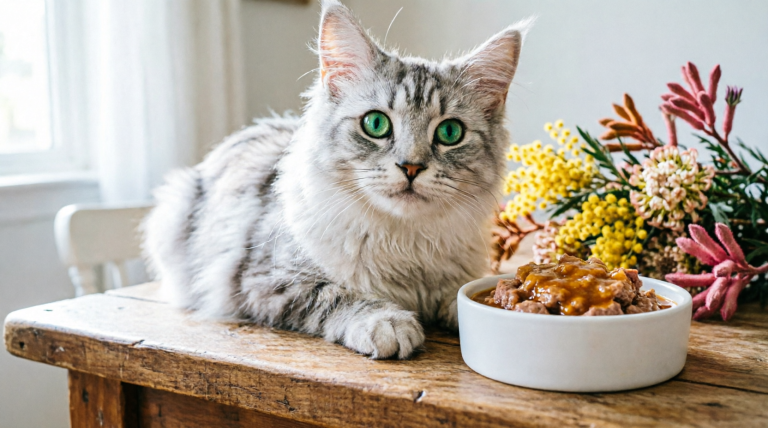
Do Maine Coons need breed-specific food?
No. A Maine Coon kitten will do well on any good-quality complete and balanced kitten food. Breed-specific ranges exist, including Royal Canin's Maine Coon Kitten food, and some owners like them for the kibble size or formulation. They aren't essential. What matters most is a complete diet for growth, fed in the right amount.
Wet food options available in Australia
You'll find these at Petbarn, Petstock, vet clinics, independent pet stores and, for some brands, supermarkets. Check that the specific product you buy is labelled complete and balanced for kittens or all life stages.
- Royal Canin: kitten and Maine Coon-specific ranges, sold through pet stores and vet clinics.
- Hill's Science Diet and Purina Pro Plan: vet-backed brands with kitten wet foods.
- Advance: a long-established brand in Australian pet stores and vet clinics, with a kitten range.
- Fussy Cat: an Australian brand. Its Grain Free kitten wet food (kitten mince) is sold in packs of pouches.
- Feline Natural: a New Zealand brand with grain-free canned recipes, such as Chicken Feast. Check the life-stage statement on the product you choose.
- Whiskas and other supermarket brands: budget kitten pouches that are complete and balanced. See our Whiskas cat food review.
For a wider comparison of brands, see our guides to the best wet cat food in Australia and the best cat food brands available in Australia.
Wet, dry or both?
Many Maine Coon owners feed a mix: wet food for hydration and palatability, and some dry food for convenience. That works well, as long as both foods are complete and balanced and you count both towards the daily total. If you feed half wet and half dry, roughly halve the recommended amount of each.
Dry food is often said to clean teeth, but most ordinary kibble does little for dental health. If teeth are a concern, ask your vet about dental diets or tooth brushing rather than relying on kibble.
Grain-free or not?
Most cats digest small amounts of grains without trouble, and there's no evidence that grain-free food is better for healthy kittens. Grain-free recipes often swap grains for potato or legumes. That isn't a problem, but it isn't an upgrade either. Choose a food for its protein sources and its complete-and-balanced statement, not for the grain-free label. Limited-ingredient diets are useful when a vet suspects a food allergy.
Advertisement
How much and how often to feed
Kittens have small stomachs and high energy needs, so feed little and often:
- Up to about six months: three to four meals a day.
- Six to twelve months: two to three meals a day.
- Adults: usually two meals a day.
Start with the feeding guide on the pack, which is based on your kitten's weight and age, then adjust. A growing Maine Coon should look lean and muscular. You should be able to feel its ribs easily but not see them. Weigh your kitten regularly, every week or two, so you can spot it gaining too fast or too slowly. Your vet can check body condition at vaccination visits.
Remove uneaten wet food after about 30 minutes, and sooner on hot days, because it spoils quickly at room temperature. Always have fresh water available. Many Maine Coons love moving water, so a pet fountain is worth trying.
Changing foods safely
Sudden diet changes often cause tummy upsets. When you bring a kitten home, keep feeding what the breeder fed for at least the first week or two, then change gradually over about seven to ten days:
1. Mix about a quarter new food with three-quarters old food for a few days.
2. Move to half and half for a few days.
3. Then three-quarters new food, then all new.
Watch the litter tray. Soft stools for a day are common. Ongoing diarrhoea, vomiting or a kitten that stops eating needs a call to your vet. If your kitten has a sensitive stomach, our guide to cat food for cats that vomit may help.
Foods to avoid
- Cooked bones, which can splinter and cause serious internal injuries.
- Onion, garlic, chives and leek, including in gravies and leftovers. They are toxic to cats.
- Chocolate, grapes and raisins, alcohol and caffeine.
- Cow's milk. Many cats can't digest lactose and get diarrhoea. Kitten milk replacers are fine.
- Processed and salty meats such as ham, bacon and sausages.
- Raw pork, which can carry parasites.
- Dog food. It doesn't meet a cat's needs for nutrients such as taurine.
Homemade diets are hard to balance for a growing kitten. If you want to cook for your cat, do it with help from a vet. Our homemade cat food recipes guide explains the risks.
When to switch to adult food
Most kittens move to adult food at around 12 months. Because Maine Coons grow for longer, some breeders recommend keeping them on a growth formula a little longer. Ask your breeder what they recommend and check with your vet at the 12-month visit. Make the change gradually, as above, and keep an eye on weight. Once growth slows, it is easy for a large cat to put on fat.
Desexing also reduces a cat's energy needs, so you may need to adjust portions afterwards.
Feeding well on a budget
A big, fast-growing kitten eats a lot, and premium wet food adds up. A few ways to keep costs down without cutting corners:
- Compare the unit price (per 100 g or per kilogram) rather than the pack price. Single pouches often cost far more per gram than multipacks, trays or larger cans.
- Mix a premium food with a cheaper complete one. Both need to be complete and balanced. Your kitten still gets a full diet, and you spread the cost.
- Use some dry food. Complete dry food is cheaper per day than wet food. A mix of wet and dry is a reasonable compromise between cost and hydration.
- Buy in bulk during sales, but only what you'll use before the use-by date, and only once you know your kitten likes the food.
- Join retailer loyalty programs or set up a repeat delivery if you've settled on a food.
Spending a little more on a complete diet now is cheaper than treating problems caused by a poor one later. Cutting quality to save money is the false economy.
Wet food in an Australian summer
Wet food goes off quickly in the heat and attracts flies. On hot days:
- Serve smaller portions and pick up leftovers within 20–30 minutes.
- Feed indoors, out of direct sun, and wash bowls after every meal.
- Don't leave wet food out while you're at work. If your kitten needs food during the day, a complete dry food or a timed feeder with a cooling compartment is safer.
- Put an extra water bowl or a fountain in a cool spot. Hydration matters even more in the heat.
Storing wet food
- Refrigerate opened cans and trays in a covered container, and use them within the time on the label, usually a day or two.
- Many cats dislike food straight from the fridge. Let it come to room temperature, or add a little warm water.
- Keep unopened stock in a cool, dry cupboard, and check use-by dates when buying in bulk.
Frequently asked questions
What is the best wet food for a Maine Coon kitten?
Any good-quality wet food labelled complete and balanced for growth or all life stages, with a named meat or fish near the top of the ingredient list, that your kitten eats well. Breed-specific foods are an option, not a requirement.
How much wet food does a Maine Coon kitten eat?
It depends on age, weight, activity and the food's energy content. Use the pack's feeding guide as a starting point, split it into three or four meals for young kittens, and adjust based on regular weigh-ins and body condition.
Can I feed my Maine Coon kitten only wet food?
Yes, if it is complete and balanced for kittens. An all-wet diet is good for hydration. Some owners add dry food for convenience, which is also fine.
When should a Maine Coon kitten switch to adult food?
Usually around 12 months, sometimes a little later for this slow-growing breed. Ask your breeder and vet.
Should I give my kitten supplements?
Not unless your vet recommends them. A complete and balanced food already contains the vitamins and minerals a kitten needs, and extra calcium in particular can do harm.
Where can I find a Maine Coon kitten?
See our guides to Maine Coon kittens for sale and to the Maine Coon breed.
Advertisement