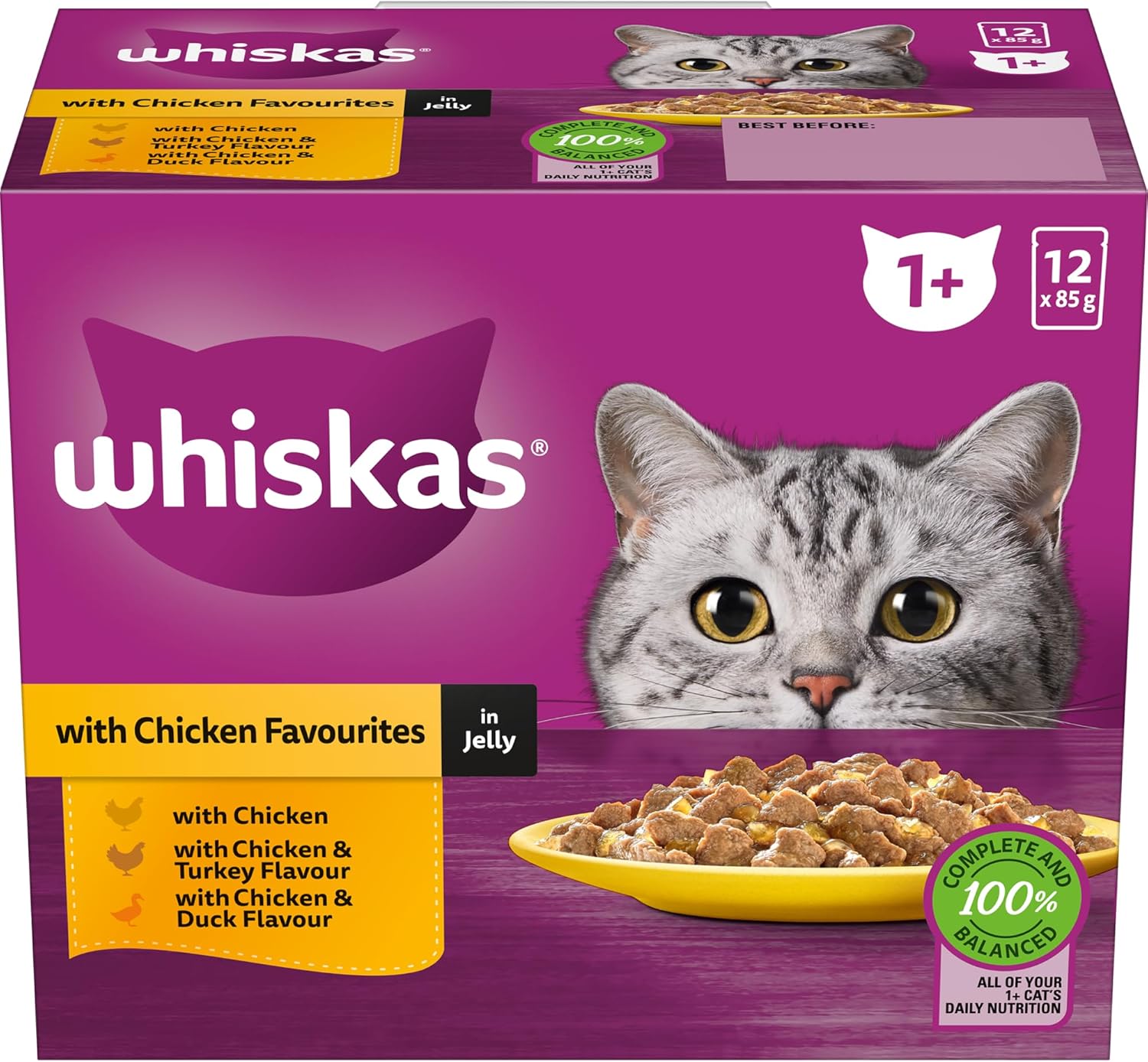
Whiskas is one of the most familiar cat foods on Australian shelves. Here's who makes it and where, what's in the wet and dry ranges, how to read a Whiskas label, how much to feed, the pros and cons, and how to decide whether it suits your cat.
Whiskas is one of the best-known cat food brands in Australia, with its purple packaging in almost every supermarket. Many cats grow up on it, and many owners choose it because it's affordable, easy to find and accepted by fussy cats.
Advertisement
This review looks at who makes Whiskas and where, what's in the wet and dry ranges, how to read the label, how much to feed, the pros and cons, and how to decide whether it suits your cat. This is an independent review. We don't receive any payment from the brand.
Who makes Whiskas?
Whiskas is owned by Mars, the US company that also makes the Advance, Optimum and Dine pet food brands. The brand traces back to Kal Kan, a pet food maker founded near Los Angeles in 1936. Whiskas was launched in the UK in the late 1950s, and Mars bought Kal Kan in 1968. In the US, Kal Kan cat food was renamed Whiskas in the late 1980s to unify the brand internationally.
Made in Australia
Mars Petcare has made pet food at Wodonga, in north-east Victoria, since 1967. In 2023 the company announced a $112.6 million investment in a new facility at Wodonga to make single-serve pouches for its Whiskas, Advance, Optimum and Dine brands, many of which were previously made overseas. Whiskas is also listed as a licensee of the Australian Made logo. Check the packaging of the specific product you buy, as origin can vary between products.
The Whiskas range
Whiskas makes a broad range of cat foods, which changes from time to time. The main types are:
- Wet food in pouches and cans, in jelly, gravy, loaf or terrine textures, in a wide range of flavours.
- Dry food (biscuits), often sold as complete adult foods in several flavours.
- Life-stage products, including kitten food and food for senior cats.
- Treats, such as crunchy-filled treats and meaty sticks.
The packaging usually shows the life stage, such as "kitten", "1+ years" for adults, or "7+ years" for seniors. Choose the food that matches your cat's life stage.
How to read a Whiskas label
The same label checks apply to any cat food.
Complete and balanced, or complementary?
The most important thing to check is whether the food is labelled as complete and balanced for your cat's life stage. A complete and balanced food is designed to provide all the nutrients a cat needs when fed as the main diet. A complementary food, such as most treats and some toppers, isn't designed to be fed on its own.
In Australia, pet food manufacturers that belong to the Pet Food Industry Association of Australia are expected to follow the Australian Standard for pet food, AS 5812, which covers manufacturing and labelling. Look for a clear statement on the pack about the life stage the food is formulated for.
Ingredients
Ingredients are listed in descending order by weight. Wet foods contain a lot of water, so meat-based ingredients often appear high on the list. Dry foods usually include cereals or other carbohydrate sources as well as meat. Ingredient lists alone don't tell you whether a food is nutritionally adequate. The complete and balanced statement matters more.
Guaranteed analysis
The panel lists minimum protein and fat, and maximum fibre and moisture. Because wet food is about 75% water and dry food about 10%, you can't compare wet and dry foods directly from these figures. Compare them on a "dry matter" basis, or ask your vet.
Taurine
Cats need taurine in their diet, and a lack of it causes serious heart and eye disease. Complete and balanced commercial cat foods contain added taurine. It's one reason a home-made diet or a dog food isn't suitable as a cat's main diet. See our guide to homemade cat food.
Wet or dry Whiskas?
Both can be complete and balanced, and many owners feed a mix.
Wet food
- Contains much more water, which helps cats that don't drink much and may benefit urinary health.
- Often more appealing to fussy cats and senior cats with dental problems.
- Usually costs more per day to feed, and opened pouches and cans need to be refrigerated and used promptly.
Dry food
- Cheaper per day and easy to store.
- Convenient for puzzle feeders and timed feeders.
- Easy to overfeed, because it's energy-dense. Measure it carefully.
See our guides to the best wet cat food in Australia and why cats don't drink water.
How much Whiskas to feed
Start with the feeding guide on the pack, which is based on your cat's weight. Then adjust for your cat:
- Combine guides when you mix wet and dry. If you feed half wet and half dry, feed half the recommended amount of each.
- Count treats. Treats should make up no more than about 10% of your cat's daily calories.
- Weigh dry food. Use kitchen scales rather than a cup, which is easy to overfill.
- Watch your cat's body condition. You should be able to feel the ribs easily under a thin layer of fat, and see a waist from above. If your cat is gaining or losing weight, adjust the amount and talk to your vet.
Overweight cats are common in Australia, and obesity raises the risk of diabetes, arthritis and other problems. See our guide to how often to feed your cat for portions and routines.
Whiskas for kittens and seniors
Kittens
Kittens need more energy and nutrients for growth than adult cats, so feed a food labelled complete and balanced for kittens or for growth until your kitten is about a year old. Kittens also need more frequent meals. Cornell University's Feline Health Center suggests three meals a day for kittens up to six months old, and two meals a day from six months to a year. Make the change to adult food gradually.
Senior cats
Older cats' needs vary much more than younger cats'. Some gain weight as they slow down, while others lose weight because of dental disease, an overactive thyroid, kidney disease or other illness. Senior formulas can suit healthy older cats, but any unexplained change in weight or appetite in an older cat is a reason to see your vet. Wet food can be easier for cats with sore teeth.
Tips for fussy eaters
Whiskas is popular partly because many fussy cats accept it. If your cat is picky:
Advertisement
- Serve wet food at room temperature, not straight from the fridge. Warmth brings out the smell.
- Try different textures. Some cats prefer jelly, others gravy, loaf or flaked textures.
- Use a shallow, wide bowl, in a quiet spot away from the litter tray.
- Avoid leaving food out all day. Set meal times help your cat come to the bowl hungry.
- Don't keep switching. Constantly offering new foods can teach a cat to hold out for something better.
A sudden loss of appetite is different from fussiness. If a cat that usually eats well stops eating, see your vet.
Comparing Whiskas with other brands
Price and marketing don't always tell you much about quality. The World Small Animal Veterinary Association suggests asking any pet food company questions such as:
- Does the company employ a qualified pet nutritionist?
- Who formulates the foods, and what are their qualifications?
- What quality control measures does the company use?
- Can the company provide the full nutrient analysis of a product, not just the guaranteed analysis?
These questions apply to every brand, budget or premium. Our guide to the best cat food brands in Australia explains them in more detail.
Pros and cons of Whiskas
Pros
- Widely available in supermarkets, so it's easy to buy anywhere in Australia.
- Affordable compared with many premium and veterinary brands.
- Palatable. Many cats, including fussy eaters, readily accept it.
- Complete and balanced options for kittens, adults and seniors.
- Wide range of flavours and textures, which helps with fussy cats.
- Locally made products from the Wodonga factory.
Cons
- Recipes and ingredient lists are less detailed and less specific than some premium brands. If you want to know the exact meat source, check the label of each product.
- Not a therapeutic diet. Cats with kidney disease, urinary problems, food allergies, diabetes or other medical conditions may need a veterinary diet.
- Dry food is easy to overfeed, as with any dry food.
- Some cats get hooked on one flavour or texture, which can make it harder to change diets later. Offering some variety from early in life can help.
Who is Whiskas good for?
Whiskas suits many healthy cats whose owners want an affordable, widely available, complete and balanced food that their cat will eat. It's a reasonable everyday choice.
It may not be the best choice for cats with specific medical needs, or if you prefer a brand with more detailed information about ingredients and sourcing. Our guide to the best cat food brands in Australia compares other options, and our guide to the best dry cat food brands for indoor cats covers dry foods.
If your cat has a health condition, ask your vet what to feed. For example, see our guides to cat food for cats that vomit and low-carb cat food for diabetic cats.
Switching to or from Whiskas
Change your cat's food gradually, over 7 to 10 days, to avoid stomach upsets:
- Days 1–3: about a quarter new food mixed with three-quarters old food.
- Days 4–6: half and half.
- Days 7–9: three-quarters new food.
- Day 10: all new food.
If your cat refuses the new food, slow down. Never let a cat go without eating while you wait for it to accept a new food. A cat that stops eating for more than a day or two can develop a serious liver condition called hepatic lipidosis, especially if it's overweight. See our guide to why your cat won't eat.
Storing Whiskas safely
- Wet food: cover opened cans and refrigerate them, and use them within the time on the label. Throw away wet food left in the bowl for more than a few hours, especially in warm weather.
- Dry food: store it in a cool, dry place, in the original bag inside a sealed container, to keep it fresh and keep pests out.
- Check use-by dates, and don't feed food from damaged or swollen cans or pouches.
- Keep bowls clean. Wash bowls daily.
Frequently asked questions
Is Whiskas good for cats?
Whiskas complete and balanced foods are designed to meet a healthy cat's nutritional needs, and many cats do well on them. Choose the product that matches your cat's life stage, feed the right amount, and see your vet if your cat has a medical condition.
Is Whiskas made in Australia?
Mars Petcare makes pet food in Wodonga, Victoria, and is expanding local production of pouches. Check the packaging of each product for its origin.
Is Whiskas wet or dry food better?
Both can be complete and balanced. Wet food provides more water, and dry food is cheaper and convenient. Many owners feed a mix.
How much Whiskas should I feed my cat?
Start with the feeding guide on the pack for your cat's weight, reduce it if you also feed other foods or treats, and adjust to keep your cat at a healthy body condition.
Can kittens eat Whiskas?
Kittens should eat a food labelled as complete and balanced for kittens or for growth, such as a kitten-specific product, until they're about 12 months old.
Are Whiskas treats good for cats?
Treats are fine in moderation, but most are complementary foods, not complete meals. Keep treats to no more than about 10% of your cat's daily calories, and reduce meals slightly on days you give more treats. Many cats are just as happy with a few pieces of their usual dry food as a reward.
Is it OK to feed my cat only Whiskas dry food?
A complete and balanced dry food can be fed as the only diet, but many vets suggest including some wet food for extra water. Make sure fresh water is always available.
Advertisement