
What Sphynx cats are like to live with, and how to care for one in Australia: bathing and skin care, sun and cold protection, feeding, health screening, and finding a registered breeder.
With big ears, wrinkled skin, lemon-shaped eyes and almost no fur, the Sphynx is one of the most recognisable cats in the world. People who meet one usually remember the personality more than the looks. Sphynx cats are outgoing, affectionate, playful and very attached to their people, and they often get compared to dogs.
Advertisement
Their lack of fur also means they need care most cats don't: regular baths, protection from sun and cold, and more food than you might expect. That matters in Australia, with its strong UV and, in the south, cold winter nights. This guide covers the breed, its care, its health, and how to find a well-bred Sphynx.
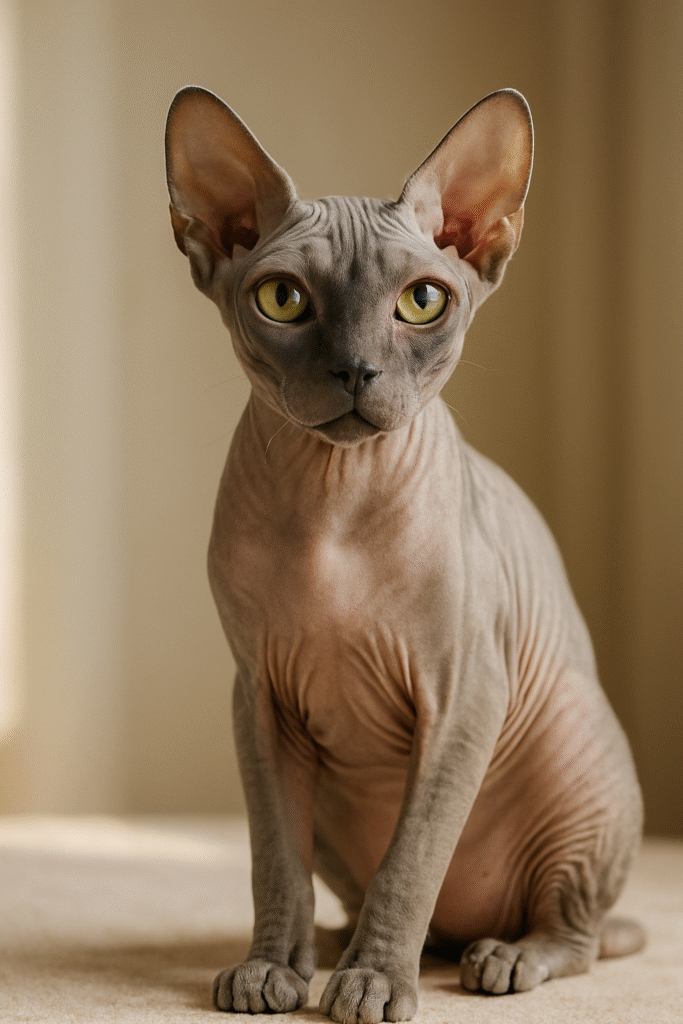
Sphynx at a glance
| Origin | Canada, 1960s, from a natural genetic mutation |
| Size | Medium, muscular, and heavier than it looks |
| Coat | Hairless or covered in fine down that feels like suede or peach skin |
| Colours | Any colour or pattern, visible in the skin pigment |
| Temperament | Affectionate, social, playful, curious, attention-seeking |
| Grooming | Baths every week or two, plus weekly ear and nail care |
| Main health checks | Heart screening for HCM, skin and dental care |
| Allergies | Not hypoallergenic |
| Best home | Indoors, with company for much of the day |
Where the Sphynx comes from
The modern Sphynx began in Toronto in 1966, when a domestic cat had a hairless kitten called Prune. More hairless kittens turned up in North America over the following years, and breeders developed the breed from them. To widen the gene pool and keep the cats healthy, they crossed in Devon Rex cats and domestic shorthairs.
Hairlessness in the Sphynx comes from a recessive mutation in a gene called KRT71, the same gene behind the Devon Rex's curly coat. Because the trait is recessive, a kitten needs a copy of the mutation from each parent to be hairless. Other hairless breeds, such as the Russian Donskoy and Peterbald, are hairless because of different mutations.
Hairless cats have been reported in various places throughout history, but the Sphynx as a breed is only a few decades old. It is now recognised by the major cat registries and shown at cat shows around Australia.
What a Sphynx is like
Appearance
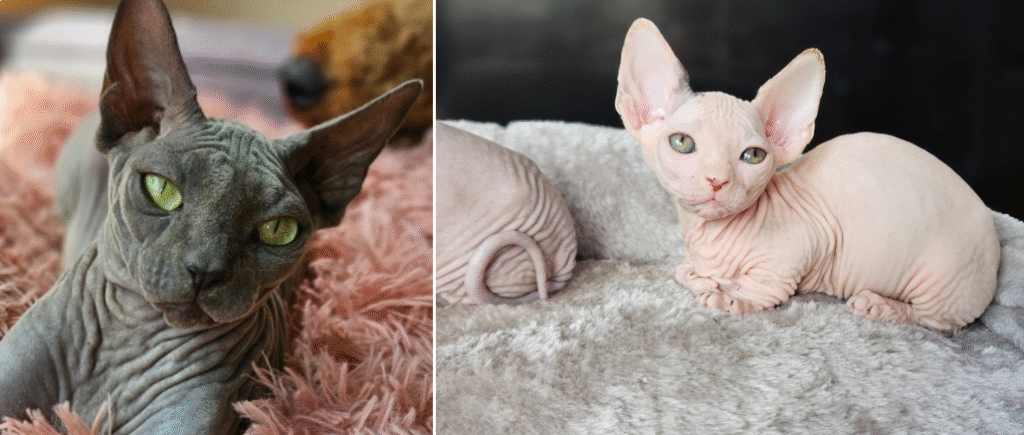
"Hairless" isn't quite accurate. Most Sphynx cats are covered in a very fine down that feels like warm suede. Some have a little short hair on the nose, the backs of the ears, the feet or the tip of the tail. The skin is often wrinkled, especially around the head, shoulders and legs, and kittens are more wrinkled than adults.
The body is medium-sized, muscular and solid, with a rounded belly, long legs and a long, whip-like tail. The head has prominent cheekbones, very large upright ears and big lemon-shaped eyes. Without fur, any colour or pattern, from black and white to tabby and tortoiseshell, shows in the skin itself.
A Sphynx also feels warm to the touch. Its body temperature is about the same as any cat's, but with no fur in the way, you feel the heat directly. See why Sphynx cats feel so warm.
Personality
Sphynx cats are among the most people-focused breeds. Typically they:
- follow their owners from room to room and want to be involved in everything
- greet visitors rather than hide from them
- seek out laps, shoulders and the warm spot under your doona
- stay playful and curious well into adulthood
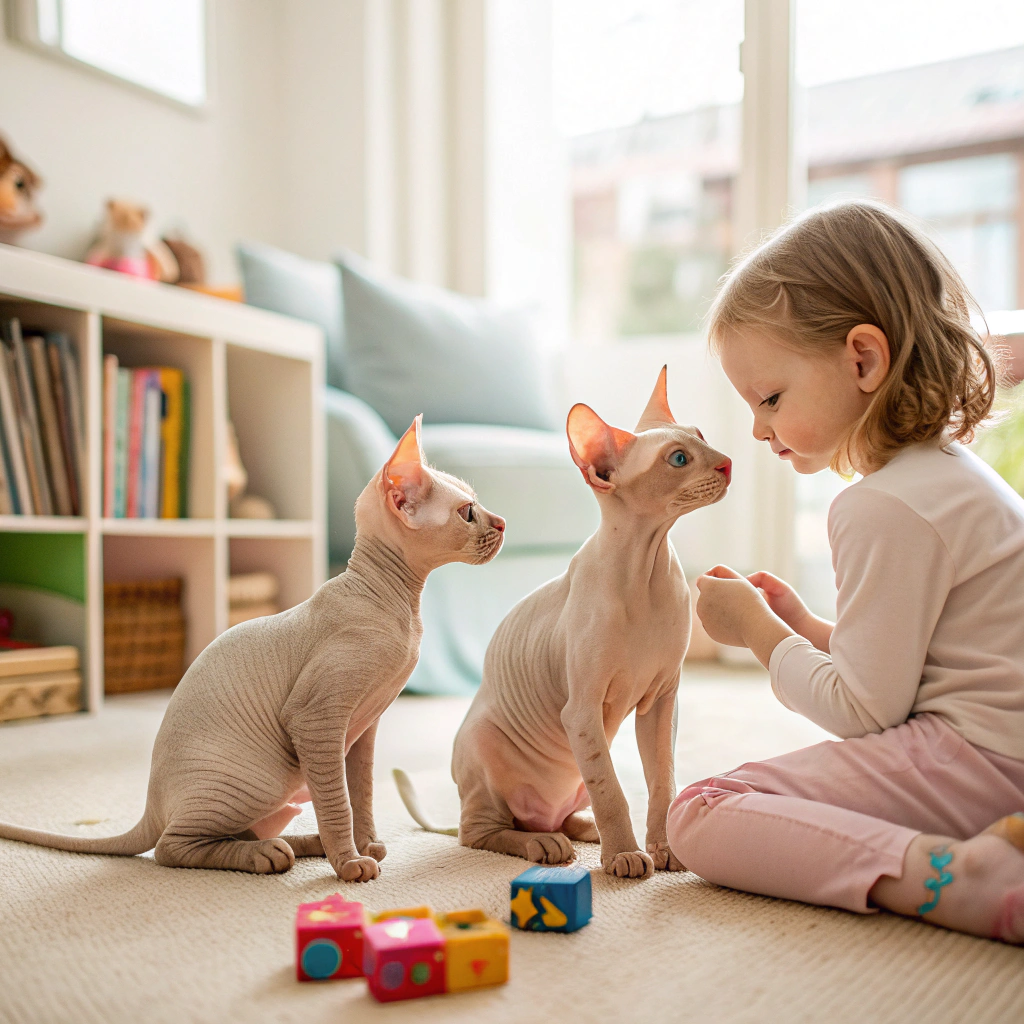
- get along well with children, other cats and dogs when introduced properly.
They are also clever and quick to learn. Many learn tricks, play fetch and walk on a harness with reward-based training. Expect plenty of chat as well; our article on why Sphynx cats are so vocal covers that.
That sociability has a downside. Sphynx cats don't cope well with being left alone for long hours. If everyone in the house works full-time away from home, a second cat, ideally another Sphynx or a similarly sociable breed, is often recommended.
What are Sphynx cats used for?
Nothing in particular. They are companion cats, bred for temperament and appearance rather than for any working role. Their striking look has made them popular in film, advertising and on social media. A Sphynx played Dr Evil's cat, Mr Bigglesworth, in the Austin Powers films. At home, though, their job is simply being an extremely affectionate pet.
Skin care and bathing
This is the biggest difference between a Sphynx and a coated cat.
Why they need baths
A cat's skin produces oil, which is normally spread along and absorbed by the fur. On a Sphynx it stays on the skin. Left alone, it builds up into a greasy film that can mark furniture and bedding, attract dirt, and contribute to blackheads and skin irritation. Our article on why hairless cats need baths explains more.
Most Sphynx cats need a bath every week or two. Some need more, some less. You'll learn your cat's rhythm by how its skin feels.
A simple bath routine
1. Fill a sink or tub with a few centimetres of lukewarm water before you bring your cat in.
2. Use a mild shampoo made for cats. Your vet can recommend one for sensitive skin. Avoid human products.
3. Wet and lather the body gently, keeping water away from the face, eyes and ears. Wipe the face with a damp cloth instead.
4. Rinse thoroughly. Leftover shampoo can irritate the skin.
5. Wrap your cat in a warm towel straight away and keep it in a warm room until completely dry.
Start bathing while your kitten is young, keep it calm and quick, and finish with a treat. Most Sphynx cats learn to tolerate baths, and some even enjoy them.
Ears, nails and skin folds
- Ears: with no hair to keep dirt out, the large ears build up dark wax quickly. Clean the outer ear gently each week with a cat ear cleaner and cotton pads, never cotton buds pushed into the canal.
- Nails: oil and debris collect around the nail beds. Trim nails every couple of weeks and wipe around them during baths.
- Folds and chin: check wrinkles, the chin and the base of the tail for blackheads or redness.
Between baths, a soft cloth dampened with warm water removes excess oil.
Protecting a Sphynx from the Australian sun
Without fur, a Sphynx's skin is exposed to UV, and pale, unpigmented skin burns easily. Sunburn is painful, and repeated sun damage raises the risk of skin cancer, especially on pale ears and noses.
- Keep your Sphynx indoors, particularly in the middle of the day.
- Remember that sun through a window can still burn. Make sure there's shade in favourite sunbathing spots.
- If you have a catio or enclosure, give it a solid roof or shade cloth. See our guide to cat enclosures and catios.
- Don't use human sunscreen. Some ingredients common in human sunscreens, such as zinc oxide, can be toxic to cats if licked off. Ask your vet about a pet-safe product if your cat will be outside.
Advertisement
Keeping a Sphynx warm
The flip side is cold. A Sphynx loses body heat quickly, and in a Melbourne, Canberra or Hobart winter, or anywhere with chilly nights, it will seek out warmth.
- Keep the house comfortably warm and free of draughts. Sphynx cats are happiest at a temperature that suits a lightly dressed person.
- Provide beds with blankets they can burrow into, and covered or cave-style beds.
- Heated pet pads help, but choose one designed for pets that stays at a low temperature, and make sure your cat can move off it. Never put a cat on a human electric blanket or hot water bottle without a cover, as burns are a risk.
- Clothing helps in cool weather. Choose soft, stretchy, breathable fabric, check the fit regularly as kittens grow, and take it off for part of each day so the skin can breathe. See our guide to jumpers and clothes for hairless cats.
In a hot summer the opposite applies. Without fur for insulation, a Sphynx also heats up quickly, so keep it in a cool room with plenty of water on hot days.
Feeding a Sphynx
Sphynx cats use a lot of energy keeping warm, and many eat noticeably more than a coated cat of the same size. Feed a good-quality complete and balanced diet with plenty of animal protein. Many owners split it into two or three meals a day. A mix of wet and dry food works well, and wet food helps with water intake.
That big appetite makes them easy to overfeed, so weigh portions and check body condition. A Sphynx should look muscular, with a slightly rounded belly, not a heavy one. Always have fresh water available. Our guide to the best cat food brands available in Australia compares options.
Health
Sphynx cats from good lines are generally robust, active cats. A few conditions are worth knowing about.
Heart disease (HCM)
Hypertrophic cardiomyopathy, a thickening of the heart muscle, is the most important health issue in the breed. Responsible breeders have their breeding cats screened by heart ultrasound (echocardiography), usually repeated over the cat's breeding life. Ask any breeder about heart screening and to see the results. Your vet will listen for murmurs at routine check-ups.
Skin problems
Without fur, the skin takes the hits. Common issues include oily skin and blackheads, rashes, yeast and other skin infections, and a condition called urticaria pigmentosa, which causes itchy, crusty spots. Regular bathing, gentle products and prompt vet checks for any new rash or sore keep most problems manageable.
Dental disease
Gum disease and dental problems are common in the breed. Start tooth brushing with a cat toothpaste while your kitten is young, and have teeth checked at every annual visit.
Inherited muscle weakness
Sphynx and Devon Rex cats can carry a gene for an inherited muscle weakness, a form of congenital myasthenic syndrome. A DNA test is available, and responsible breeders test for it.
Colds and chills
Young Sphynx kittens in particular can be prone to respiratory infections if they get cold. Keep them warm and see a vet promptly if your kitten has a runny nose, sneezing or reduced appetite. Learn the general signs that a cat is unwell, too.
Are Sphynx cats hypoallergenic?
No. Most cat allergies are caused by a protein, Fel d 1, produced in a cat's saliva and skin glands, not by the fur itself. Sphynx cats produce it like any other cat, and because they're bathed often and leave oily skin residue rather than shed hair, some allergic people react to them just as strongly. Some people with mild allergies find they cope better with a Sphynx, but there's no guarantee. Spend time with Sphynx cats before committing.
Is a Sphynx right for you?
A Sphynx suits you if you:
- are home a lot, or can provide a feline companion
- want a cat that is affectionate, interactive and involved in everything
- are happy to bathe your cat regularly and clean ears and nails weekly
- can keep your cat indoors and warm, with protection from the sun.
It's probably not the right breed if you want a low-maintenance or independent cat, are out for long hours, or have severe cat allergies.
Finding a Sphynx in Australia
Look for a breeder registered with a recognised cat council, such as a member body of the Australian Cat Federation (ACF) or the Coordinating Cat Council of Australia (CCCA). Sphynx breeders are fewer than for some breeds, so waiting lists are common. Use the time to talk to a few breeders and visit if you can.
A good breeder will:
- tell you which council they are registered with, and supply registration papers with the kitten
- show you heart screening results for the parents and any DNA tests
- raise kittens indoors as part of the household, and let them go home at around 12 weeks or older
- send kittens home vaccinated, microchipped and desexed, or with a desexing agreement
- ask about your home and how much time the cat would spend alone.
Be cautious of cheap Sphynx kittens, sellers who won't let you visit or video call, and requests for a deposit before you've confirmed the breeder's registration. Sphynx cats occasionally come up through rescue groups, too. Check your state and council rules on registration, desexing and containment in our overview of cat laws in Australia.
Frequently asked questions
Do Sphynx cats get cold?
Yes. They lose heat quickly and seek out warm spots, blankets and people. Keep your home warm and draught-free, offer cosy beds, and consider a jumper in cool weather.
How often should I bath a Sphynx?
Usually every one to two weeks, adjusted to how oily your cat's skin gets. Clean the ears and around the nails weekly.
Can Sphynx cats go outside?
Not unsupervised. Their skin burns easily in the Australian sun, they get cold, and like all cats they are safer, and safer for wildlife, when contained. A shaded catio is a good compromise.
Do Sphynx cats smell?
Not if they are kept clean. An unbathed Sphynx can develop greasy skin and a musty smell, and dirty ears can smell too. Regular baths and ear cleaning prevent it.
Are Sphynx cats good with children and other pets?
Generally, yes. They're sociable and tolerant, and they usually enjoy company. As with any cat, introduce them gradually and teach children to handle them gently.
Why do people say Sphynx cats look strange?
Mostly because they look so different from the furry cats we're used to. Read more in why Sphynx cats look so unusual.
Advertisement