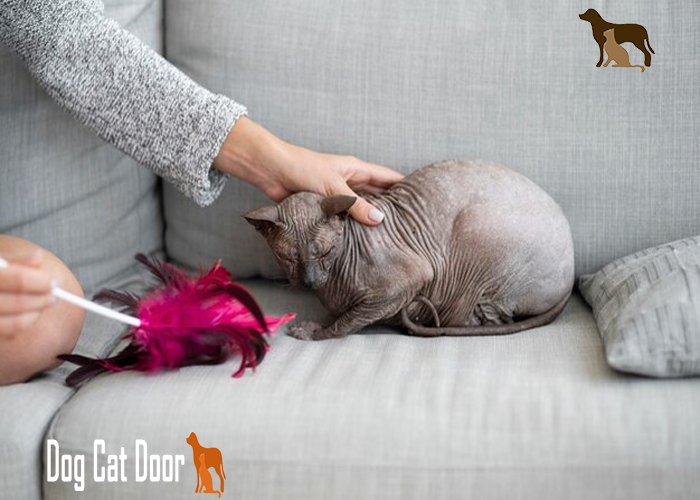
Hairless cats feel the cold, and a well-fitted jumper helps on cool days and in air-conditioned rooms. Here's when a Sphynx needs clothes, which fabrics and styles work, how to measure, how to get your cat used to wearing them, and how often to wash them.
A cat with fur carries its own insulation everywhere it goes. A Sphynx doesn't. Without a coat, a hairless cat loses heat quickly through its skin, so a cool winter night in Melbourne or Canberra, a draughty hallway or a room with the air conditioning running can leave it cold.
Advertisement
That's why many Sphynx owners keep a few jumpers in the cupboard. Clothes aren't essential for every hairless cat all the time, but on the right days a soft, well-fitted jumper makes a real difference to the cat's comfort. This article covers when hairless cats need clothes, which fabrics and styles work, how to measure for a good fit, how to get a cat used to wearing them, and how to keep them clean.
Which cats need clothes?
Clothes are mainly for cats with little or no fur:
- Sphynx, the best-known hairless breed.
- Donskoy and Peterbald, the Russian hairless breeds.
- Bambino and Elf cats, which are Sphynx crosses.
- Devon Rex and Cornish Rex cats, whose thin, curly coats give much less insulation than a normal coat, can benefit on cold days too.
Some furred cats also benefit from a jumper now and then. Very old or thin cats lose heat more easily, and cats that have been shaved for surgery or a medical problem may feel the cold while the fur grows back. After surgery, your vet may suggest a recovery suit instead of a cone. It covers the wound and stops the cat licking it.
A healthy cat with a normal coat doesn't need clothes. Dressing one up can make it overheat, and many furred cats find clothing stressful. If your furred cat seems cold, a warm bed in a draught-free spot is a better answer.
Why hairless cats feel the cold
A cat's normal body temperature is around 38 to 39°C, slightly higher than ours. Fur traps a layer of warm air against the skin. Without it, a Sphynx loses heat to the air around it much faster, which is why their skin feels so warm to touch. The heat you feel is heat they're losing.
To keep up, hairless cats burn more energy. Many eat noticeably more than a furred cat of the same size, and they go looking for warmth: sunny windows, laptops, heater vents and the space under your doona. Our article on why Sphynx cats feel so warm explains this in more detail.
A good rule of thumb: if you're comfortable in a T-shirt, your Sphynx is probably fine without clothes. If you've reached for a jumper, your cat may want one too.
When a jumper helps
- Cool days and nights. Through winter in the southern states, and on cold nights almost anywhere inland.
- Air-conditioned rooms. An air-conditioned house in summer can be colder for a hairless cat than you'd expect.
- After a bath. Hairless cats need regular baths, and they chill quickly while they dry. Towel your cat thoroughly first, then put on a clean, dry jumper. Our article on why hairless cats need baths covers how often and how.
- Trips to the vet or cattery. Cars, waiting rooms and cages can be cooler than home.
- Older and unwell cats. Elderly cats, cats with arthritis and cats that are recovering from illness often appreciate the extra warmth.
When to leave the jumper off
- Warm days. Once the room is warm, take the clothes off. Hairless cats can overheat too.
- Overnight, unsupervised, at first. Until you know a jumper fits well and your cat is relaxed in it, don't leave it on while you're out or asleep. A loose jumper can snag on furniture or get twisted.
- If your cat is stressed. A cat that freezes, flattens itself to the floor, hides or keeps trying to pull the jumper off isn't comfortable. Take it off and try again later with more gradual training, or rely on warm bedding instead.
Watch for signs of overheating: restlessness, flushed or very hot skin, rapid breathing and lying stretched out on cool floors. Open-mouth breathing or panting in a cat is an emergency, so take the clothes off, move the cat somewhere cool and call your vet.
Choosing the right fabric
Bare skin is sensitive. It can be scratched by rough fabric, rubbed raw by seams and irritated by dyes or detergents. Good fabrics for hairless cats are soft, stretchy and breathable.
| Fabric | Good for | Watch out for |
|---|---|---|
| Cotton and cotton-elastane knits | Everyday wear, most of the year | Can stretch out of shape after many washes |
| Ribbed knits | Close, snug fit that moves with the cat | Check the cuffs aren't tight |
| Bamboo viscose | Very soft and breathable, good for sensitive skin | Usually thinner, so less warm |
| Fleece | Cold days and nights, cats that feel the cold most | Can be too warm indoors, and builds static |
| Coarse wool | Not recommended | Scratchy on bare skin |
Whatever the fabric, look for flat seams, soft cuffs, and no tags, buttons, zips, sequins, pompoms or bows. Anything loose can be chewed off and swallowed, and hard parts press into the skin when the cat lies down.
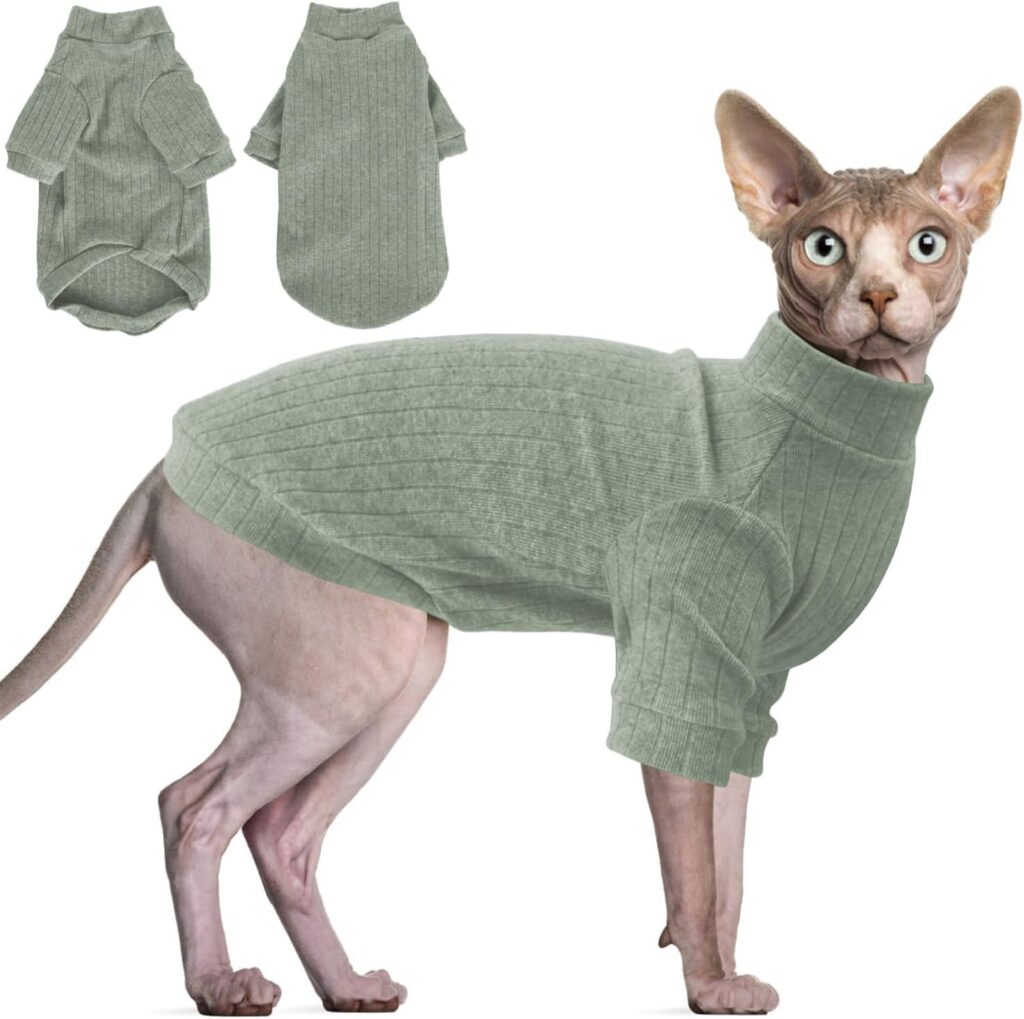
Styles of jumper and what they're for
Short-sleeved jumpers and T-shirts
The everyday option. A short-sleeved top covers the chest, back and belly, where most body heat is lost, but leaves the legs free. Most cats accept short sleeves more easily than long ones.
Turtlenecks
A high neck keeps the throat and the top of the chest warm and stops the jumper sliding back. Choose a soft, stretchy neck that doesn't press against the throat. You should be able to slide two fingers easily under it.
Long-sleeved jumpers
Good for cold nights and older cats. Check that the sleeves don't bunch at the elbows or rub in the armpits, and that the cuffs are loose enough to leave no marks.
Fleece-lined jumpers and vests
For the coldest weather, or for a cat that spends time in a cool room. These are warm, so use them when it's genuinely cold and take them off when the house warms up.
Onesies and full-body suits
These cover the back legs as well, and they work as recovery suits after surgery. They need careful sizing around the back legs and tail, and the opening at the back has to leave plenty of room for the cat to use the litter tray.
Patterns, colours and seasonal jumpers are a matter of taste. The cut and fabric matter much more to the cat than the print.
How to measure your cat
Sizes vary a lot between makers, so measure your cat rather than guessing from its weight. Use a soft tape measure and take three measurements:
- Neck: around the base of the neck, where a collar would sit.
- Chest (girth): around the widest part of the chest, just behind the front legs. This is the most important measurement.
- Back length: from the base of the neck to the base of the tail.
Compare these with the maker's size chart. If your cat falls between sizes, pick the larger one for chest and neck, as long as the back length isn't much too long. A jumper that's too long gets under the back legs and tail.
Advertisement
Checking the fit
Once the jumper is on:
- You should be able to slide two fingers under the neck and the chest band.
- Your cat should be able to walk, jump, lie down, groom and stretch normally.
- The jumper shouldn't ride up over the shoulders or slide sideways.
- The belly opening should be well clear of where your cat urinates.
After the first few wears, check the armpits, the neck and the edges of the sleeves for red marks or rubbing. Hairless skin shows irritation quickly, which makes it easy to spot.
Getting your cat used to wearing clothes
Very few cats accept clothes straight away. Take it slowly, and keep every step positive.
- Let your cat investigate. Leave the jumper near its bed or favourite spot for a day or two so it smells familiar.
- Start with the neck. Slip the neck over your cat's head, give a treat, and take it off again.
- Add the front legs. Gently guide one leg through at a time, then reward. Don't force a leg that's being pulled back.
- Keep the first wears short. A few minutes while you play or offer food is enough at first. Build up gradually over several days.
- Use distraction. A meal, a lick treat or a favourite game takes your cat's mind off the jumper.
- Stay calm. If your cat struggles, take the jumper off and try again another day. Holding a struggling cat while you dress it teaches it to dislike clothes.
Many cats walk strangely, freeze or flop over the first time they wear clothes. That usually passes within a few minutes. If it doesn't, the jumper may be too tight or your cat may need more gradual training.
Some Sphynx cats never accept clothes. That's fine. Warm bedding, blankets and a warm house do the same job.
Keeping clothes clean
Hairless cats produce the same skin oils as other cats, but there's no fur to absorb them. The oil ends up on bedding, furniture and clothing. A jumper that's worn for days builds up oil, dirt and smell, and putting it back on a cat can make skin problems worse.
- Rotate several jumpers. Three or four lets you swap them every couple of days.
- Wash every two to three days of wear, or sooner if a jumper looks greasy or smells.
- Use a fragrance-free, gentle detergent, and skip fabric softener, which can leave residue that irritates the skin.
- Rinse well, then air-dry or tumble-dry on low according to the label.
- Replace worn clothes. Stretched necks, holes and frayed seams can snag claws or rub skin.
Each time you change a jumper, have a quick look at your cat's skin. Oily patches, blackheads (often on the chin and tail), redness or a rash under the clothes all mean the cat needs a bath, a cleaner jumper or a vet check.
Making your own
If you're handy with a sewing machine, simple clothes are easy to make. Old T-shirts, soft cotton knits and the sleeves of an adult's cotton jumper all work. Baby clothes can be adapted too. Australian baby sizes 0000 to 00 often fit an adult Sphynx around the chest, though you'll need to cut a larger opening for the back legs and tail.
Whatever you make:
- Use soft, stretchy fabric.
- Finish every edge so it doesn't fray.
- Keep seams flat, and put them on the outside if they might rub.
- Leave out buttons, zips, snaps and decorations.
- Measure and check the fit as you would for a bought jumper.
Other ways to keep a hairless cat warm
Clothes are only one part of keeping a Sphynx comfortable. Many owners use them alongside:
- Covered or igloo-style beds, which trap warm air around the cat. See cat beds cats actually use.
- Fleece blankets on the couch and in the cat's favourite spots. Hairless cats often burrow under them.
- Self-warming pads, which reflect the cat's own heat back and need no power.
- Heated pet beds and pads made for animals, with low, even heat and a chew-resistant cord. Don't use a human electric blanket or heat pack, which can get hot enough to burn.
- Draught-free rooms, especially overnight.
Hairless cats in the Australian sun
Australia's UV levels are high for much of the year, and bare, pale skin burns quickly, even through a window. A lightweight top gives a little protection, but it isn't enough on its own. Sphynx cats are best kept indoors, with shade available from strong sun through glass, and any outdoor enclosure should have a solid roof or shade cloth. Never put human sunscreen on a cat. Some ingredients are toxic if licked off, so ask your vet if your cat needs a pet-safe product. Our Sphynx care guide for Australian owners covers sun protection, bathing and health in more detail.
Common mistakes
- Guessing the size. Measure the chest, neck and back length every time you buy from a new maker.
- Choosing looks over comfort. Stiff fabric, decorations and tight cuffs make clothes uncomfortable to wear.
- Leaving clothes on all the time. Skin needs time uncovered, and oil builds up under clothing.
- Not washing often enough. A greasy jumper undoes the work of bathing.
- Dressing a warm cat. Clothes on a warm day can do more harm than good.
- Forcing it. A cat that's held down and dressed learns to fear clothes.
Frequently asked questions
Do all Sphynx cats need jumpers?
Not all the time. Most benefit from a jumper on cool days, at night in winter and after baths. In a warm house, many need nothing at all.
What temperature is too cold for a Sphynx?
There's no single number, because cats vary. As a guide, if a room feels cool to you in a T-shirt, it's probably cool for a hairless cat. Watch your cat: shivering, curling up tightly, burrowing under blankets and seeking heaters all suggest it's cold.
Can a Sphynx wear a jumper overnight?
Yes, once you know the jumper fits well and your cat is relaxed in it. Choose a soft, well-fitted top, not a heavy fleece, and check the skin in the morning.
How often should I wash my cat's jumper?
Every two to three days of wear, or sooner if it looks greasy or smells. Rotating several jumpers makes this easier.
Can I use baby clothes for my cat?
Yes, with some changes. Baby clothes in sizes 0000 to 00 often fit around the chest, but you'll usually need to cut and hem a bigger opening at the back and remove any buttons, zips or snaps.
My cat hates clothes. What else can I do?
Keep the house warm, provide covered beds and fleece blankets, and use a pet-safe heated pad or a self-warming pad in its favourite spot. Plenty of hairless cats live comfortably without ever wearing a jumper.
Do Devon Rex and Cornish Rex cats need jumpers?
Sometimes. Their coats are thin and curly, so they feel the cold more than most furred cats. A light jumper can help on cold days, especially for older Rex cats.
Advertisement