
Some people love the Sphynx's look and some find it strange. Here's what's behind it: the gene that causes hairlessness, why they're wrinkled, the big ears and missing whiskers, common myths, and what their looks mean for care.
Few cats divide opinion like the Sphynx. Some people see a hairless cat for the first time and think it looks strange, sick or even a little unsettling. Others think it's the most striking cat they've ever seen. Most Sphynx owners say the look grew on them within days, mostly because of the personality that comes with it.
Advertisement
Whichever camp you're in, there are good reasons the Sphynx looks so different. This article explains where the look comes from, what's going on with the wrinkles, ears and whiskers, some common myths about hairless cats, and what the look means for looking after one.
Why the look surprises people
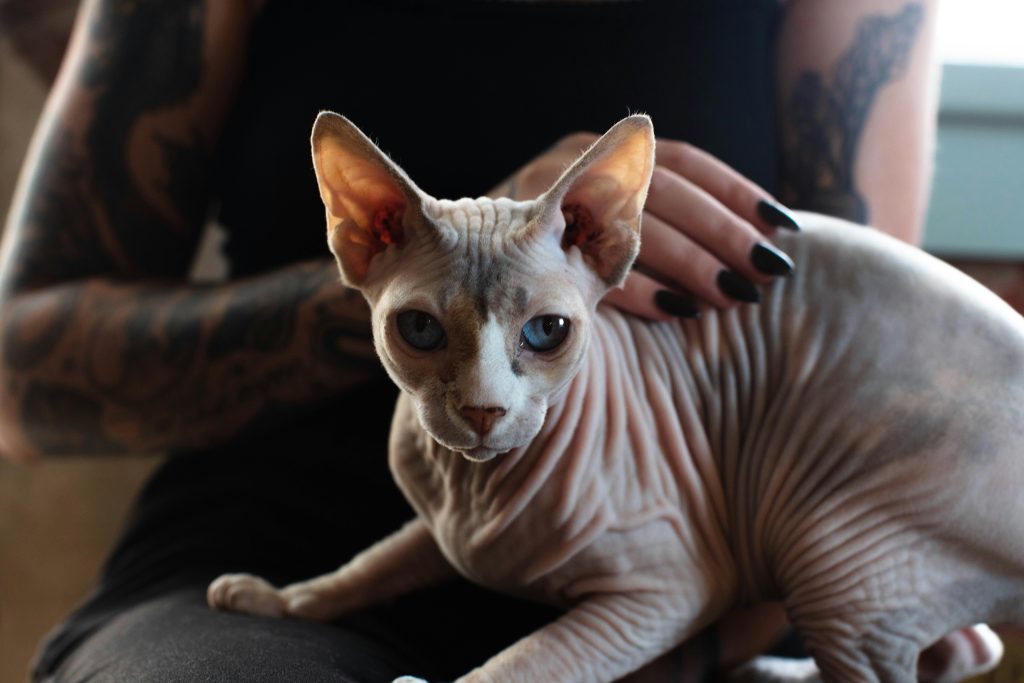
We're used to cats as soft, rounded, furry animals. Fur does a lot of visual work. It hides the shape of the skeleton and muscles, smooths out the outline, softens the face and makes the eyes look smaller in proportion. Take the fur away and you see the cat underneath, and that cat looks quite different from the one we picture.
On a Sphynx you see:
- Skin, with visible wrinkles, folds and colour patches, where you'd expect fur.
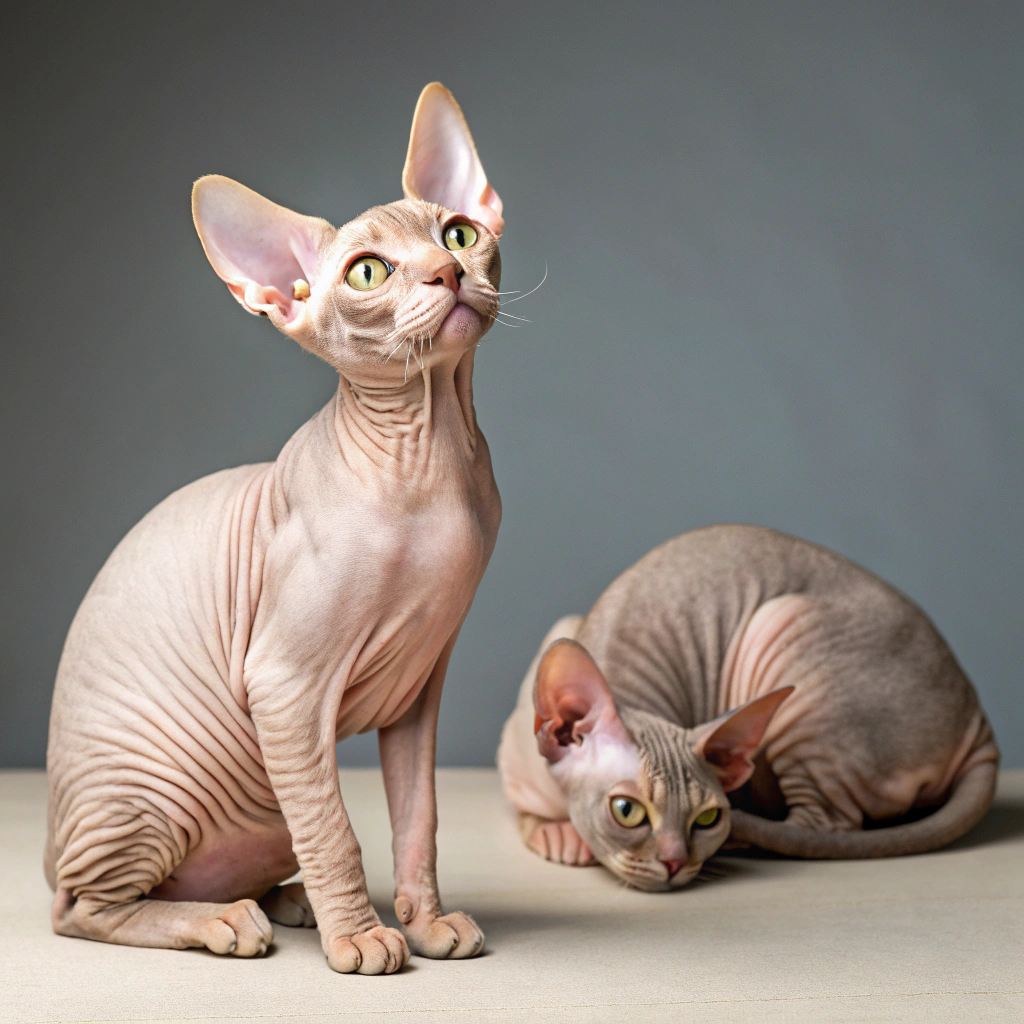
- The full shape of the body: the muscles of the shoulders and legs, the ribcage and a rounded belly.
- Ears that look enormous, because there's no fur around the head to balance them.
- Large eyes and strong cheekbones, with nothing to soften the face.
- A long, thin, whip-like tail instead of a plume.
None of this is unhealthy. It's simply what a cat looks like without its coat, plus a few features that breeders selected because they liked them.
Where the hairlessness comes from
The Sphynx breed started in Toronto, Canada, in 1966, when an ordinary domestic cat gave birth to a hairless kitten. Hairless kittens had turned up before in various places, but this time breeders took an interest. Over the following decades they developed the breed from that kitten and other hairless cats found in North America, crossing in Devon Rex cats and domestic shorthairs to keep the breed healthy.
The hairlessness is caused by a mutation in a gene called KRT71. The gene helps build the structure of hair, and the Sphynx mutation means hair barely forms. The same gene, with a different change, gives the Devon Rex its short, curly coat. The Sphynx mutation is recessive, so a kitten has to inherit it from both parents to be hairless.
Other hairless breeds have their own causes:
- The Donskoy and Peterbald, both developed in Russia, are hairless because of a different, dominant mutation, so only one parent needs to pass it on.
- Bambino and Elf cats are Sphynx crosses with other breeds, such as the short-legged Munchkin or the curled-ear American Curl.
- The Lykoi is only partly hairless, with a patchy coat that gives it a "werewolf" look.
Is a Sphynx completely hairless?
Usually not. Most Sphynx cats have a very fine down over the body that feels like suede or the skin of a peach. Many also have a little short hair on the bridge of the nose, the backs of the ears, the feet or the tip of the tail. The amount can change with age, season and temperature, and a cat may look more or less bald at different times of the year.
Why are Sphynx cats wrinkled?
The wrinkles are partly a breed trait that breeders selected for, and partly just visible. All cats have loose skin, especially around the neck, shoulders and legs, which helps them twist and stretch. On a furred cat, you never see the folds. On a Sphynx, every crease shows.
Kittens are the most wrinkled, and many Sphynx cats smooth out a little as they grow. The deepest folds are usually on the forehead, between the ears, around the shoulders and down the legs. Those folds do need checking during baths, because oil and dirt can collect in them.
Why are their ears so big?
Sphynx ears are genuinely large, wide at the base and upright. Breed standards favour that look. They also look even bigger because there's no fur around the head to frame them. Big, bare ears collect dark wax quickly, which is why Sphynx owners clean them every week.
What about the whiskers?
Many Sphynx cats have short, sparse or broken whiskers, and some have none at all. Whiskers are specialised hairs, and the same mutation that stops body hair forming affects them too.
Whiskers matter to cats. They are sensitive touch organs that help them judge gaps, sense movement nearby and find their way in poor light. Cats without whiskers adapt well indoors, but the issue has drawn attention from animal welfare groups. In Germany, for example, welfare guidance treats breeding cats that lack whiskers as a welfare problem. It's one reason good breeders think carefully about which cats they pair.
Colours and patterns on bare skin
A Sphynx has the same colour genes as any other cat. The pigment is just in the skin instead of the fur. That's why you see black, blue (grey), red, cream, chocolate and lilac Sphynx, as well as tabby stripes, tortoiseshell patches and white markings, all showing directly on the skin. A white Sphynx has pale pink skin, and a black one can look dark grey or charcoal.
Patterns are often clearest on kittens and on cooler parts of the body. Colours can deepen or fade a little with age, temperature and sun exposure. The fine down over the skin also affects the shade, so the same cat can look slightly different from one season to the next. Pale and white areas are the most vulnerable to sunburn, which is one reason Sphynx cats are best kept indoors in Australia.
How the look changes from kitten to adult
Sphynx kittens are at their most extreme: heavily wrinkled, with enormous ears, big eyes and a round pot belly. Many people who find adult Sphynx cats odd-looking find the kittens appealing, perhaps because big eyes and a rounded face read as "baby".
As they grow, Sphynx cats fill out into a muscular, medium-sized cat with a broad chest and a rounded belly. The wrinkles usually soften but stay visible on the head and shoulders, and the ears look a little less oversized once the head grows into them. The fine down can thicken slightly in cooler months, and some cats grow a little hair on the extremities in winter.
Myths about hairless cats
"They must be sick or have mange"
Advertisement
No. A Sphynx is meant to look like this. Its skin should be clean, warm and smooth, without scabs, sores, red patches or a greasy, smelly coating. Those would point to a skin problem, often from not bathing often enough, and need a vet check.
"Their skin feels cold or clammy"
The opposite. Sphynx cats feel very warm, because there's no fur between your hand and their skin. Their body temperature is the same as any cat's. See why Sphynx cats feel so warm. A clean Sphynx feels like warm suede, while an oily one feels slightly sticky, which is a sign it's due for a bath.
"Hairless means hypoallergenic"
Unfortunately not. Most cat allergies are triggered by a protein called Fel d 1, which is produced in saliva and skin glands, not by fur. Sphynx cats produce it too. Some people with mild allergies cope better with a Sphynx, but many allergic people react just as strongly.
"Hairless means low maintenance"
There's no brushing, but there are baths every week or two, weekly ear cleaning, nail care, and protection from cold and sun. A Sphynx is a higher-maintenance cat than most short-haired breeds. Our article on why hairless cats need baths explains why.
"They look aloof, so they must be unfriendly"
Their wide-eyed, sculpted faces can look stern in photos, but the Sphynx is one of the most affectionate breeds there is. They are typically outgoing, cuddly and often talkative, which our article on why Sphynx cats are so vocal covers.
Why so many people end up loving the look
Ask Sphynx owners and a few themes come up again and again:
- Personality first. Most people who live with a Sphynx say they stopped noticing the look within days, because the cat is so engaging. A cat that greets you at the door, sleeps under the covers and follows you around tends to win people over.
- Expressive faces. With no fur, every movement of the brows, ears and eyes shows, so their faces look unusually expressive.
- Variety. Every colour and pattern a cat can have shows in the skin, so no two Sphynx look quite alike.
- Warmth. Holding a warm, velvety Sphynx is a very different experience from looking at a photo of one.
Like any breed's appearance, liking it is a matter of taste. What matters for the cat is that people choose a Sphynx because they want one and can care for one, not because the look is a novelty.
What the look means for care
A Sphynx's appearance comes with real care needs:
- Bathing every week or two to remove the skin oil that fur would normally absorb.
- Ear cleaning every week, and nail care, including wiping oil from around the nail beds.
- Sun protection. Pale, bare skin burns easily in the Australian sun, so Sphynx cats should live indoors with shade available. Never use human sunscreen on a cat.
- Warmth. Draught-free rooms, blankets, cosy beds and, in cool weather, soft clothing. Our guide to jumpers and clothes for hairless cats covers what works.
- More food. Keeping warm without fur takes energy, so many Sphynx cats eat more than you'd expect for their size.
- Health screening, particularly heart screening for hypertrophic cardiomyopathy (HCM) in breeding cats, plus good dental care.
For the full picture, see our Sphynx care guide for Australian owners.
If your furred cat is losing hair
A Sphynx is meant to be hairless. A normally furred cat that develops bald patches is a different matter. Fur loss in a coated cat can come from fleas, allergies, ringworm or other skin infections, hormonal problems, or over-grooming because of stress or pain. Thinning fur, bald patches, scabs or constant licking all deserve a vet visit. See how to tell if your cat is sick for other signs to watch for.
Frequently asked questions
Why are Sphynx cats hairless?
Because of a natural recessive mutation in the KRT71 gene, which stops hair forming properly. Breeders developed the breed from hairless kittens born to ordinary cats in North America from the 1960s.
Are Sphynx cats bald from a disease?
No. Their hairlessness is genetic and normal for the breed. Bald patches on a cat that normally has fur are a different matter and need a vet check.
Do Sphynx cats have whiskers?
Some do, but they're often short, sparse or broken, and some Sphynx cats have none.
Why are Sphynx cats so wrinkly?
All cats have loose skin. On a Sphynx there's no fur to hide the folds, and breeders have favoured a wrinkled look. Kittens are usually more wrinkled than adults.
Can Sphynx cats get sunburnt?
Yes, easily, especially on pale or white skin. In Australia, keep a Sphynx indoors with shade from strong sun through windows, and give any outdoor enclosure a solid roof or shade cloth. Don't use human sunscreen on a cat. Ask your vet if you need a pet-safe product.
Can you get Sphynx cats in Australia?
Yes. The Sphynx is a recognised domestic breed, and registered breeders operate around the country, although there are fewer of them than for the most popular breeds, so waiting lists are common. Look for a breeder registered with a recognised cat council who screens breeding cats' hearts.
Are hairless cats good pets?
For the right home, very much so. They're affectionate, social and playful. They need regular baths, protection from sun and cold, and plenty of company, so they suit people who are home a lot and happy with the extra care.
Advertisement