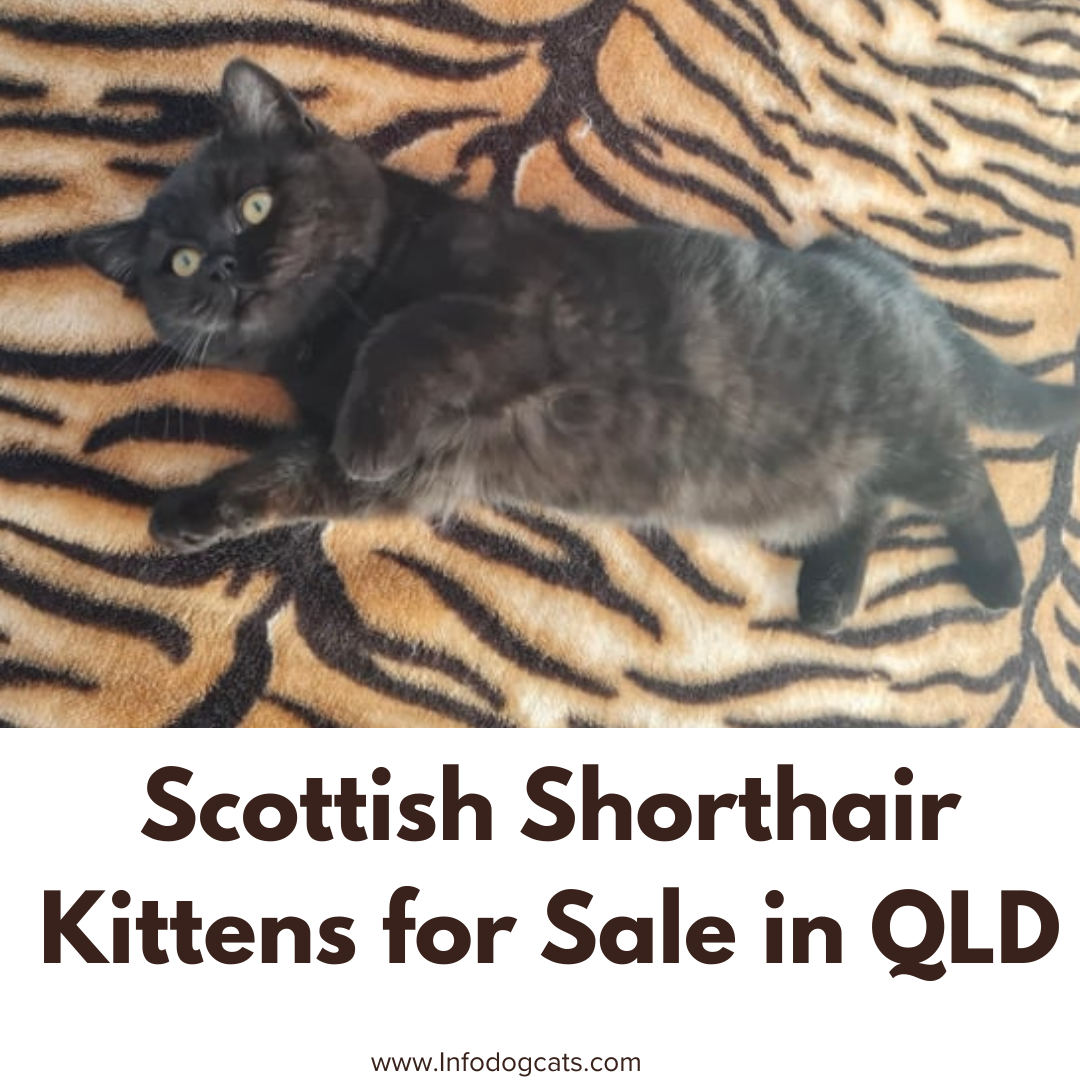
Scottish Shorthairs are the straight-eared cats from Scottish Fold breeding. Here's what that means for health, how to find a registered breeder in Queensland, what Queensland law requires of sellers, the questions to ask, and how to spot a kitten scam.
Scottish Shorthairs are round-faced, solid, easygoing cats with big eyes and a dense, plush coat. They look a lot like the better-known Scottish Fold, but their ears stand up normally. That difference matters more than it might seem, and anyone looking for a Scottish Shorthair kitten should understand it before they start answering advertisements.
Advertisement
This guide explains what a Scottish Shorthair is, its link to the Scottish Fold and what that means for health, how to find a registered breeder in Queensland, what Queensland law requires when cats are sold, the questions to ask, and how to avoid kitten scams.
What is a Scottish Shorthair?
The straight-eared Scottish
The Scottish Shorthair, also called the Scottish Straight in some countries, is the straight-eared cat that comes from Scottish Fold breeding. The Australian Cat Federation's breed standard describes it as the straight-eared progeny of Scottish Fold breeding, with small, pert ears that have rounded tips. The Coordinating Cat Council of Australia's standard says the Scottish Shorthair is the same as the Scottish Fold in every respect apart from the ears, which are erect rather than folded.
In Australia the Scottish Shorthair has been a fully recognised breed since 2002. It's shown and registered as a breed in its own right.
Where the breed comes from
Every Scottish Fold and Scottish Shorthair traces back to Susie, a white barn cat with folded ears found on a farm in Scotland in 1961. A local couple, William and Molly Ross, took one of her kittens, and the breeding program grew from there. Early breeders crossed the Folds with British Shorthairs and other domestic cats, so the breed has a similar round, cobby look to the British Shorthair.
Appearance
- Body. Medium-sized, rounded and solid, with medium-length legs.
- Head. Round, with full cheeks and large, round eyes that give the breed its "sweet" expression.
- Ears. Small, set well apart, upright with rounded tips.
- Coat. Short, dense and soft, standing slightly away from the body. There's also a longhaired version.
- Colours. A wide range, including blue, cream, silver tabbies, bicolours, colourpoints and many more.
Personality
Scottish cats are known for being placid, affectionate and adaptable. Most are people-oriented without being demanding, and they're generally quieter than active breeds like the Siamese. They usually fit in well with families and other pets when introduced slowly. As with any breed, individual personalities vary, and early socialisation by the breeder makes a big difference.
The Scottish Fold connection and why it matters
What causes the folded ear
The folded ear is caused by a single dominant variant of a gene called TRPV4. The same variant affects cartilage throughout the body, not just in the ears. It causes a condition called osteochondrodysplasia, which leads to abnormal bone development and painful arthritis.
According to RSPCA Australia, every cat with folded ears carries the variant and develops the disease to some degree. Australian veterinary researchers showed in the early 1990s that all Scottish Folds develop the condition. Signs include:
- a short, thick, stiff tail
- stiff, short legs and swollen joints
- lameness, an abnormal walk, and reluctance to jump
- in severe cases, a cat so crippled that euthanasia is needed, sometimes at a young age.
Changes can show on X-rays from as early as seven weeks old. Cats with two copies of the variant, which come from mating two Folds, are severely affected. That's why reputable registries forbid mating Fold to Fold.
What about straight-eared cats?
Scottish Shorthair kittens are the straight-eared kittens from litters that include Fold parents. A kitten with straight ears usually hasn't inherited the variant, and studies that have genotyped straight-eared Scottish cats found they didn't carry it. That means a straight-eared Scottish Shorthair doesn't have the Fold bone disease.
There are two things to keep in mind, though:
- Ears can be hard to judge in very young kittens. All Scottish kittens are born with straight ears, and folds usually only appear at about three to four weeks old. A DNA test for the TRPV4 variant removes any doubt. Ask whether your kitten, or both its parents, have tested clear.
- Shorthairs are part of Fold breeding. Because the breed exists through Fold breeding, buying a Scottish Shorthair supports breeding programs that also produce Folds. RSPCA Australia considers it unethical to breed from animals with a genetic mutation known to cause painful deformities and disease, and doesn't support breeding Scottish Folds, including crossing a Fold with a straight-eared cat.
Breeding of affected Scottish Folds is restricted in Victoria under the state's code of practice on breeding animals with heritable defects that cause disease. Several other countries, including the Netherlands and Austria, have banned or restricted breeding them.
If you love the look but are uneasy about the link to Fold breeding, the British Shorthair is a good alternative. It has a very similar round face, plush coat and calm personality, with no Fold ancestry.
Other health checks
Some health problems seen in Scottish cats come from the other breeds in their background:
- Polycystic kidney disease (PKD). An inherited disease in which cysts form in the kidneys and slowly destroy them. A large Japanese study found the common PKD variant was significantly more likely in Persians, Scottish Folds and Exotic Shorthairs than in other breeds. A DNA test is available. Ask whether the parents have tested negative.
- Hypertrophic cardiomyopathy (HCM). A thickening of the heart muscle that affects many breeds. There's no DNA test for HCM in Scottish cats, but some breeders have their breeding cats' hearts checked by ultrasound.
- Blood type. Type B blood is much more common in British-type cats than in most breeds. When a type B mother has kittens with type A blood, antibodies in her first milk can destroy the kittens' red blood cells (neonatal isoerythrolysis). Good breeders know their cats' blood types and plan matings to avoid it.
Where to find Scottish Shorthair kittens in Queensland
Registered breeders
The safest source is a breeder registered with a recognised cat council. In Queensland, breeders register with bodies such as the Queensland Feline Association and other councils affiliated with national organisations like the Australian Cat Federation and the Coordinating Cat Council of Australia. Registered breeders agree to follow their council's rules and code of ethics, and their kittens can be registered and come with pedigree papers.
Contact the cat councils and ask for a list of Scottish breeders. There aren't many, so you may need to join a waiting list or look interstate.
Cat shows
Cat councils run shows in Queensland throughout the year. A show is a good place to see adult Scottish cats, meet several breeders and ask questions. Most breeders don't sell kittens at shows, but many take enquiries.
Rescue and adoption
Scottish and British-type cats occasionally come up through breed rescue, breeders rehoming retired breeding cats, and general shelters. An adult cat's personality is already known, which makes matching easier.
Online advertisements
Advertisement
Many genuine breeders advertise online, but so do backyard breeders and scammers. Use an advertisement as a starting point, then check the breeder's registration and ask the questions below before you pay anything.
What Queensland law requires
Microchipping before sale
Under Queensland's Animal Management (Cats and Dogs) Act 2008, a cat must be microchipped before it's 12 weeks old, and before it's sold or given away. The person selling or giving away the kitten is responsible for having it microchipped, and only an authorised implanter, such as a vet, can insert the chip. A seller who hands over an unchipped kitten isn't following the law.
When you take your kitten home, make sure the microchip registration is transferred into your name, and keep your contact details up to date.
Council rules
Each Queensland council has its own local laws for cats. Depending on where you live, they may include:
- registering your cat with council, usually within a set time of it reaching 12 weeks of age or of moving into the area
- a limit on how many cats you can keep without a permit
- requirements for cats to be contained to your property
- lower fees, or requirements, for desexed cats.
Check your council's website before you bring a kitten home, especially if you already have cats.
Breeder registration
Queensland's breeder registration and supply number system applies to dogs. There's no equivalent state register for cat breeders, so membership of a recognised cat council is the main way to check a breeder. Some councils have their own permit requirements for people who breed cats.
Questions to ask a breeder
Before you commit, ask:
- Which cat council are you registered with, and what's your membership or prefix?
- Are any of your breeding cats Scottish Folds? Do you ever mate Fold to Fold?
- Has this kitten, or both of its parents, been DNA tested for the TRPV4 fold variant?
- Have the parents been DNA tested for PKD? Have they had heart ultrasounds?
- Can I meet the mother, and see where the kittens are raised?
- How are the kittens socialised?
- What vaccinations, worming and flea treatment will the kitten have had?
- Will the kitten be microchipped, and desexed, before it goes home?
- What food is the kitten eating?
- Do you offer a written contract, and will you take the cat back if I can't keep it?
A good breeder will be happy to answer all of these, will ask you plenty of questions too, and will stay in touch after you take your kitten home.
When kittens go home
Kittens shouldn't leave their mother before eight weeks, and most registered breeders keep them until 12 weeks or older. By then, a kitten should be weaned, eating solid food, using a litter tray, and partway through its vaccinations. Many registered breeders desex pet kittens before they leave, or sell them on a contract that requires desexing by a set age.
Your kitten should come with:
- vaccination records and a vet health check
- worming and flea treatment records
- microchip details, with the registration transferred to you
- pedigree papers or registration documents
- a sales contract, and desexing certificate if it has been desexed
- information on what it's being fed.
How to avoid kitten scams
Pet scams are common in Australia, and kittens of popular breeds are a favourite. Typical warning signs are:
- a price well below what registered breeders charge
- a seller who won't let you visit or do a live video call
- pressure to pay a deposit quickly to "hold" the kitten
- payment requested by bank transfer, gift cards or cryptocurrency
- photos that appear in other advertisements (try a reverse image search)
- extra payments demanded later for "transport", "insurance" or a "special crate".
Never pay for a kitten you haven't seen in person or on a live video call. If you're unsure, ask which cat council the breeder belongs to and confirm their registration with that council directly. You can report a scam to the ACCC's Scamwatch.
Preparing for your kitten
Before your kitten comes home, set up a quiet room with a litter tray, food and water, a bed and a scratching post. Book a vet check for the first week. Keep your kitten indoors while it settles in. In the long term, an indoor life with access to a secure enclosure keeps your cat safe and protects wildlife. See our guides to cat enclosures and catios and cat laws in Australia.
If you already have a cat, introduce them slowly. Our guide to warning signs when introducing cats explains what to watch for. For feeding, see our guide to how often to feed your cat, and for toys and climbing, see interactive cat toys and cat scratching posts and cat trees.
Frequently asked questions
Is a Scottish Shorthair the same as a British Shorthair?
No. They look similar, and British Shorthairs were used in early Scottish breeding, but they're separate breeds. A Scottish Shorthair comes from Scottish Fold lines. A British Shorthair has no Fold ancestry.
Do Scottish Shorthairs have the same health problems as Scottish Folds?
A straight-eared cat that doesn't carry the TRPV4 fold variant doesn't have the Fold bone disease. Ask for DNA test results to be sure. Like any breed, Scottish Shorthairs should come from parents tested for other inherited diseases such as PKD.
Can a Scottish Shorthair kitten develop folded ears later?
Folds usually show at about three to four weeks old, so a kitten old enough to go home normally has its final ear type. A DNA test confirms whether it carries the fold variant.
Are Scottish Shorthairs good family cats?
Most are calm, affectionate and tolerant, which suits many families. Teach children to handle the cat gently and give it places to retreat to.
Do Scottish Shorthairs need much grooming?
The dense coat benefits from a weekly brush, and more often during seasonal moults. Longhaired Scottish cats need brushing several times a week.
Can I buy a Scottish Shorthair from another state?
Yes. Many Queenslanders buy from interstate because there are few breeders. Check the breeder's registration and health testing, meet the kitten in person or on a live video call before paying, and ask how the kitten will travel.
Should I adopt instead?
If you don't need a particular breed, adopting a cat from a shelter or rescue group is a great option. Many shelters have calm, round-faced cats that would suit the same homes. Our guide to kittens for adoption in Melbourne covers how adoption works.
Advertisement