Cats do some baffling things, from midnight zoomies to kneading your lap, chattering at birds and knocking your cup off the bench. Here's what's behind the most common strange cat behaviours, and how to tell a quirk from a sign that something's wrong.
Anyone who lives with a cat knows they do some baffling things. They tear around the house at midnight, knead your lap until it hurts, chatter at birds through the window and push your coffee cup off the bench while looking you in the eye.
Advertisement
Most of these behaviours make sense once you remember what cats are: small predators, descended from solitary wildcats, that communicate mainly through body language and scent. This article explains the meaning behind the most common strange cat behaviours, and how to tell a harmless quirk from a sign that something is wrong.
Sudden bursts of energy (the zoomies)
Your cat is asleep, then suddenly races down the hall, bounces off the couch, skids around a corner and stops as if nothing happened. These bursts are often called the zoomies, and they're normal.
Cats are built for short sprints. In the wild, they spend a lot of time resting and then burst into action to chase prey. An indoor cat that has slept most of the day has pent-up energy, and it comes out in a rush. Zoomies are most common in young cats, at dawn and dusk when cats are naturally most active, and after using the litter tray.
The best way to calm the zoomies is to use up that energy on your terms. Two or three short, active play sessions a day with a wand toy, ending with a "catch" and a meal, often help a lot. Our article on stopping Ragdoll zoomies has more ideas that work for any breed, and our guide to interactive cat toys suggests toys that tire cats out.
If an older cat suddenly becomes much more active, restless or vocal, especially at night, have your vet check for an overactive thyroid, which is common in older cats.
Kneading
Kneading, often called "making biscuits", is when a cat pushes its front paws in and out against something soft: a blanket, a cushion or your lap. Many cats purr, dribble or close their eyes while they do it.
Kneading starts in kittenhood. Kittens knead their mother's belly to help the milk flow. Adult cats keep doing it when they feel content and safe, which is why it so often happens on a warm lap. Cats also have scent glands in their paw pads, so kneading leaves their scent behind.
If your cat's claws hurt, put a thick blanket on your lap, and keep its nails trimmed. Don't push your cat away or scold it. It's a sign of affection.
Head-butting and cheek rubbing
When a cat bumps its head against you, or rubs its cheek along your legs, a doorframe or the corner of your laptop, it's leaving its scent. Cats have scent glands on their cheeks, chin and forehead. Rubbing marks people and objects as familiar and part of their group.
A firm head-butt, sometimes called bunting, is one of the friendliest things a cat does. It's usually a greeting, and often a request for attention or food.
Rolling over and showing the belly
A cat that flops onto its back and shows its belly when you walk in is saying hello and telling you it feels safe. The belly protects a cat's vital organs, so exposing it is a sign of trust.
It's often not an invitation for a belly rub, though. Many cats grab, kick and bite if you touch their belly, because their instinct is to protect it. Some cats do enjoy belly rubs, but most prefer a scratch under the chin or around the cheeks. Greet a belly-up cat with a gentle chin scratch instead.
Chattering at birds
Cats often sit at a window making a strange, rapid clicking or chattering sound with their jaw while they watch birds, possums or insects outside. It's a sign of excitement and frustration: the cat can see prey but can't get to it. Some researchers think it may also be an instinctive rehearsal of the bite cats use to catch prey.
Chattering is harmless. A window perch, a bird-safe view and regular play give an indoor cat a good outlet. If your cat paws or scratches at the window, our article on why cats scratch at windows explains what's going on.
Knocking things off tables
Few cat habits are as frustrating as pushing objects off benches and shelves, often while watching you. There are several reasons:
- Hunting instinct. Cats test small objects with their paws to see if they move, much as they would with prey.
- Attention. If knocking your keys off the table makes you jump up, your cat learns it works.
- Boredom. An under-stimulated indoor cat makes its own entertainment.
Clear breakables away, give your cat more play and climbing space, and try not to react dramatically when something falls.
Bringing you "presents"
Cats that hunt sometimes bring their catch home and leave it at the door or in the bed. Nobody knows exactly why, but it's most likely a mix of bringing prey back to a safe place to eat, and the hunting instinct itself.
It isn't a reward or a lesson for you. It is a sign that your cat is hunting wildlife. Australian native animals are especially vulnerable to cats. Keeping your cat indoors or in a catio protects them. See our article on how many feral cats there are in Australia for the wider picture. Indoor cats often bring toys instead, which satisfies the same instinct.
Squeezing into boxes and small spaces
Give a cat an expensive bed and it will sit in the box it came in. Small, enclosed spaces make cats feel hidden and secure, which matters to a small predator that is also prey for larger animals. Boxes are also warm and good for ambushes.
Cardboard boxes, covered beds and high shelves help cats feel safe, especially in busy households. A cat that suddenly hides far more than usual may be stressed, frightened or unwell, though.
Burying, or not burying, their poop
Cats bury their waste to hide their scent from predators and from more dominant cats. Most pet cats do it out of instinct.
A cat that stops burying, or starts going outside the tray, may be telling you something about the tray: it's dirty, it's in a busy or noisy spot, the litter type has changed, the tray is too small, or another cat is guarding it. It can also be a sign of pain, such as arthritis, a urinary problem or constipation. Our guide to cats peeing or pooping outside the litter tray covers causes and fixes.
Scratching furniture
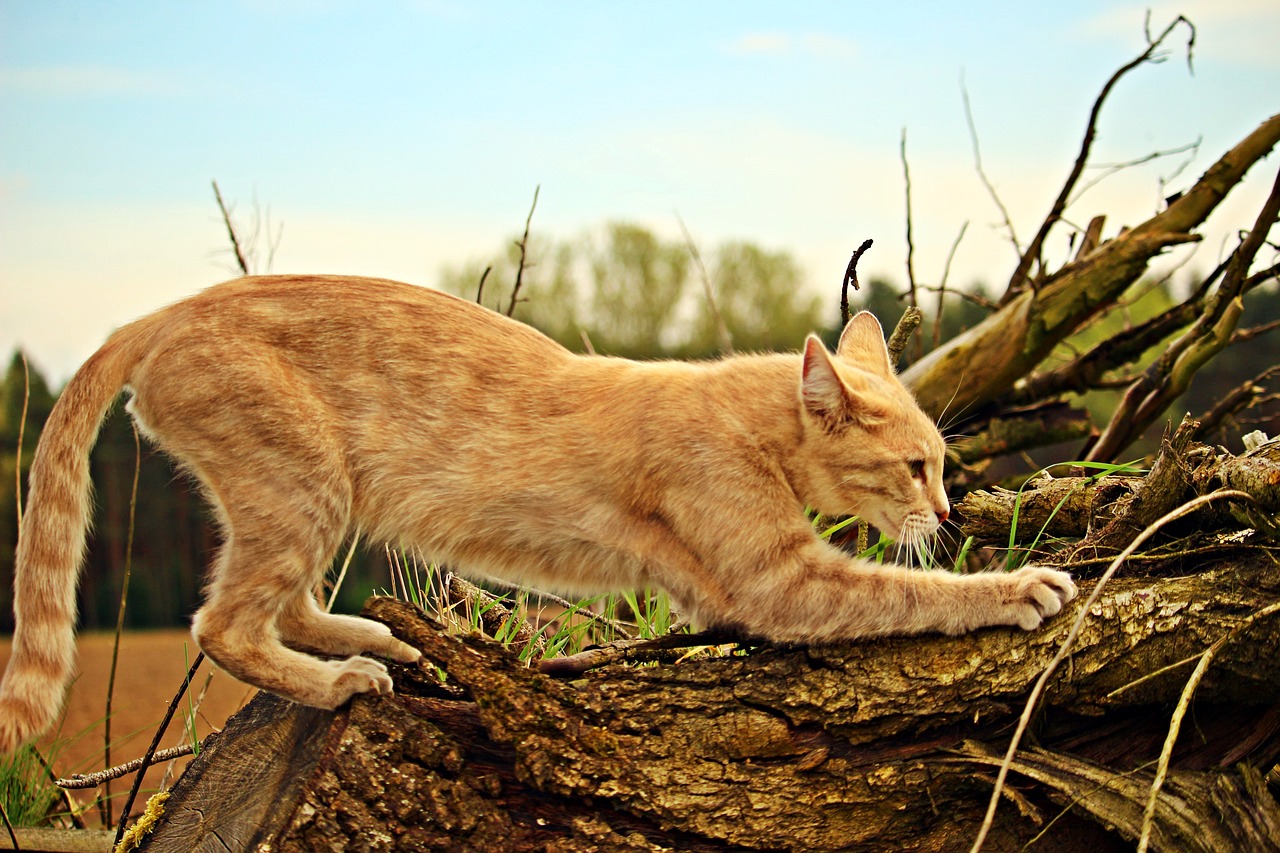
Scratching isn't bad behaviour. Cats scratch to remove the worn outer layers of their claws, to stretch their shoulders and back, and to leave scent and visible marks from glands in their paws. It's a normal, healthy behaviour that they need to do.
The answer is to give them somewhere better to scratch: a tall, sturdy post that doesn't wobble, near the furniture they're scratching and near where they sleep. Our guide to cat scratching posts in Australia explains what makes a good one.
The arched back
A cat that arches its back high, fluffs up its fur and turns side-on is trying to look bigger. It usually means the cat is frightened or threatened, not aggressive. The cat is hoping to scare off the threat without a fight. Give it space and remove whatever is scaring it.
Kittens and young cats often do a playful version, a sideways hop with an arched back and fluffed tail, as an invitation to play. And a relaxed, slow arch with a stretch after waking up is just a stretch.
Advertisement
Love bites and biting while being patted
Some cats give gentle nibbles during cuddles. These love bites are usually soft and part of affectionate grooming.
A different kind of bite happens when a cat is enjoying being patted and then suddenly bites, sometimes hard. This is often called petting-induced aggression. The cat has reached its limit, and the patting has gone from pleasant to too much. Watch for warning signs: a twitching or thumping tail, skin rippling along the back, ears turning sideways or back, and the cat going still. Stop patting before you reach that point, keep sessions short, and focus on the head and cheeks.
Kittens and young cats also bite in play. Use toys rather than your hands, so your cat learns that hands aren't toys.
Licking you
Cats lick people they're bonded with. It's a form of social grooming, like cats that groom each other, and it can also be a way of marking you with their scent. Some cats lick because you taste of salt or lotion.
Excessive licking, of you or of itself, can be a sign of stress or a skin problem, especially if your cat is licking patches of fur thin. Our article on why your cat licks you explains more.
Sleeping on you
Cats sleep on people for warmth, security and company. A cat's comfortable temperature range is higher than ours, so a warm human body is an ideal bed, particularly in winter. Sleeping on a trusted person also lets a cat relax completely, knowing someone is watching out for danger.
If your cat sleeps on you and then wakes you at 4 am, it's usually hunger or the natural dawn activity peak. Our article on why cats wake you up at night covers how to change the routine.
Staring and slow blinking
Cats stare for several reasons. A cat that stares at you beside its food bowl probably wants dinner. A hard, unblinking stare with a stiff body can be a challenge, and is more common between cats than towards people.
A soft gaze with slow, deliberate blinks is a friendly signal. Research at the University of Sussex found that cats are more likely to slow-blink back at people who slow-blink at them, and more likely to approach them. Try it: look at your cat, narrow your eyes and blink slowly. Many cats answer in kind.
Pupils that suddenly go big
A cat's pupils change size with the light. They widen in dim light to let more light in, and narrow to slits in bright light. Our article on whether cats can see in the dark explains how their eyes work.
Pupils also widen with emotion: excitement during play, fear, or the moment before a pounce. So big pupils in a normally lit room can mean a cat is excited or anxious. Read them together with the ears, tail and body.
If your cat's pupils stay dilated in bright light, are different sizes, or don't change with the light, see your vet. It can be a sign of eye disease, high blood pressure or a neurological problem.
Begging for food then walking away
Some cats demand food loudly, then sniff it and walk off. Common reasons are:
- They wanted attention, not food. For many cats, the feeding routine is time with you.
- The food isn't fresh. Wet food that has been sitting out or straight from the fridge smells less appealing. Cats prefer food at room temperature.
- The bowl. Narrow, deep bowls can bother a cat's whiskers. A wide, shallow dish often helps.
- Too many treats between meals.
If your cat starts eating noticeably less, loses weight, or stops eating for more than a day, see your vet. Cats that don't eat can become seriously ill quickly. Our article on why your cat won't eat explains more.
Eating grass and vomiting
Many cats chew grass. It may add fibre and help them bring up hairballs, and some cats simply like the texture. A pot of cat grass is a safe option for indoor cats. Our cat grass review covers growing it. Keep cats away from lilies, which are highly toxic to cats.
An occasional hairball is normal, especially in long-haired cats. Regular vomiting isn't, even if it seems to happen "all the time" with your cat. Vomiting more than once or twice a month, vomiting with weight loss, or vomiting with lethargy needs a vet visit. Our article on cat food for cats that vomit covers diet and when to get help.
Ignoring you when you call
Cats often seem to ignore their names. They hear you, though. A study from Japan found that pet cats can tell their own name from other similar words. They're just less inclined than dogs to come when called, unless they see a reason to. Calling your cat before meals or treats teaches it that coming is worth it.
When strange behaviour means something's wrong
Most odd cat behaviour is normal. What matters most is change: a cat that suddenly starts behaving differently is often telling you something. See your vet if your cat:
- Hides much more than usual or stops greeting you.
- Stops using the litter tray, strains in the tray, or goes often with little result. A male cat straining to urinate is an emergency.
- Eats or drinks much more or much less than usual.
- Becomes aggressive when touched, especially in one area.
- Over-grooms until the fur is thin or the skin is sore.
- Becomes restless, vocal or confused, particularly at night in an older cat.
- Vomits regularly, or loses weight.
Our article on how to tell if your cat is sick lists other signs to watch for.
Frequently asked questions
Why does my cat suddenly run around the house?
It's usually pent-up energy, often at dawn or dusk or after using the litter tray. More active play during the day helps. A sudden change in an older cat is worth a vet check.
Why does my cat knead me?
Kneading starts in kittenhood, when kittens knead their mother to feed. Adult cats do it when they feel relaxed and content, and it also leaves their scent on you.
Why does my cat show me its belly but attack when I touch it?
Showing the belly is a sign of trust, not an invitation. Most cats protect their belly by instinct. A chin or cheek scratch is a better response.
Why does my cat chatter at birds?
It's excitement and frustration at seeing prey it can't reach. It's harmless, and normal for indoor cats.
Why does my cat bite me when I pat it?
It has reached its limit. Watch for a twitching tail, rippling skin and flattening ears, and stop patting before the bite.
Why does my cat stare at me?
It may want food or attention, or it may be watching you out of interest. Slow blinking during a stare is friendly, and you can slow-blink back.
Is it normal for my cat to vomit hairballs?
An occasional hairball is normal. Regular vomiting isn't, and it needs a vet check.
Advertisement