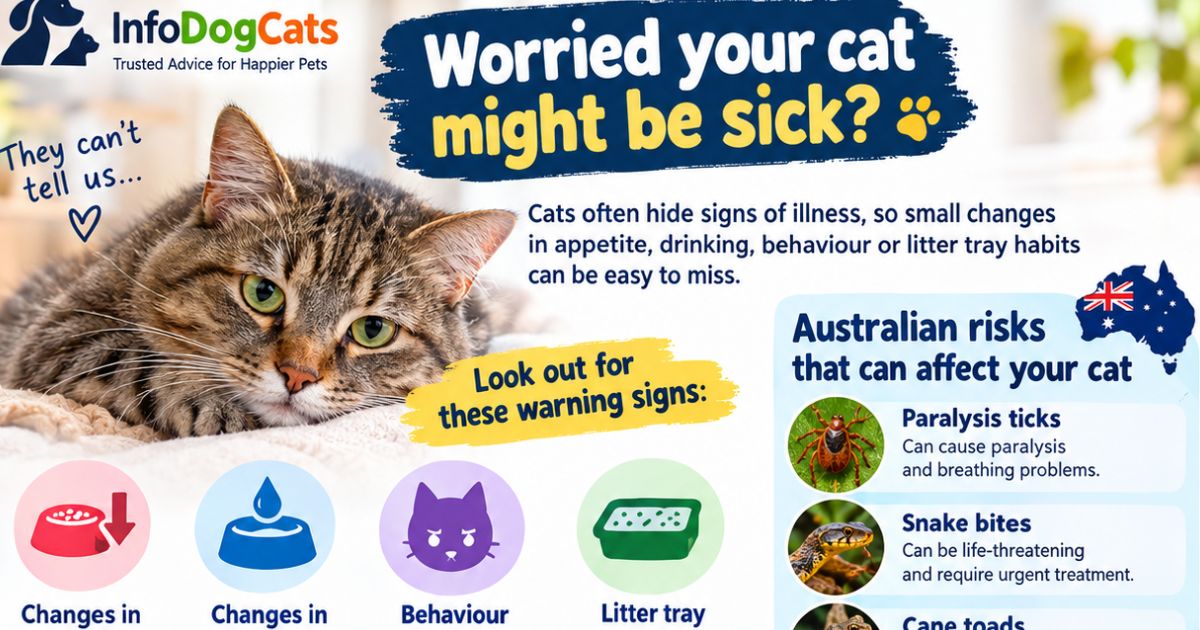
Not sure if your cat needs an emergency vet tonight? Learn the red-flag signs, what can wait until morning, what to do on the way and the Australian risks that need urgent care.
It's late at night, your cat is acting strangely and your regular vet is closed. Do you go to an emergency hospital now, or wait until morning? It's one of the hardest calls a cat owner has to make, and getting it right can save your cat's life.
Advertisement
Cats often hide pain and illness, so by the time a problem is obvious it may already be serious. Agriculture Victoria recommends checking cats daily for signs of ill health, including changes in appetite, energy, drinking, weight and toileting.
Australian cats also face local emergencies, including paralysis ticks in some regions, snake bites, cane toad poisoning and toxic plants such as lilies. Below you'll find the red-flag signs that need an emergency vet straight away, the signs that need a vet soon, what to do while you get help, and how to be prepared.
Quick answer: does my cat need an emergency vet?
Go to an emergency vet now if your cat has difficulty breathing, collapses, has a seizure, may have been poisoned, may have been bitten by a snake or has a paralysis tick, or is straining to urinate with little or no urine. If your cat is eating less, hiding or has a single episode of vomiting but is otherwise alert, call your vet for advice. If in doubt, phone the emergency clinic and describe the signs. Never give human medicines to your cat.
Signs that need a vet soon, but are not always an emergency
These changes deserve a call to your vet and usually an appointment within a day or two. They become urgent if they're severe, getting worse quickly or combined with any red-flag sign below. For a fuller guide to everyday signs of illness, see how to tell if your cat is sick.
- Eating less or refusing food. Cats that eat too little can develop further health problems, so don't assume your cat is just fussy, especially if it is a kitten, a senior or already unwell.
- Drinking or urinating more than usual. This can be an early sign of an underlying medical problem.
- A single episode of vomiting or diarrhoea in a cat that's otherwise bright. Repeated vomiting, blood, or a cat that can't keep water down needs prompt advice.
- Hiding, sleeping more or reluctance to jump, which can point to pain or illness.
- Sneezing or eye and nose discharge. Cornell University's Feline Health Center lists discharge, sneezing, lethargy and appetite loss among signs seen in sick cats.
- Weight loss, a poor coat, new lumps or skin problems.
Sick cat symptoms and what action to take
Use this table to help decide how urgently to seek veterinary advice. It is a practical guide, not a diagnosis, and your vet may recommend more urgent care based on your cat's circumstances.
| Symptom | What you should do |
|---|---|
| Mild appetite change but otherwise normal behaviour | Contact your vet if the change persists or you are concerned. |
| Repeated vomiting or ongoing diarrhoea | Seek prompt veterinary advice, particularly if your cat is weak or cannot keep water down. |
| Increased thirst or urination | Arrange a veterinary assessment. |
| Sneezing or eye discharge | Contact your vet if symptoms persist, worsen or affect eating or breathing. |
| Straining to urinate with little or no urine | Seek emergency veterinary care immediately. |
| Difficulty breathing or open-mouth breathing | Treat as an emergency and contact an emergency vet. |
| Collapse, seizures or inability to stand | Seek emergency veterinary care immediately. |
| Suspected exposure to poison, lilies, a snake or a paralysis tick | Contact a vet or emergency veterinary service immediately. |
| Sudden severe pain, major injury or uncontrolled bleeding | Seek emergency veterinary care. |
Do not wait for every symptom to appear before acting. A cat can be seriously ill without displaying several obvious warning signs.
When is a sick cat an emergency?
Some conditions can deteriorate quickly and need immediate assessment. If your cat appears severely unwell, contact your nearest emergency veterinary clinic and explain what happened, when the symptoms began and whether you suspect a particular toxin or injury.
Red flags you should never ignore
Seek emergency veterinary help for:
- Difficulty breathing or severe respiratory distress.
- Collapse, unconsciousness, seizures or inability to stand.
- Straining to urinate while producing little or no urine.
- Suspected poisoning or contact with a potentially toxic plant.
- A suspected snake bite or paralysis tick exposure.
- Severe pain, serious trauma or uncontrolled bleeding.
- Sudden severe weakness, especially when accompanied by pale gums or other signs of distress.
Agriculture Victoria advises that veterinary help should be sought promptly when a cat shows signs of ill health, injury or distress. When symptoms are severe, do not delay care while searching online for a diagnosis.
If you're not sure
A subtle change in your cat's routine can be more revealing than how it looks. If you're uncertain whether it's urgent, phone your vet or the nearest emergency clinic and describe the signs. A veterinary professional can tell you whether your cat needs to be seen now or can wait for an appointment.
What to do while you get help
Taking sensible steps can help you keep your cat comfortable and give your vet useful information.
- Assess your cat without causing stress. Observe its breathing, movement, alertness and general behaviour. Avoid repeatedly handling a painful or frightened animal.
- Check eating, drinking and toileting. Record when your cat last ate, drank, urinated and passed faeces. Mention any vomiting or diarrhoea.
- Call your vet. Explain the symptoms, how long they have been present and whether they are getting worse. Tell the clinic immediately if you suspect poisoning, a bite or another emergency.
- Keep your cat somewhere quiet and safe. If it is not struggling to breathe or showing another emergency sign, a comfortable indoor area can help you monitor it while following veterinary advice.
- Prepare a secure carrier. Use a suitable cat carrier for transport. Avoid squeezing, lifting unnecessarily or putting pressure on painful areas.
- Bring relevant information. Take photographs of unusual symptoms, packaging from a suspected toxin or a safe sample of a suspicious plant if your vet requests it. Do not delay emergency transport to collect these items.
- Follow veterinary instructions. Give prescribed treatment exactly as directed and arrange any recommended follow-up appointments.
Never give your cat human painkillers, leftover antibiotics or another animal's medicine unless a veterinarian specifically directs you to do so. Do not force food or water into a weak, vomiting or distressed cat.
If poisoning is possible, do not attempt to make your cat vomit or use home remedies unless a veterinary professional specifically instructs you.
Australian risks that can make cats sick
The cause of illness may depend on where you live, your cat's lifestyle and what it has encountered. Australia's climate, wildlife and gardens create several risks worth recognising.
Paralysis ticks in eastern Australia
Paralysis ticks can be a serious threat to cats in affected areas, including parts of coastal eastern Australia. Risk varies with location, habitat and conditions, so outdoor access in a tick-prone area deserves particular care.
Possible warning signs include weakness, an abnormal walk, difficulty moving, changes in the voice, vomiting or breathing difficulties. These symptoms are not unique to tick paralysis, so you should not try to diagnose the cause at home.
If you suspect a paralysis tick, contact a vet immediately and follow their instructions. Read more about paralysis ticks in Australian cats.
Snake bites and cane toad poisoning
Cats that roam outdoors may encounter snakes, particularly in areas where suitable habitat is nearby. A suspected snake bite is an emergency even if you cannot see a wound or your cat initially seems normal.
Keep your cat as still and calm as possible, transport it safely and contact an emergency vet. Do not cut the bite, apply a tourniquet or attempt to suck out venom.
Cane toads are another risk in parts of Queensland, the Northern Territory and other areas where these introduced animals occur. Toad toxins can cause severe illness after contact with a cat's mouth. Excessive drooling, distress, vomiting, abnormal movement or seizures require urgent veterinary attention.
If you suspect cane toad poisoning, contact your vet immediately for first-aid instructions. You can read more about snake bites in Australian cats and cane toad poisoning in cats.
Advertisement
Toxic plants and household products
Agriculture Victoria lists several plants that can be poisonous to cats, including lilies, daffodils, tulips and some other flowering plants. It advises taking a cat to the vet immediately if you suspect it has eaten a poisonous plant.
Lilies deserve particular caution because exposure can cause severe illness in cats. Do not wait for symptoms before seeking advice if your cat has chewed a lily or may have been exposed to it.
Human medicines, cleaning products and insecticides can also be dangerous. Store chemicals securely, keep medicines out of reach and check whether plants are safe before bringing them into your home.
For suspected lily exposure, see our information about lilies toxic to cats in Australia.
Heat stress during Australian summers
Australian summer runs from December to February. Hot weather can increase the risk of heat-related illness, particularly when cats are confined in poorly ventilated spaces or cannot reach a cool area and fresh water.
Warning signs of heat stress can include panting, drooling, weakness, vomiting or collapse. If your cat is panting or showing signs of distress in hot conditions, move it away from the heat, contact a vet immediately and follow the clinic's cooling instructions.
Do not leave a cat in a parked car, even if you expect to return quickly. Make sure your cat can reach shade, water and a cooler indoor area during hot weather. More practical advice is available in our guide to keeping cats cool in an Australian summer.
Regional differences across Australia
In Victoria, New South Wales, Queensland, South Australia, Western Australia, Tasmania, the Northern Territory and the ACT, local conditions can affect which hazards your cat is most likely to encounter.
Coastal and bushland environments may expose outdoor cats to different wildlife and parasites from heavily urbanised areas. Hot inland conditions can also make access to water, shelter and cool resting places especially important.
Ask your local vet about risks specific to your suburb or region. Discuss parasite prevention, vaccination, desexing, safe outdoor access and whether your cat's lifestyle increases its exposure to infectious disease or injury.
Keeping your cat indoors or in a secure cat enclosure can reduce exposure to some hazards, although indoor cats can still become ill and need regular health checks.
Be prepared before an emergency happens
A little planning makes an emergency far easier to handle:
- Save two numbers in your phone: your regular vet and your nearest 24-hour emergency hospital.
- Know the route to the emergency hospital and how long it takes at night.
- Keep a sturdy carrier where you can reach it quickly.
- Keep a record of your cat's vaccinations, medications and health conditions to show the vet.
- Think about costs ahead of time. Emergency care can be expensive. Read our guides to cat vet costs in Australia and whether cat insurance is worth it.
- Book regular health checks. Agriculture Victoria recommends regular veterinary checks, with more frequent visits for older cats and cats with health problems.
Checklist: is this an emergency?
Save this checklist and use it when you notice a change in your cat's health.
- [ ] My cat is eating its usual food and showing its normal appetite.
- [ ] My cat is drinking approximately as usual.
- [ ] My cat is urinating and passing faeces without difficulty.
- [ ] My cat is moving normally and can reach its usual resting places.
- [ ] My cat is grooming normally and has no unexplained skin changes.
- [ ] My cat's eyes and nose look normal for its usual condition.
- [ ] My cat is behaving normally and is not hiding more than usual.
- [ ] I have checked for vomiting, diarrhoea, wounds or unusual swelling.
- [ ] I have considered possible exposure to toxins, ticks or snakes.
- [ ] I know how to contact my regular vet and the nearest emergency clinic.
If you notice a concerning change, contact your vet rather than relying on the checklist to rule out illness. If your cat has emergency symptoms, seek veterinary care immediately.
Frequently asked questions
Can I wait until morning to see my vet?
Only if your cat has no red-flag signs and is alert, comfortable and breathing normally. Difficulty breathing, collapse, seizures, suspected poisoning, a possible snake bite or tick, and straining to urinate can't wait. If you're unsure, phone the emergency clinic and ask.
How do I know if my cat needs an emergency vet?
Difficulty breathing, collapse, seizures, suspected poisoning, a possible snake bite and straining to urinate without producing urine are emergency warning signs. Call an emergency veterinary clinic and explain what has happened. Do not wait for symptoms to worsen or attempt home treatment before seeking professional advice.
Why is my cat hiding and refusing food?
Hiding and refusing food can occur with pain, nausea, stress, infection or other medical problems. These signs do not identify a specific disease. Contact your vet, especially if your cat appears weak, is vomiting or has other symptoms. Kittens and cats with existing health conditions may need particularly prompt assessment.
Can I give human medicine to a sick cat?
No. Do not give human painkillers, cold medicines or leftover prescription drugs unless your vet specifically instructs you to do so. Some human medicines can be highly toxic to cats. If your cat has already swallowed a medicine, contact a vet immediately and provide the product name and estimated amount if known.
What should I do if my cat stops eating?
Contact your vet for advice rather than assuming your cat is being fussy. Reduced appetite can have several causes, including dental pain and illness, and prolonged inadequate food intake can create additional health risks. Tell your vet when your cat last ate, whether it is drinking and whether you have noticed vomiting or other changes.
How can I tell if my outdoor cat has been poisoned?
Possible warning signs include drooling, vomiting, weakness, unusual movement, tremors, seizures or breathing problems, depending on the substance. Symptoms alone cannot reliably identify a toxin. If you suspect poisoning, contact a vet immediately, keep your cat away from the suspected source and do not induce vomiting unless instructed by a veterinary professional.
Related guides
Sources
- Agriculture Victoria, Routine health care for cats
- Agriculture Victoria, Code of Practice for the Private Keeping of Cats
- Agriculture Victoria, Toxic plants for cats
- Agriculture Victoria, Creating the perfect indoor haven
- Cornell University College of Veterinary Medicine, Choosing and Caring for Your New Cat
- RSPCA Queensland, Cat minding: basic care requirements
This information is general in nature and is not a substitute for an examination or advice from your veterinarian.
Advertisement