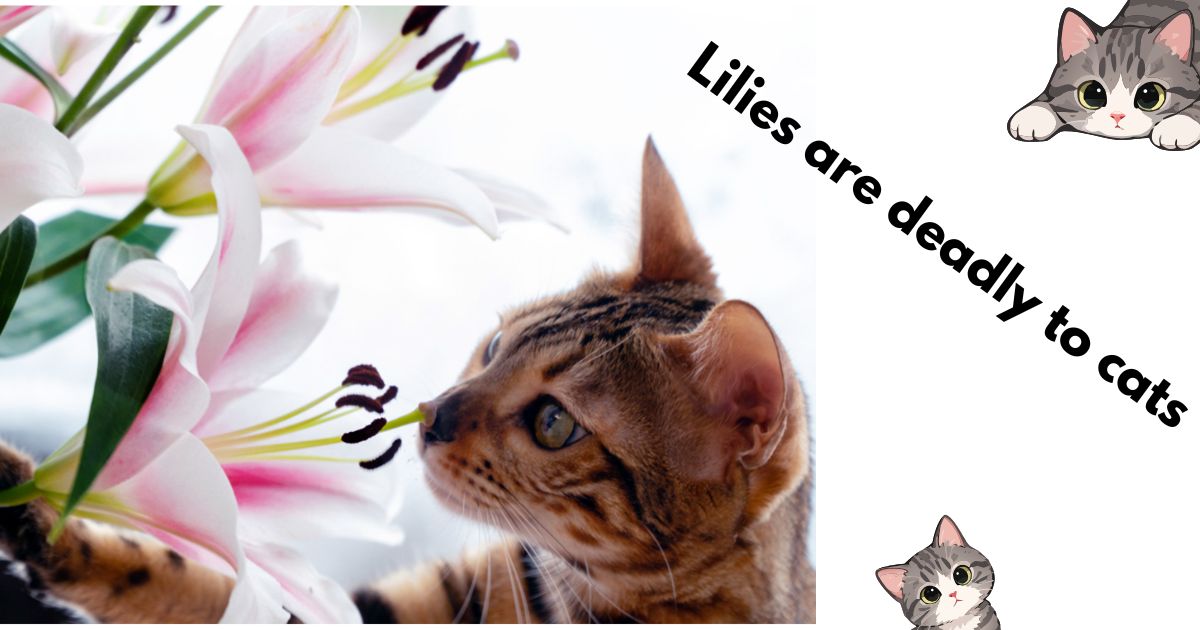
A single bite of a lily leaf, a lick of pollen or a sip of vase water can cause fatal kidney failure in cats. Here's which lilies are dangerous, the signs to watch for and what to do.
They're one of the most popular flowers in Australian homes, especially at Christmas, Easter and Mother's Day. They're also one of the most dangerous things you can bring into a house with a cat.
Advertisement
Lilies can cause sudden, fatal kidney failure in cats. A cat doesn't have to eat a whole flower. A nibble of a leaf, pollen licked off its fur, or a drink of water from the vase can be enough. Many cat owners have never been told, and many people who give lilies as gifts have no idea.
This guide explains which lilies are dangerous, how cats are poisoned, the signs to watch for, what to do if you think your cat has been exposed, and how to keep your home safe.
Why lilies are so dangerous to cats
RSPCA Australia describes lilies as highly toxic to cats and warns that eating even small amounts can cause rapidly fatal kidney failure.
The exact toxin in lilies hasn't been identified, according to Purdue University's College of Veterinary Medicine, but its effect is well known: it damages the kidneys of cats. Purdue notes that the toxin affects only cats. Dogs that eat lilies may get a mild upset stomach, but they don't develop kidney failure.
International Cat Care, a leading feline welfare charity, reports that in the UK, lily poisoning is among the top five serious poisonings in cats and is the subject of more feline poisoning enquiries than anything else.
Every part of the plant is toxic
RSPCA Australia states that all parts of the lily plant are toxic to cats, including:
- Petals and flowers
- Leaves
- Stems
- Pollen
- Vase water: RSPCA Australia notes that even the water in a vase of cut lilies is thought to be toxic.
The pollen problem
Pollen is one of the most common ways cats are poisoned, and one of the easiest to miss. A cat brushes past a vase, pollen falls onto its fur, and later it licks the pollen off while grooming. International Cat Care lists licking pollen from the coat as one of the ways cats can be poisoned.
You may never see your cat touch the flowers. A small orange-yellow smudge on your cat's fur, nose or whiskers can be the only clue.
Which lilies are dangerous?
RSPCA Australia lists lilies from two plant groups, Lilium (true lilies) and Hemerocallis (daylilies), as toxic to cats. Common names include:
- Easter lily
- Christmas lily
- Asiatic lily
- Oriental lily
- Tiger lily
- Stargazer lily
- Day lily
- Trumpet lily
- Leopard lily and panther lily
- White lily and yellow lily
Purdue University also lists Japanese show lilies, rubrum lilies and wood lilies among the highly toxic types.
RSPCA Australia also includes calla lilies in its list of lilies to keep away from cats.
The simplest rule
Plant names can be confusing, and florists' bouquets often don't come with a label. The safest approach is simple: treat any plant or flower called a "lily" as dangerous to your cat, and keep it out of your home.
Why this matters at Christmas in Australia
In Australia, lilies are a popular Christmas flower. They feature in many festive bouquets, table arrangements and gift hampers. They're also common at Easter and on Mother's Day.
RSPCA Victoria issues warnings about lilies ahead of Easter each year, and the same risk applies whenever lilies come into the house. Busy holidays make it easy for a bouquet to be left on a table where a curious cat can reach it.
How much does it take?
Very little. RSPCA Australia warns that even small amounts can cause rapidly fatal kidney failure. International Cat Care notes that a cat can suffer fatal kidney failure after nibbling a leaf, licking pollen from its coat or drinking water from a vase of lilies.
There is no "safe" amount, so any possible exposure should be treated as an emergency.
Signs of lily poisoning in cats
Purdue University describes this typical timeline after a cat eats part of a lily:
| Time after exposure | What you may see |
|---|---|
| A few minutes to 12 hours | Drooling, vomiting, less activity, loss of appetite |
| 12 to 24 hours | Signs of kidney damage, such as weeing more and dehydration |
| 24 to 72 hours | Kidney failure, which can be fatal without treatment |
RSPCA Australia lists these signs:
- Vomiting, which may contain pieces of the plant
- Excessive drooling
- Loss of appetite
- Depression and lethargy (low energy, hiding)
- Dehydration
- Abnormal urination, either passing much more urine than normal or none at all
RSPCA Australia notes that death from kidney failure generally occurs within 12 to 72 hours of eating the plant.
Don't wait for signs
The early signs can fade, and a cat may seem to improve for a while. Meanwhile, the kidneys can be getting worse. If you know or suspect your cat has been near lilies, act straight away, even if it seems completely fine.
What to do if your cat has been exposed to lilies
Lily poisoning is an emergency. RSPCA Australia advises getting veterinary care immediately if you suspect your cat has been exposed.
- Call your vet or nearest 24-hour emergency hospital now. Tell them your cat may have been exposed to lilies, and when.
- Take the plant, or a photo of it, so the vet can identify it. Purdue recommends this to help confirm whether it's a highly toxic lily.
- Gently wipe pollen off your cat's fur with a damp cloth if you can do so safely and quickly, so it can't lick off any more. Don't let this delay your trip.
- Don't try home remedies or wait to see if signs appear.
- Remove the lilies so other cats in the house can't reach them.
Why speed is so important
Purdue University notes that if treatment is delayed by 18 hours or more, cats generally develop irreversible kidney failure, which can be fatal. RSPCA Australia states that survival depends on early recognition and prompt veterinary treatment.
In other words, a cat seen early has a far better chance than one that arrives after signs of kidney failure have appeared.
What to tell the vet on the phone
Having this information ready saves time when every hour counts:
- What happened: whether you saw your cat chew the plant, found pollen on its fur, or saw it drink from the vase.
- When: your best estimate of the time, even if it's only "sometime this afternoon".
- Which plant: the name on the label or card if there was one, or a description and photo.
- Your cat's details: age, approximate weight and any existing health problems, especially kidney disease.
- Any signs so far: vomiting, drooling, hiding, not eating or changes in urination.
If you can't reach your usual vet, go straight to the nearest 24-hour emergency hospital. Don't wait until the morning.
Advertisement
How vets treat lily poisoning
Your vet will decide on the right treatment for your cat. In general, treatment aims to stop more toxin being absorbed and to protect the kidneys while the body clears it. This may involve:
- Making your cat vomit, if exposure was very recent
- Medicines to reduce how much toxin is absorbed from the gut
- Intravenous fluids to support the kidneys
- Blood and urine tests to check kidney function
- Hospital monitoring
Cornell University's Feline Health Center notes that the outlook is better for cats treated quickly, and that many cats don't survive. If kidney failure has already developed, treatment becomes much more difficult.
Why do cats chew plants?
Many owners are surprised that their cat would bother with flowers at all. But chewing plants is common cat behaviour. Cats may nibble leaves out of curiosity, boredom or play, especially young cats and indoor cats. Long, thin leaves and dangling petals can look a lot like a toy. Some cats also seem to like the texture of grass and leaves.
That's why "my cat never touches plants" isn't a safe assumption. A cat that has ignored houseplants for years can still investigate a new bouquet, simply because it's new and smells interesting.
Giving your cat safer outlets can help: a pot of cat grass, plenty of play with wand toys, and climbing and scratching spaces. These don't make lilies safe, but they can reduce general plant chewing.
Homes with more than one cat
In a multi-cat household, it can be impossible to know which cat touched the lilies. If lilies have been in the house and any cat may have had contact, tell your vet how many cats you have. They may want to check each one, since pollen on one cat's coat can also be groomed off by another.
How to keep your cat safe
Keep lilies out of the house
This is the only reliable protection. Putting lilies "up high" isn't enough: cats climb, and pollen falls. RSPCA Australia advises making sure your cat never has access to lilies of any kind, whether cut flowers, potted plants or garden beds.
Tell your friends and family
Many lily poisonings start with a gift. Let friends and family know you have a cat and ask them not to send lilies. If you receive a bouquet with lilies, thank the sender and give the lilies to a neighbour without cats, or put them straight in an outside bin.
Check bouquets and hampers
Mixed bouquets often include lilies, sometimes as just one or two stems. Check every arrangement before it comes inside.
Garden lilies
If your cat goes outside or into an enclosure, check your garden and your neighbours' gardens for lilies and daylilies. Remove any that your cat could reach. Our guide to cat enclosures and catios explains how to choose safe plants for outdoor spaces.
Clean up spilled pollen and water
If lilies have been in your home, wipe down surfaces where pollen has fallen and empty any vase water where your cat can't reach it.
Cat-safer flower ideas
If you love fresh flowers, ask your florist for an arrangement with no lilies. Even with flowers that aren't known to be toxic, it's a good idea to keep bouquets out of your cat's reach, because chewing plant material can still upset a cat's stomach. When in doubt, check with your vet before bringing a new plant home.
Lily safety checklist
Save or share this list with other cat owners:
- [ ] No lilies in the house: cut flowers, potted plants or bouquets.
- [ ] Ask family and friends not to send lilies.
- [ ] Check every bouquet and hamper before it comes inside.
- [ ] Remove lilies and daylilies your cat can reach in the garden.
- [ ] Save your nearest 24-hour emergency vet's number in your phone.
- [ ] If your cat may have been exposed: call the vet immediately and take the plant or a photo.
- [ ] Don't wait for signs. Treatment works best when it starts early.
Frequently asked questions
Can a cat die from just licking lily pollen?
Yes. International Cat Care warns that cats can suffer fatal kidney failure after licking lily pollen from their coat. That's why lilies are dangerous even if your cat never chews the flowers.
Is lily vase water toxic to cats?
RSPCA Australia says even the water in a vase of cut lilies is thought to be toxic. Keep vases of lilies out of homes with cats.
How long after eating a lily will a cat show symptoms?
Early signs such as drooling, vomiting and loss of appetite can appear within minutes to 12 hours, according to Purdue University. Kidney damage may follow within 12 to 24 hours, and kidney failure within 24 to 72 hours.
Can cats survive lily poisoning?
Yes, if they receive treatment early. Purdue notes that delays of 18 hours or more generally lead to irreversible kidney failure. Don't wait for signs: call a vet as soon as you suspect exposure.
Are lilies toxic to dogs too?
Purdue University says the toxin affects only cats. Dogs may get a mild stomach upset, but they don't develop kidney failure from lilies. Still, it's best to keep plants away from all pets.
My cat walked past the lilies but I didn't see it touch them. What should I do?
Check your cat's fur, face and whiskers for pollen, and look for chewed leaves or petals. If there's any chance your cat had contact, call your vet for advice straight away. It's better to be checked and reassured than to wait.
Related guides
- How to tell if your cat is sick: the subtle signs cats hide.
- How much do vet bills cost for cats in Australia?: including emergencies.
Sources
- RSPCA Australia Knowledgebase, Are lilies toxic to cats?
- International Cat Care, Lily toxicity
- Purdue University College of Veterinary Medicine, Beautiful spring lilies pose serious danger to cats
- Cornell Feline Health Center, Easter peril: look out for lilies and other items
This guide is general information only and is not a substitute for advice from your vet. If you think your cat has been exposed to lilies, contact a vet immediately.
Advertisement