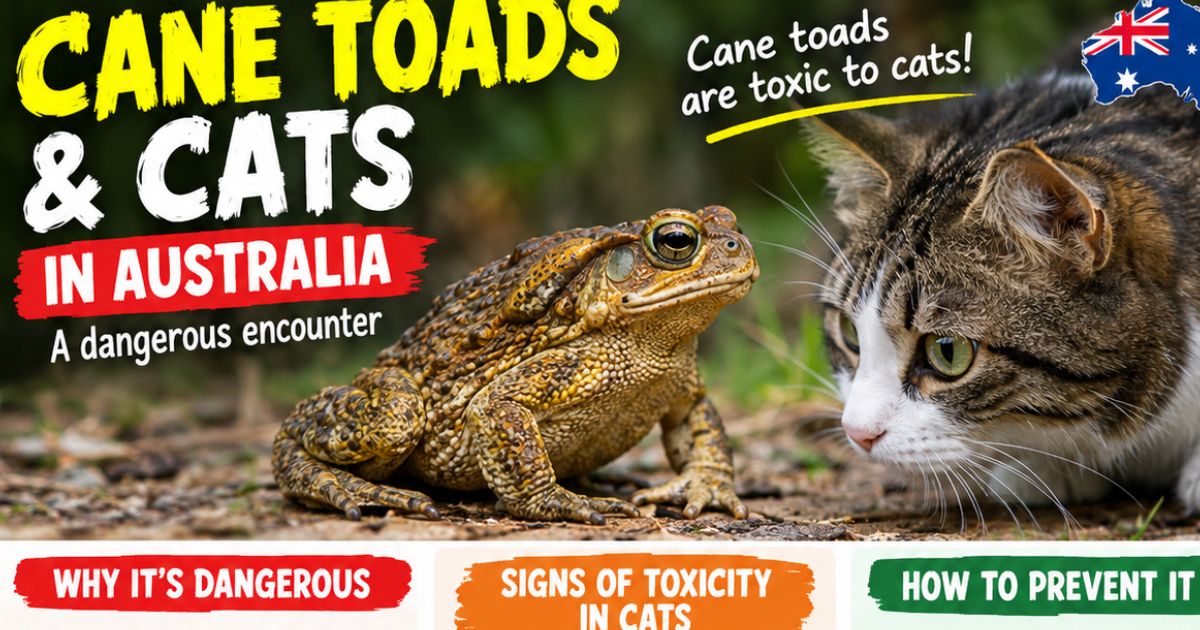
One lick of a cane toad can make a cat seriously ill within minutes. Learn the warning signs, the first aid steps that matter, and how to keep your cat safe in toad country.
If you live in Queensland, the Northern Territory, northern Western Australia or north-east New South Wales, cane toads are part of life. They gather around porch lights, sit by pet water bowls and hop across lawns on warm, wet nights. For a curious cat, a slow-moving toad can look like the perfect thing to pounce on.
Advertisement
That curiosity can be dangerous. Cane toads produce a powerful toxin that is absorbed quickly through a cat's mouth. Animal Emergency Service, which runs 24-hour emergency hospitals in Queensland and Victoria, describes cane toad poisoning in cats as a serious and potentially fatal condition, and says early treatment can mean the difference between life and death.
Here's how cats are poisoned, the signs to watch for, the first aid steps that make a real difference, and how to reduce the risk around your home.
Cane toads in Australia: a quick background
Cane toads aren't native to Australia. RSPCA Queensland explains that more than 100 were introduced to Queensland in 1935 to control cane beetles in sugarcane crops. They bred successfully and spread, and RSPCA Queensland estimates there are now around two billion in Australia.
According to the NSW Department of Primary Industries, cane toads are found throughout northern Australia and in north-east New South Wales, in coastal areas, woodlands, forests, wetlands and urban areas, including suburban backyards.
How to recognise a cane toad
The Northern Territory Government and NSW DPI describe adult cane toads as:
- Large and heavily built, usually around 9 to 15 cm long, and occasionally up to 24 cm
- Dry and warty-skinned, in shades of grey, olive, yellow-brown or red-brown
- Marked by a bony ridge over each eye that meets above the nose
- With a large toxin gland (the parotoid gland) on each shoulder, behind the head
- Without wide finger pads like many native tree frogs
- Moving in short, quick hops rather than the leaps many native frogs make
Young toads are smaller, darker and smoother, and the NT Government notes they can look like native frogs when they're under about 4 cm. Cane toad tadpoles are small, jet black and gather in large groups.
Why cane toads are dangerous to cats
RSPCA Queensland explains that cane toads have glands on the back of the neck and shoulders that release a toxin called bufotoxin. It's poisonous to cats, dogs and most native animals. RSPCA Queensland also notes that tadpoles are highly toxic.
When a cat bites, licks or mouths a toad, the toxin is absorbed rapidly through the lining of the mouth. Animal Emergency Service notes it can also be absorbed through the eyes and skin, and that it affects the nervous system and the heart.
RSPCA Queensland warns that a small dose may cause odd, disoriented behaviour and is less likely to be fatal, but larger doses can be fatal without prompt treatment.
Are cats at less risk than dogs?
Dogs are more likely to grab and chew a toad, so cane toad poisoning is reported more often in dogs. But cats are smaller, so a smaller amount of toxin can affect them more. Animal Emergency Service says time is critical for cats because of their size. Any cat that has had contact with a toad should be treated as an emergency.
Signs of cane toad poisoning in cats
The Lort Smith Animal Hospital notes that signs can appear within minutes. Animal Emergency Service and Lort Smith list these signs:
Early signs
- Heavy drooling or foaming at the mouth
- Pawing at the mouth
- Bright red gums
- Vomiting
- Panting or fast breathing
- Dilated pupils
- A strange, trance-like stare or unusual behaviour
Severe signs
- Wobbly walking or sudden loss of coordination
- Weakness in the legs
- Tremors, shaking or seizures
- Irregular or very fast heartbeat
- Difficulty breathing
- Blue-tinged gums
- Collapse
Lort Smith also lists less common signs such as blindness and muscle paralysis.
When it usually happens
Animal Emergency Service notes that cane toads are nocturnal and most active at dusk and dawn, so cats are most at risk at night. Toad numbers often rise after rain, and Animal Emergency Centre reports seeing more toad poisonings in pets during Queensland's wet season.
If your cat comes inside at night drooling, pawing at its face or acting strangely, check the yard for toads and act straight away.
First aid: what to do right now
Cane toad poisoning is an emergency. Do these steps quickly, and get your cat to a vet.
1. Remove the toad and protect yourself
If there's a toad in your cat's mouth, remove it. Lort Smith advises washing your hands thoroughly with soapy water afterwards. Wear gloves if you have them.
2. Wipe your cat's mouth and gums
The toxin is sticky, so wiping removes more of it than rinsing alone.
- Use a damp cloth or gauze.
- Wipe the gums, tongue and the inside of the cheeks thoroughly.
- Rinse the cloth between wipes, as recommended by Animal Emergency Centre, so you're not wiping toxin back in.
- Repeat several times.
3. Rinse carefully, if your cat allows
Lort Smith suggests gently rinsing the mouth with water from a syringe, aimed across the mouth rather than towards the back of the throat, so your cat doesn't breathe in water. RSPCA Queensland advises keeping the head tilted down while rinsing.
4. Don't use a hose or high-pressure water
Animal Emergency Centre warns against hosing inside a pet's mouth, because it can cause them to breathe in water. Animal Emergency Service adds that high-pressure water may push the toxin further into the throat.
5. Don't make your cat vomit
Animal Emergency Service says vomiting isn't effective because the toxin is absorbed so quickly. Lort Smith advises never inducing vomiting unless a vet tells you to, and never in a pet that is having a seizure.
6. Call a vet and go immediately
Call your vet or nearest 24-hour emergency hospital and tell them you're on the way with a suspected cane toad poisoning. If your cat has severe signs such as seizures or breathing trouble, go immediately and wipe the mouth on the way only if someone else is driving.
Even if your cat seems to improve after wiping, it should still be checked by a vet. Lort Smith rates cane toad toxicity as severe, and heart and nervous system problems can develop quickly.
How vets treat cane toad poisoning
Treatment depends on how unwell your cat is. Animal Emergency Service and Lort Smith say it may include:
- Further cleaning of the mouth to remove remaining toxin
- Oxygen therapy
- Intravenous fluids
- Medication to control seizures
- Medication to stabilise the heart rhythm
- Heart monitoring and intensive care
Cats treated quickly have the best chance. Animal Emergency Service stresses that early intervention can make the difference between life and death.
How to protect your cat from cane toads
Keep your cat indoors at night
This is the single most effective step. Animal Emergency Service recommends keeping cats indoors at night, especially around dusk and dawn, when toads are most active. Indoor and contained cats are also safer from cars, snakes, fights and paralysis ticks.
If your cat enjoys outdoor time, a secure enclosure or catio can help. Choose one with fine mesh and a solid base, since young toads are small. Our guide to cat enclosures and catios explains what to look for.
Bring pet bowls inside
Advertisement
Cane toads are attracted to water and leftover pet food. Bring food and water bowls inside overnight, or place them where toads can't reach. Toads can also sit in water bowls, so always refresh water left outside.
Turn off outdoor lights at night
Lights attract insects, and insects attract toads. Turning off porch and garden lights, or switching to lights that attract fewer insects, can reduce toads around your doors.
Make your yard less toad-friendly
Animal Emergency Service suggests:
- Removing standing water
- Keeping grass trimmed
- Sealing gaps and hiding spots around the house, under decks and in garden beds
A low barrier of fine mesh or solid material along fences can also help keep toads out of small yards.
Check the yard before letting your cat out
A quick torch check of the lawn, garden and water bowls before your cat goes out in the evening can prevent a poisoning.
Know your nearest emergency vet
Save your nearest 24-hour emergency vet's number in your phone, and work out how long it takes to get there at night.
Living with cats in toad country: a nightly routine
For many households in Queensland and the Top End, cane toads are a fact of life for much of the year. A simple evening routine makes a big difference:
- Before dusk: call your cat inside and give its evening meal indoors, so it's in the habit of coming home.
- Bring in the bowls: move outdoor food and water bowls inside, and tip out any water left in buckets or pot-plant saucers.
- Lights off: switch off outdoor lights you don't need.
- Doors closed: make sure cat flaps are locked for the night.
- Morning check: before letting your cat out, have a quick look around the yard, especially near taps, garden beds and the lawn after rain.
It only takes a few minutes, and it removes most of the chances your cat has to meet a toad.
What to do with a cane toad in your yard
It's natural to want to remove toads from your yard, but it must be done humanely and only after you're sure it's not a native frog.
RSPCA Queensland advises:
- Keep pets and children away from the area first.
- Make sure it's a cane toad, not a native frog. Many native frogs are protected. If you're unsure, check the identification features above, use your state's identification guide, or ask your local council.
- Use a humane method. RSPCA Queensland recommends a registered product made for the purpose, used as directed, or a stepped cooling method: twelve hours in the fridge, then 24 hours in the freezer.
- Wear rubber gloves and avoid stressing the toad, since stress can make it release toxin.
- Dispose of it in your wheelie bin, or bury it deep enough that pets can't dig it up.
Never hit, kick or use household chemicals on toads. These methods are cruel and can splash toxin.
In NSW, the Department of Primary Industries asks residents to report cane toad sightings, especially outside known areas, through its biosecurity sighting page.
Other warm-weather risks for cats in toad country
The same warm, wet months that bring out cane toads also bring other hazards:
- Snakes, which are more active in warm weather. See our guide to snake bites in cats.
- Paralysis ticks on the east coast. Read about paralysis ticks in cats.
- Heatstroke during hot, humid spells. See how to keep your cat cool in an Australian summer.
Cane toad safety checklist
- [ ] Keep your cat indoors from dusk to dawn.
- [ ] Bring food and water bowls inside overnight.
- [ ] Turn off outdoor lights you don't need.
- [ ] Remove standing water and trim long grass.
- [ ] Check the yard with a torch before letting your cat out at night.
- [ ] Keep a soft cloth handy for wiping your cat's gums.
- [ ] Save your 24-hour emergency vet's number in your phone.
- [ ] If your cat touches a toad: wipe the gums, don't hose the mouth, and call a vet immediately.
Frequently asked questions
Can a cat die from licking a cane toad?
Yes. Cane toad toxin is absorbed quickly through the mouth, and a large dose can be fatal without fast treatment. Any contact should be treated as an emergency.
How long after touching a cane toad will a cat show signs?
Signs can appear within minutes, according to the Lort Smith Animal Hospital. Drooling, pawing at the mouth and red gums are often the first signs.
Should I wash my cat's mouth with a hose?
No. Animal Emergency Centre warns that hosing inside the mouth can cause your cat to breathe in water. Wipe the gums with a damp cloth instead, rinsing the cloth between wipes, and gently rinse with a syringe aimed across the mouth if your cat allows.
Are cane toad tadpoles dangerous to cats?
Yes. RSPCA Queensland says tadpoles are also highly toxic. Keep cats away from ponds and puddles where toads breed.
Do cane toads live in Sydney or Brisbane?
Cane toads are widespread in Brisbane and much of Queensland. In NSW, the Department of Primary Industries says they're found in the north-east of the state. Isolated sightings have been reported further south, which is why NSW DPI asks people to report toads outside known areas.
Will my cat learn to avoid toads?
Some cats may avoid toads after an unpleasant experience, but you can't rely on it, and a single encounter can be serious. Prevention is far safer.
Related guides
Sources
- Animal Emergency Service, Cane toads and cats: understanding the risks of toad toxicity
- Lort Smith Animal Hospital, Cane toad in cats
- Animal Emergency Centre, Toad poisoning in pets
- RSPCA Queensland, Cane toads: an introduced menace
- Northern Territory Government, How to identify a cane toad
- NSW Department of Primary Industries, Cane toads: protect what we love
This guide is general information only and is not a substitute for advice from your vet. If your cat has had contact with a cane toad, contact a vet immediately.
Advertisement