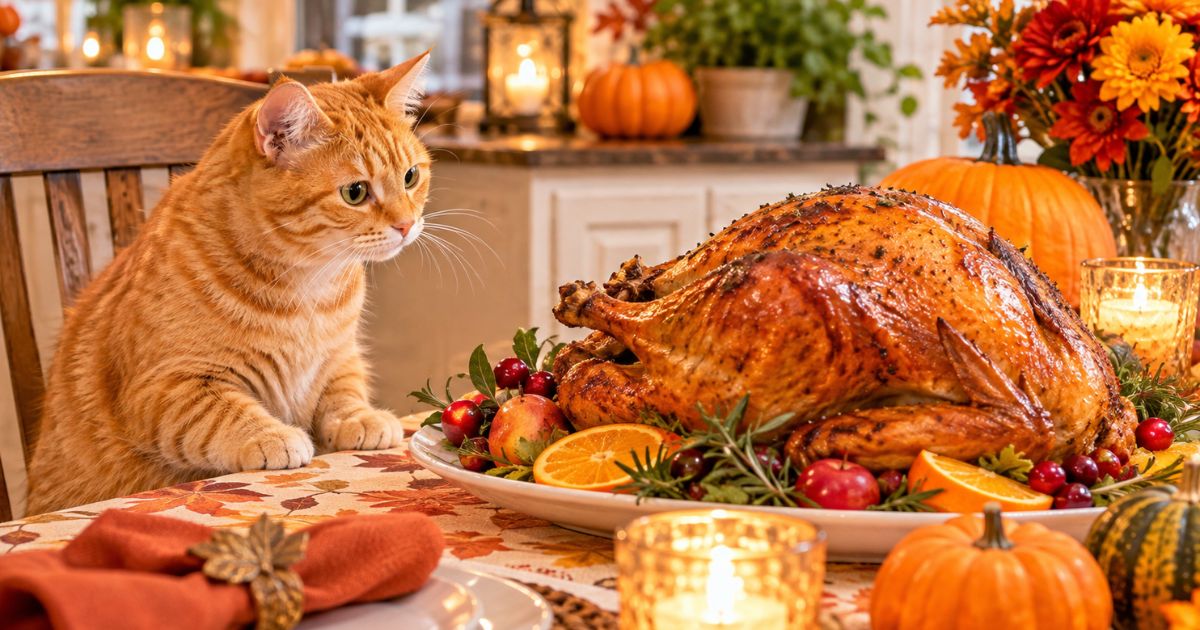
Can cats eat turkey at Thanksgiving? Which parts are safe, which holiday foods are dangerous for cats, and what to do if your cat raids the table, including emergency vet and poison control numbers.
The turkey is out of the oven, the table is loaded with stuffing, gravy and pie, and your cat is suddenly your most devoted dinner guest. It's tempting to slip it a little something. After all, it's Thanksgiving for everyone.
Advertisement
The good news is that a small piece of plain turkey is fine for most cats. The bad news is that much of the Thanksgiving table is not. Onions in the stuffing, garlic in the gravy, fatty skin, cooked bones and sugar-free desserts can all send a cat to the emergency vet, often on the one night of the year when clinics are hardest to reach.
Below you'll find exactly which parts of the turkey cats can eat, a dish-by-dish guide to the Thanksgiving table, the warning signs of poisoning, and what to do if your cat helps itself.
Quick answer: can cats eat turkey?
Yes, in small amounts, if it's plain. The American Veterinary Medical Association (AVMA) says plain, boneless, skinless turkey is generally safe in small portions. The ASPCA adds that turkey should be fully cooked, because raw or undercooked turkey may contain salmonella.
Never give your cat: turkey bones, skin, fat, gravy, stuffing or anything seasoned with onion or garlic. The AVMA warns that even a small amount of fatty food can cause pancreatitis.
| Turkey part | Safe for cats? | Why |
|---|---|---|
| Plain cooked breast meat, boneless and skinless | Yes, a small amount | Lean protein that most cats enjoy |
| Skin | No | Fatty and often seasoned, can cause pancreatitis |
| Fat drippings | No | Can cause vomiting, diarrhoea and pancreatitis |
| Cooked bones | No | Can splinter, cause choking or damage the digestive tract |
| Raw or undercooked turkey | No | May contain salmonella |
| Gravy | No | Usually contains onion, garlic, salt and fat |
| Stuffing | No | Usually contains onion, garlic and herbs |
| Turkey string or twine | No | Can cause a life-threatening intestinal injury |
Why cats are especially at risk at Thanksgiving
Cats are small, curious and very good at reaching countertops. A small amount of a toxic food has a bigger effect on a 4 kg (9 lb) cat than on a large dog.
Cats are also more sensitive than dogs to some ingredients. Pet Poison Helpline, a US animal poison control service, notes that cats are more sensitive to onions, garlic and related plants than dogs.
Add a busy kitchen, guests who don't know the rules, and plates left on low tables, and Thanksgiving becomes one of the riskiest days of the year for pets.
The Thanksgiving table, dish by dish
Roast turkey
Plain, cooked white meat with the skin and bones removed is the safest option. Offer a piece about the size of your thumbnail. The ASPCA advises only giving a small bite if it's boneless and fully cooked.
Skip the skin, which is fatty and often coated in butter, oil, herbs and spices. The AVMA warns that fat and skin can cause pancreatitis, a painful inflammation of the pancreas.
Turkey bones and carcass
The AVMA explains that poultry bones can damage your pet's digestive tract, and can also cause choking or an intestinal blockage. Cooked bones splinter easily.
The turkey carcass is one of the most common causes of holiday vet visits, because pets raid the trash after dinner. The AVMA recommends sealing carcasses, bones and scraps in a tightly closed bag inside a closed bin, outdoors or behind a closed door.
Turkey string, twine and foil
The string used to truss a turkey smells of meat juices, which makes it very tempting to cats. VCA Animal Hospitals explains that swallowed string can lodge in the digestive tract and drag the intestines into folds, and may tear through the intestinal wall. Surgery is usually needed.
If you see string hanging from your cat's mouth or bottom, don't pull it. Vet Help Direct warns that pulling can cut into the intestines. Call your vet straight away. Bin string, foil and roasting bags immediately after carving.
Stuffing and dressing
Stuffing is one of the most dangerous dishes for cats. It almost always contains onion, garlic, shallots, leeks or chives.
Pet Poison Helpline explains that onions, garlic, chives and leeks are members of the Allium family and are poisonous to cats. They can damage red blood cells, leading to anaemia. Signs can be delayed, so a cat that seems fine after eating stuffing can become unwell days later. The ASPCA also lists onions and garlic as common holiday foods that can be toxic to pets.
Gravy
Gravy is usually made with fat drippings, onion, garlic, stock cubes and salt. It's a combination of almost everything cats shouldn't eat. The AVMA specifically lists gravy and sauces among the foods to avoid.
Mashed potatoes and side dishes
Plain cooked potato isn't toxic, but holiday mashed potatoes are usually loaded with butter, cream, cheese, garlic or chives. Green bean casseroles often contain fried onions. Keep all side dishes off your cat's menu.
Cranberry sauce
Cranberry sauce is very high in sugar, and some recipes contain grapes, raisins or alcohol. It's best avoided.
Bread rolls and raw dough
The ASPCA warns that raw yeast dough can expand in the stomach and cause painful bloating. As the dough ferments, it also produces ethanol, which can cause drunkenness and other serious effects. Keep rising dough well out of reach.
Desserts: pies, cakes and sweets
- Chocolate: The ASPCA warns that chocolate can cause vomiting, tremors, seizures and abnormal heart rhythms.
- Xylitol: This sugar substitute is found in some sugar-free desserts and baked goods. The AVMA warns it can be deadly if eaten by dogs or cats, and the ASPCA lists low blood sugar, liver damage and death as possible effects.
- Raw batter: The ASPCA warns that batter containing raw eggs carries a salmonella risk.
- Raisins: The AVMA lists raisins among foods that are poisonous to pets. They often appear in pies, breads and stuffing.
- Whipped cream and dairy: Many adult cats are lactose intolerant, and rich desserts can upset their stomachs.
Drinks
Keep wine, beer and cocktails out of reach, and clean up spills straight away. Alcohol can cause serious poisoning in cats, even in small amounts.
Non-food Thanksgiving hazards
Table decorations
The AVMA warns that festive table decorations such as corn cobs, pine cones and gourds can cause choking if swallowed, and that some flowers and plants are toxic. Lilies, often used in autumn bouquets, are extremely dangerous to cats. Even a small amount of pollen or a nibble of a leaf can cause kidney failure. Read our guide to lilies and cats.
Guests' medications
The ASPCA lists visitors' medications as a common hazard. Ask guests to keep handbags, pill organisers and toiletries off the floor and out of reach.
Open doors
The AVMA warns that pets can slip outside while guests are arriving and leaving. Make sure your cat is microchipped with up-to-date contact details, as the AVMA recommends, and consider keeping it in a closed room during arrivals.
Stress
Advertisement
Crowds, noise and new smells can stress cats. The ASPCA recommends giving pets a quiet place, such as a room with a closed door, and the AVMA suggests putting nervous pets in another room with a favourite toy.
A safe Thanksgiving plate for your cat
Want to include your cat in the celebration? Try this:
- A thumbnail-sized piece of plain turkey breast, fully cooked, with no skin, bones or seasoning.
- Your cat's usual food, served at its normal time.
- A favourite cat treat or a spoonful of its regular wet food.
- A new toy to keep it busy while you eat.
Keep treats to a small part of your cat's daily food. If your cat has a medical condition, such as kidney disease, diabetes or a sensitive stomach, ask your vet before giving any human food.
Signs your cat ate something it shouldn't
Watch your cat closely during and after Thanksgiving. Contact a vet if you notice:
- Vomiting or diarrhoea, especially if it's repeated or contains blood
- Not eating or hiding more than usual
- Lethargy, weakness or wobbliness
- Drooling or pawing at the mouth
- A painful, swollen or tense belly
- Straining or not passing faeces
- Pale gums, fast breathing or a fast heart rate
- Tremors or seizures
Some poisonings, such as onion and garlic toxicity, cause delayed signs. Call your vet even if your cat seems fine.
What to do in an emergency
- Remove any remaining food and keep your cat away from the area.
- Work out what your cat ate, how much and when. Keep the packaging or recipe.
- Call your vet, a 24-hour emergency vet or an animal poison control service immediately.
- US: ASPCA Animal Poison Control Center, (888) 426-4435, or Pet Poison Helpline, (855) 764-7661. Both are available 24/7, and a consultation fee may apply.
- Australia: Animal Poisons Helpline, 1300 869 738.
- Don't make your cat vomit unless a vet tells you to.
- Go to the emergency vet if advised, and take the packaging with you.
Plan ahead for the holiday
Many vet clinics close or reduce hours over Thanksgiving. Before the holiday, look up your nearest 24-hour emergency vet, save the number in your phone, and check the opening hours.
Emergency vet visits can be expensive, especially for treatment like surgery for a swallowed bone or string. If you don't have pet insurance, it's worth thinking about before the holiday season. Our guides to cat vet costs and whether cat insurance is worth it explain what to consider.
How to keep your cat safe on Thanksgiving Day
- Feed your cat before guests arrive, so it's less interested in the table.
- Brief your guests. Ask everyone, especially children, not to feed the cat.
- Never leave food unattended on benches or low tables.
- Bin bones, string, foil and scraps immediately in a sealed bin outside or behind a closed door.
- Give your cat a quiet room with food, water, a litter tray and a bed.
- Watch the doors during arrivals and departures.
- Keep guests' bags and medications off the floor.
- Skip lilies in your centrepiece.
- Save emergency numbers in your phone.
Thanksgiving cat safety checklist
- [ ] I know where the nearest 24-hour emergency vet is.
- [ ] Poison control numbers are saved in my phone.
- [ ] My cat is microchipped with current contact details.
- [ ] Guests know not to feed the cat.
- [ ] Turkey bones, string and carcass go straight into a sealed bin.
- [ ] No stuffing, gravy, skin or fat for my cat.
- [ ] Desserts, chocolate and sugar-free treats are out of reach.
- [ ] No lilies in the house.
- [ ] My cat has a quiet room away from the party.
Frequently asked questions
Can cats eat turkey?
Yes, a small piece of plain, fully cooked turkey breast with no skin, bones or seasoning is generally safe. The AVMA says plain, boneless, skinless turkey is fine in small portions, but gravy, stuffing, skin and fat are not.
Can cats eat turkey skin?
No. Turkey skin is fatty and often seasoned with butter, herbs, onion or garlic. The AVMA warns that even a small amount of fatty food can cause pancreatitis.
Can cats eat turkey bones?
No. The AVMA warns that poultry bones can damage the digestive tract and cause choking or intestinal blockages. Cooked bones splinter easily. Bin the carcass in a sealed container.
Can cats eat stuffing?
No. Stuffing usually contains onion and garlic, which Pet Poison Helpline says are poisonous to cats and can damage red blood cells. Signs can be delayed, so contact your vet if your cat eats any.
Can cats eat mashed potatoes?
It's best not to. Plain potato isn't toxic, but holiday mashed potatoes often contain butter, cream, garlic or chives, which can upset or harm cats.
Can cats eat pumpkin pie?
No. Pumpkin pie contains sugar, dairy and spices, and some recipes use sugar substitutes like xylitol, which the AVMA warns can be deadly for cats.
What should I do if my cat ate Thanksgiving food?
Call your vet, a 24-hour emergency vet or an animal poison control service straight away. In the US, the ASPCA Animal Poison Control Center is on (888) 426-4435. In Australia, call the Animal Poisons Helpline on 1300 869 738.
Related guides
- Christmas food that's dangerous for cats
- Cat emergency signs: when to see a vet
- Is cat insurance worth it?
Sources
- ASPCA, Thanksgiving safety tips
- American Veterinary Medical Association, Thanksgiving pet safety
- Pet Poison Helpline, Onions, garlic, chives and leeks
- VCA Animal Hospitals, Foreign body in cats
- Vet Help Direct, My cat's swallowed some string, should I pull it out?
- Animal Poisons Helpline, About us
This guide is general information only and is not a substitute for advice from your vet. If you think your cat has eaten something dangerous, contact a vet or poison control immediately.
Advertisement