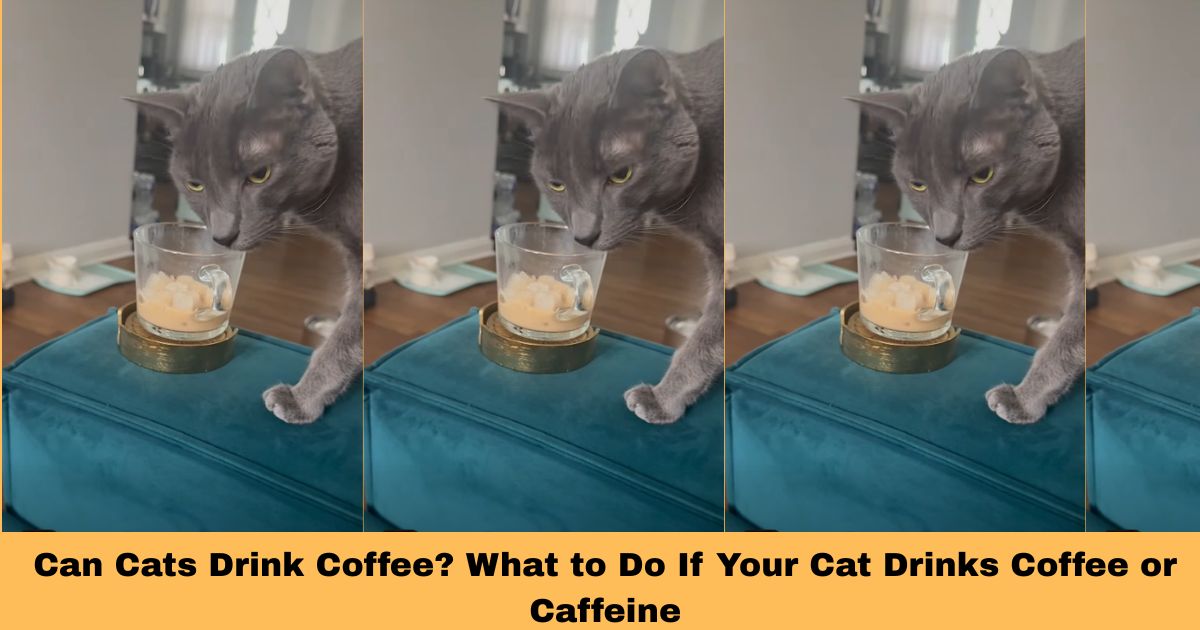
Did your cat just lap up your coffee? How dangerous caffeine is for cats, how much is too much, the signs of caffeine poisoning, and exactly what to do next.
This article contains affiliate links. As an Amazon Associate, we earn from qualifying purchases, at no extra cost to you. Learn more.
Advertisement
If your cat seems obsessed with your morning coffee, you're not alone. A viral video shared in November 2026 showed a cat creeping toward its owner's iced coffee, only for the owner to snatch the cup away just in time. One viewer joked that the cat knew its owner should be drinking water instead.
It's a funny clip, but it raises a serious question that many cat owners search for every day: can cats drink coffee? And what should you do if your cat has already had a few laps?
The short answer is no, cats should never drink coffee. Below you'll find why caffeine is dangerous for cats, how much is too much, the signs of caffeine poisoning, and exactly what to do if your cat gets into your coffee, tea or energy drink.
Quick answer: can cats drink coffee?
No. Coffee and other caffeinated drinks are dangerous for cats. Agriculture Victoria warns that in large enough doses, caffeine can be fatal for a cat, and there's no antidote. PetMD, writing with the Pet Poison Helpline veterinary team, explains that a lick or two of a caffeinated drink is unlikely to cause problems, but larger amounts can. Concentrated products such as coffee grounds, coffee pods, caffeine pills and energy supplements are the most dangerous.
If your cat drank more than a lick or two, or ate coffee grounds, beans or pills, call your vet or a pet poison helpline straight away.
Why is caffeine dangerous for cats?
Caffeine belongs to a group of chemicals called methylxanthines, the same family as theobromine in chocolate. The MSD Veterinary Manual explains that methylxanthines stimulate the nervous system and the heart, which can lead to restlessness, a racing heart, tremors and seizures.
PetMD notes that cats are highly sensitive to caffeine, and that toxic effects can occur even from small amounts. Because cats are small, a quantity that wouldn't affect a person can have a big effect on a cat.
How much caffeine is in your drink?
The amount of caffeine your cat swallows depends on what it drank and how much. The Mayo Clinic gives these typical amounts:
| Drink | Typical caffeine |
|---|---|
| Brewed coffee, 8 oz (240 ml) | 96 mg |
| Espresso, 1 oz (30 ml) | 63 mg |
| Instant coffee, 8 oz | 62 mg |
| Energy drink, 8 oz | 79 mg |
| Brewed black tea, 8 oz | 48 mg |
| Cola, 8 oz | 33 mg |
| Brewed green tea, 8 oz | 29 mg |
| Decaf coffee, 8 oz | 1 to 2 mg |
Coffee grounds, whole beans, coffee pods and caffeine pills contain far more concentrated caffeine than a brewed drink, which is why PetMD describes them as more dangerous.
How much caffeine is too much for a cat?
There's no single "safe" amount, and individual cats react differently.
The MSD Veterinary Manual gives toxic doses of methylxanthines for dogs: mild signs such as vomiting and diarrhoea from about 20 mg per kg of body weight, heart effects at about 40 to 50 mg/kg, and seizures at about 60 mg/kg or more. It doesn't give separate figures for cats, but PetMD notes that cats are highly sensitive.
To put those dog figures into perspective, an average 4 kg (9 lb) cat would reach 20 mg/kg with just 80 mg of caffeine. That's less than a standard 8 oz cup of brewed coffee. Because cats may be even more sensitive, treat any more than a lick or two as a reason to call your vet.
What about decaf?
Decaf coffee has very little caffeine, about 1 to 2 mg per cup according to the Mayo Clinic. A small sip of plain decaf is unlikely to be toxic. But coffee drinks often contain other ingredients that can upset a cat's stomach, so it's still not a good idea.
It's not just the caffeine
Many coffee drinks contain other ingredients that aren't good for cats:
- Milk and cream. Agriculture Victoria explains that adult cats don't have much lactase, the enzyme that digests milk, so dairy can cause diarrhoea. Iced lattes and creamy coffee drinks often tempt cats for this reason.
- Sugar and syrups. Cats don't need sugar, and sweet syrups can upset their stomach.
- Xylitol. Some sugar-free syrups, sweeteners and creamers contain xylitol. The AVMA warns that xylitol can be deadly if eaten by cats.
- Chocolate. Mochas and chocolate-flavoured drinks add theobromine, which is also toxic to cats.
- Whipped cream and toppings, which add fat, sugar and dairy.
Signs of caffeine poisoning in cats
PetMD lists these signs of caffeine toxicity in cats:
- Vomiting
- Diarrhoea
- Restlessness or hyperactivity
- Abnormal behaviour
- Open-mouth breathing or panting
- A fast heart rate
- Muscle tremors
- Unsteadiness or wobbliness
- High body temperature
- Dehydration
- Seizures
Agriculture Victoria also lists collapse as a possible sign.
How fast do signs appear?
PetMD explains that caffeine is absorbed quickly, so signs can develop rapidly. The MSD Veterinary Manual notes that methylxanthine signs can last up to 72 hours in severe cases, and PetMD says caffeine signs in cats can last 12 to 36 hours.
What to do if your cat drinks coffee
Step by step
- Stay calm and remove the drink, and any grounds, pods or beans, so your cat can't have more.
- Work out what and how much your cat had. Was it brewed coffee, espresso, an energy drink, coffee grounds or pills? Roughly how much is missing? Keep the cup, packet or pod.
- Check your cat for signs such as restlessness, panting, vomiting or tremors.
- Call your vet or a pet poison helpline immediately, even if your cat seems fine.
- US: Pet Poison Helpline, (855) 764-7661, or ASPCA Animal Poison Control Center, (888) 426-4435. Both are available 24/7, and a consultation fee may apply.
- Australia: Animal Poisons Helpline, 1300 869 738.
- Don't try to make your cat vomit. PetMD warns that there's no safe way to make a cat vomit at home.
- Go to your vet or a 24-hour emergency vet if advised, and take the packaging with you.
When it's probably OK
If your cat had only a lick or two of plain brewed coffee, PetMD says it's unlikely to cause problems. Still, watch your cat closely for the next few hours, and call your vet if you notice any signs, or if you're not sure how much it drank.
When it's an emergency
Go to an emergency vet straight away if your cat:
- Ate coffee grounds, whole beans, coffee pods, caffeine pills or energy supplements
- Drank a significant amount of coffee, espresso or an energy drink
- Shows tremors, seizures, collapse or difficulty breathing
- Is very restless, panting or has a racing heart
Our guide to cat emergency signs explains other situations that can't wait.
How vets treat caffeine poisoning
There's no antidote for caffeine, as Agriculture Victoria notes, so treatment focuses on removing the caffeine and supporting your cat. PetMD and the MSD Veterinary Manual describe treatment that may include:
Advertisement
- Making your cat vomit in the clinic, if it's safe and the caffeine was swallowed recently
- Activated charcoal to reduce absorption, in some cases
- Intravenous fluids to support the heart and help flush out the caffeine
- Medications to control a fast heart rate, tremors and seizures
- Hospitalisation and monitoring of heart rate, temperature and behaviour
PetMD says that with prompt treatment, cats typically recover without lasting effects, but untreated caffeine poisoning can be fatal.
The cost of emergency care
Emergency treatment and overnight hospitalisation can be expensive. If you don't have pet insurance, it's worth considering before an emergency happens. Our guides to cat vet costs and whether cat insurance is worth it explain what to consider.
Hidden sources of caffeine around the house
Coffee cups aren't the only risk. PetMD lists many sources of caffeine that cats can get into:
- Coffee beans and ground coffee
- Used coffee grounds in the bin or compost
- Coffee pods and capsules
- Tea bags and loose-leaf tea
- Energy drinks and soft drinks
- Chocolate and chocolate-covered coffee beans
- Caffeine pills, diet pills and energy supplements
- Caffeinated gum
- Some medications
Keep these in closed cupboards, and make sure your kitchen bin has a secure lid.
Why do cats like coffee?
Cats are naturally curious, and anything you're enjoying can look interesting. Some cats are attracted to:
- Milk or cream in the drink
- The smell of a new liquid
- The movement of ice in an iced coffee
- Your attention. If your cat gets a reaction every time it approaches your cup, it may keep coming back.
Cats also tend to prefer drinking from interesting places, like glasses and running taps, rather than a still bowl.
How to keep your cat away from your coffee
- Use a lidded travel mug at home, especially for iced coffee.
- Never leave drinks on low tables or the edge of the bench.
- Clean up spills straight away.
- Bin used grounds and pods in a lidded bin.
- Store coffee, tea and energy drinks in closed cupboards.
- Give your cat its own interesting water. Many cats enjoy drinking from moving water. A cat water fountain can make water more appealing and may help redirect a cat that's curious about your drinks. You can browse cat water fountains on Amazon.
- Offer a distraction, such as a short play session or a treat, when you sit down with your coffee.
Coffee and caffeine safety checklist
- [ ] My coffee, tea and energy drinks are never left unattended within reach.
- [ ] I use a lidded mug, especially for iced coffee.
- [ ] Coffee beans, grounds, pods and tea bags are stored in closed cupboards.
- [ ] My kitchen bin has a secure lid.
- [ ] Caffeine pills and supplements are locked away.
- [ ] I know the signs of caffeine poisoning.
- [ ] I've saved my vet's number and a pet poison helpline.
- [ ] I know where my nearest 24-hour emergency vet is.
Frequently asked questions
Can cats drink coffee?
No. Coffee contains caffeine, which is dangerous for cats. Agriculture Victoria warns that in large enough doses caffeine can be fatal for a cat, and there's no antidote.
My cat licked my coffee. Should I worry?
A lick or two of plain brewed coffee is unlikely to cause problems, according to PetMD. Watch your cat for restlessness, vomiting, panting or tremors, and call your vet if you see any signs or aren't sure how much it drank.
How much coffee is toxic to a cat?
There's no single safe amount, and cats are highly sensitive. For dogs, the MSD Veterinary Manual says mild signs can begin at about 20 mg of caffeine per kg. For a 4 kg cat, that's less than one 8 oz cup of brewed coffee. Call your vet if your cat drinks more than a lick or two.
Are coffee grounds dangerous for cats?
Yes. Coffee grounds, beans and pods contain concentrated caffeine and are more dangerous than a brewed drink. Contact your vet or a pet poison helpline immediately if your cat eats any.
Can cats drink decaf coffee?
Decaf has very little caffeine, about 1 to 2 mg per cup according to the Mayo Clinic, so a small sip is unlikely to be toxic. But milk, sugar and sweeteners in coffee drinks can still upset your cat, so it's best avoided.
Can cats drink tea?
No. Tea also contains caffeine, around 48 mg in an 8 oz cup of black tea according to the Mayo Clinic. Tea bags and loose-leaf tea are more concentrated and more dangerous.
How long does caffeine poisoning last in cats?
PetMD says signs can last 12 to 36 hours, and the MSD Veterinary Manual notes that methylxanthine signs can last up to 72 hours in severe cases. With prompt treatment, most cats recover fully.
Related guides
- Cat emergency signs: when to see a vet
- Christmas food that's dangerous for cats
- Can cats eat turkey? Thanksgiving food safety
Sources
- PetMD, Caffeine and pets: safety tips and considerations
- Agriculture Victoria, Human foods to avoid for cats
- MSD Veterinary Manual, Chocolate (methylxanthine) toxicosis in animals
- Mayo Clinic, Caffeine content for coffee, tea, soda and more
- American Veterinary Medical Association, Thanksgiving pet safety
- TAG24, Viral video of the day for 7 November 2026
- Animal Poisons Helpline, About us
This guide is general information only and is not a substitute for advice from your vet. If you think your cat has swallowed caffeine, contact a vet or pet poison helpline immediately.
Advertisement