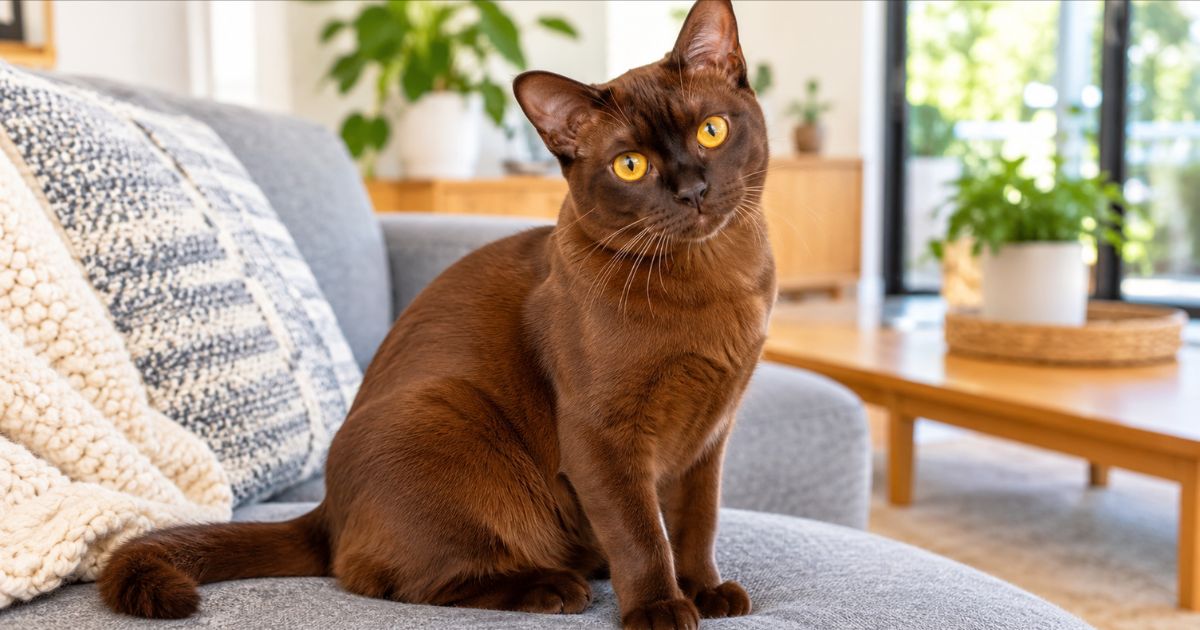
Thinking of a Burmese kitten? Learn what Burmese cats are really like, the health issues to ask breeders about, how to buy safely in Australia, and how to adopt a Burmese instead.
The Burmese is one of Australia's favourite pedigree cats. Affectionate, playful and famously people-focused, it's the kind of cat that follows you from room to room and wants to be involved in everything you do.
Advertisement
If you're searching for Burmese kittens for sale or a Burmese cat to adopt, it pays to do your homework first. Burmese cats have a few breed-specific health issues, and Australia's popularity for the breed makes it a target for backyard breeders and online scams.
Below you'll find what Burmese cats are like to live with, the health conditions to ask any breeder about, the legal checks to make when buying a kitten in Australia, and how to find a Burmese through adoption.
Quick answer
The Burmese is an affectionate, active, intelligent cat that needs company and play. Before buying a Burmese kitten in Australia, visit the breeder in person, meet the mother cat, and ask about testing for inherited conditions such as hypokalaemia. Check the kitten's microchip number, and in Victoria the seller's source number, which must appear in any sale advertisement. Consider adoption too: Burmese and Burmese-cross cats do turn up in shelters and rescue groups.
A short history of the Burmese
According to Burke's Backyard, most Western Burmese cats trace back to a single female cat called Wong Mau, brought from Burma (now Myanmar) to the United States in the 1930s. Because she was the only cat of her type in the West, she was mated with a Siamese, and the kittens were bred back to her. The breed was formally recognised in the 1950s and 1960s.
Burke's Backyard describes the Burmese as one of Australia's most popular pedigree shorthaired cats. Pet insurance data backs this up. PetSure's 2023 policy data ranked the Burmese fifth among the most popular cat breeds in Australia, and Bupa Pet Insurance's 2023–24 data also placed it in the top 10.
What are Burmese cats like?
Personality
Burke's Backyard describes Burmese cats as intelligent, affectionate, active, playful and inquisitive. PetSure describes them as affectionate, playful and people-oriented, and says they need plenty of time and attention.
Burmese cats are often described as dog-like. Burke's Backyard notes that some can be trained to retrieve toys or balls of paper. They're vocal, but Burke's Backyard says they're generally less demanding than Siamese, and most accept strangers well.
Living with a Burmese
- They don't like being alone. Burke's Backyard suggests that people who are away from home a lot should consider having two, because a bored Burmese can become destructive.
- They need play and climbing space. Burmese cats like room to explore and will scratch furniture if they don't have a scratching post.
- They're good with families. Burke's Backyard says Burmese cats are good with children, as long as they're not teased.
- They suit apartments. According to Burke's Backyard, Burmese cats suit average homes and flats.
- They roam if allowed. Burke's Backyard warns that Burmese will wander if allowed outside, and many are hit by cars. That makes indoor living or a secure enclosure especially important.
Appearance and care
Burke's Backyard lists 10 recognised Burmese colours in Australia: brown, blue, lilac, chocolate, cream, red, and four tortoiseshell variations (lilac-cream, blue tortie, chocolate tortie and brown tortie). Burmese cats have golden eyes and a short, silky coat.
Grooming is minimal. Burke's Backyard says hand-stroking is usually enough to remove loose hairs. It gives the Burmese a typical lifespan of 12 to 16 years.
Burmese cat health: what to know and what to ask
Every breed has health issues, and the Burmese is no exception. Knowing them helps you ask the right questions and spot problems early.
Hypokalaemia
International Cat Care explains that Burmese and related breeds can inherit periodic hypokalaemia, a condition linked to low potassium levels. It causes episodes of muscle weakness, often with a drooping head and neck, and usually appears in kittens aged two to six months. Burke's Backyard notes it can be treated with oral potassium supplements.
A gene test is available, and International Cat Care recommends testing breeding cats. Ask any Burmese breeder whether the parents have been tested.
Diabetes
Burmese cats in Australia have a higher risk of diabetes. A study by Lederer and colleagues, published in The Veterinary Journal in 2009, looked at 12,576 cats at two cat-only clinics in Brisbane. It found diabetes in 22.4 per 1,000 Burmese cats, compared with 7.6 per 1,000 domestic shorthaired and longhaired cats.
Keep your Burmese at a healthy weight, feed a good-quality diet, and watch for signs of diabetes such as drinking and urinating more, increased appetite and weight loss. See your vet promptly if you notice these.
Feline orofacial pain syndrome (FOPS)
Fitzpatrick Referrals, a UK veterinary specialist hospital, describes FOPS as a painful condition that causes exaggerated licking and chewing, pawing at the mouth, and in severe cases, injury to the tongue and lips. It's most common in Burmese cats and is thought to be inherited.
Fitzpatrick Referrals says many cats first show signs when their adult teeth come through, and that dental disease and stress, especially conflict with other cats, are common triggers. If your Burmese paws at its mouth or seems uncomfortable when eating, see your vet.
Other issues
PetSure lists gastrointestinal disease, eye problems and dental issues among the most common insurance claims for Burmese cats in Australia. Burke's Backyard also mentions that some Burmese may be lactose intolerant, so they shouldn't be given milk, and that indoor spraying can occur. Desexing and keeping litter trays clean may help with spraying.
| Condition | What it does | What to ask or do |
|---|---|---|
| Hypokalaemia | Episodes of muscle weakness from low potassium | Ask if parents are gene-tested |
| Diabetes | Increased thirst, urination and appetite, weight loss | Keep your cat lean, see your vet if signs appear |
| FOPS | Mouth pain, pawing at the mouth, tongue injury | Regular dental checks, reduce stress |
| Dental disease | Bad breath, sore gums, tooth loss | Annual dental checks |
| Lactose intolerance | Stomach upset | Don't give milk |
For help planning for these costs, read our guides to cat vet costs in Australia and whether cat insurance is worth it.
Burmese kittens for sale: how to buy safely in Australia
The legal checks
Australian states have rules about advertising cats and kittens. Two examples:
- New South Wales: The NSW Office of Local Government says all advertisements for the sale of kittens and cats must include a microchip number. Sellers must be able to provide this before the sale.
- Victoria: Agriculture Victoria says any advertisement to sell, rehome or give away a cat must show the animal's microchip number and a source number from the Pet Exchange Register. Agriculture Victoria encourages buyers to search the seller's source number on the register before buying.
Rules differ between states and change over time, so check your state's current requirements. Our guide to cat laws in Australia explains the main rules by state.
Pedigree registration
Pedigree Burmese kittens are usually registered with an Australian cat registry. The Australian Cat Federation, founded in 1972, is one of the national registries, and the Co-ordinating Cat Council of Australia is another. Registration papers confirm a kitten's pedigree, but they don't guarantee good health or responsible breeding, so still ask about health testing.
Advertisement
How to find a responsible Burmese breeder
RSPCA Australia gives this advice for choosing a breeder:
- Visit in person. See where the kittens were born and raised. Never buy a kitten sight unseen.
- Meet the mother cat, and the father if possible, to check their health and temperament. Burke's Backyard specifically advises checking a Burmese kitten's parents for any signs of aggression.
- Ask for health records, including vaccinations, worming, microchipping and genetic test results for the parents.
- Expect questions. A good breeder wants to know their kittens are going to suitable homes.
- Ask for a written take-back promise. RSPCA Australia says responsible breeders should take a kitten back within a specified period.
- Ask for references from previous buyers.
- Check the legal numbers in the advertisement, and verify them where your state allows.
Red flags
Walk away if a seller:
- Won't let you visit or meet the mother cat
- Wants to meet in a car park or deliver the kitten to you
- Asks for full payment or a deposit before you've seen the kitten
- Can't provide a microchip number, or a source number in Victoria
- Has many different breeds available at once
- Offers kittens younger than about eight weeks
- Has no health records or genetic test results
Online pet scams are common in Australia. A cheap "Burmese kitten" advertised with stock photos is a classic warning sign.
Burmese adoption: finding a Burmese to rescue
Many people searching for Burmese kittens don't realise they can adopt one. RSPCA Australia encourages people looking for a pet to first consider adopting from the RSPCA or another reputable animal welfare organisation.
Where to look
- RSPCA and animal shelters: Purebred and Burmese-cross cats do arrive in shelters, often when owners can no longer care for them.
- Breed rescue groups: Some breed clubs and volunteers help rehome Burmese cats. Ask your state's Burmese cat club whether it runs a rehoming list.
- Breeders: Some breeders rehome retired breeding cats once they're desexed. These adult cats can make wonderful companions.
Why consider an adult Burmese?
Adult cats have settled personalities, so you know whether a cat is calm, chatty or extra playful. They're often already desexed, vaccinated and microchipped. And with a lifespan of 12 to 16 years, a Burmese adopted at five or six still has many years ahead.
Preparing for your Burmese
- Set up a safe indoor space with a litter tray, food, water, a bed and hiding spots.
- Provide climbing and scratching options. Burmese cats love height and play.
- Plan for company. If you work long hours, think about adopting two cats together.
- Make your home escape-proof, or build an outdoor enclosure. See our guide to cat enclosures and catios.
- Book a vet check in the first week, and ask about dental care and diabetes prevention.
- Schedule daily play. Short sessions with wand toys keep a Burmese happy and fit.
Burmese buyer's checklist
- [ ] I've decided between buying a kitten and adopting a Burmese.
- [ ] I've checked the microchip number in the advertisement.
- [ ] In Victoria, I've searched the seller's source number on the Pet Exchange Register.
- [ ] I've visited the breeder and met the mother cat.
- [ ] I've asked if the parents are tested for hypokalaemia.
- [ ] I've seen vaccination, worming and microchip records.
- [ ] I have a written agreement, including a take-back promise.
- [ ] I've budgeted for vet care, dental care and insurance.
- [ ] My home is ready, with climbing space, scratching posts and escape-proof windows.
- [ ] I have a plan for company if I'm out for long periods.
Frequently asked questions
Are Burmese cats good pets?
Yes, for the right household. Burmese cats are affectionate, playful and people-oriented, and Burke's Backyard says they're good with children. They need attention and company, so they're best for people who are home often or who can adopt two cats.
How long do Burmese cats live?
Burke's Backyard gives the Burmese a typical lifespan of 12 to 16 years. Good nutrition, weight control, dental care and regular vet check-ups help them live a long, healthy life.
Are Burmese cats prone to diabetes?
Yes. A 2009 Australian study of cats at Brisbane cat clinics found diabetes in 22.4 per 1,000 Burmese cats, compared with 7.6 per 1,000 domestic cats. Keep your Burmese lean and see your vet if it drinks or urinates more than usual.
What should I check before buying a Burmese kitten?
Visit the breeder, meet the mother cat, and ask for health records and hypokalaemia test results. Check the microchip number in the advertisement, and in Victoria, the seller's source number on the Pet Exchange Register.
Can I adopt a Burmese cat?
Yes. Burmese and Burmese-cross cats sometimes come into RSPCA shelters and rescue groups, and some breeders rehome retired breeding cats. Ask local shelters and your state's Burmese cat club about available cats.
Can Burmese cats be left alone?
Burmese cats don't like being alone for long periods. Burke's Backyard suggests that people who are often away should consider getting two, because a bored Burmese can become destructive.
Related guides
Sources
- Burke's Backyard, Burmese cats
- PetSure, The 10 most popular cat breeds
- International Cat Care, Hypokalaemia in cats
- Lederer R et al., Frequency of feline diabetes mellitus and breed predisposition in domestic cats in Australia, The Veterinary Journal, 2009
- Fitzpatrick Referrals, Feline orofacial pain syndrome (FOPS)
- NSW Office of Local Government, Sell or give away a pet
- Agriculture Victoria, Pet Exchange Register FAQs
- RSPCA Australia Knowledgebase, How do I find a responsible dog or cat breeder?
- Australian Cat Federation, About the ACF
This guide is general information only and is not a substitute for advice from your vet. Laws on selling and advertising cats vary by state and may change.
Advertisement