Thinking of buying a self-cleaning litter box? The real pros and cons, what vets and cat behaviourists warn about, three popular models compared, and how to switch your cat over safely.
This article contains affiliate links. As an Amazon Associate, we earn from qualifying purchases, at no extra cost to you. Learn more.
Advertisement
Scooping the litter box is the least glamorous part of living with a cat. So it's no surprise that self-cleaning litter boxes have become one of the most talked-about cat products of the past few years. The idea is simple: your cat does its business, and the machine sifts, separates and stores the waste for you.
But these boxes are a big investment, often costing many times more than a standard tray. And they aren't right for every cat. Some cats are frightened by the movement and noise, and a hands-off box can make it easier to miss early signs of illness.
Below you'll find how self-cleaning litter boxes work, the honest pros and cons, what cat behaviourists and vets warn about, three popular models compared, and how to switch your cat over safely. If you're planning to buy during the Black Friday and Cyber Monday sales, this will help you choose wisely.
Quick answer: are self-cleaning litter boxes worth it?
They can be, for the right cat and household. A self-cleaning litter box can reduce odour, save daily scooping and help busy owners, multi-cat homes and people with mobility problems. But they're expensive, some cats refuse to use them, and experts warn that owners can miss early warning signs in their cat's waste. If you buy one, choose a model with strong safety sensors, keep a traditional litter box available while your cat adjusts, and keep monitoring your cat's toilet habits.
| Pros | Cons |
|---|---|
| Less daily scooping | High upfront cost |
| Better odour control in many models | Some cats are scared of the noise and movement |
| A clean surface for every visit | Owners may miss changes in urine or stool |
| Helpful for multi-cat homes | Mechanisms need regular deep cleaning |
| Some models track visits and weight | Most have minimum cat weights, so not suitable for small kittens |
| Useful for owners with limited mobility | Some need special litter or refills |
How self-cleaning litter boxes work
Most self-cleaning litter boxes use sensors to detect when a cat enters and leaves. After a short delay, the box runs a cleaning cycle. Depending on the design, it may:
- Rotate a drum or globe to sift clumps through a screen into a sealed waste drawer
- Rake waste across the litter bed into a covered compartment
- Use disposable trays filled with crystal litter that absorbs urine and dries out stool
Many newer models connect to a phone app that records each visit, tracks your cat's weight and sends alerts when the waste drawer is full.
Who a self-cleaning litter box suits
- Busy owners who struggle to scoop once or twice a day
- Multi-cat homes, where boxes fill up quickly
- Owners with limited mobility or back problems who find scooping difficult
- People who travel for short periods, although your cat still needs daily checks from a sitter
- Tech-minded owners who like tracking their cat's habits in an app
Who should think twice
- Owners of kittens. Many models have minimum cat weights. Forbes Vetted lists minimum weights of about 3 lb (1.4 kg) for Litter-Robot models and 6 to 7 lb (2.7 to 3.2 kg) for the PetSafe ScoopFree Crystal Pro.
- Nervous or noise-sensitive cats. The Toronto Humane Society notes that automatic boxes can scare some cats and lead to them going outside the box.
- Cats with urinary or digestive health problems, unless the box offers good health monitoring and you still check the waste regularly.
- Very large cats, which may feel cramped in models with small openings.
What the experts warn about
Safety
Joey Lusvardi, a certified cat behaviour consultant interviewed by Forbes Vetted, warns that robotic litter boxes do carry a risk of injury to cats. He recommends choosing a box with features such as a delayed cleaning start and automatic shut-off if a cat enters during a cycle.
Missing early signs of illness
This is the most important downside. Dr Aimee Warner, a veterinarian quoted by Forbes Vetted, warns that the hands-off design allows owners to miss early warning signs in their cat's waste. Lusvardi adds that owners may miss signs such as blood in the waste or changes in how often a cat uses the box.
Changes in litter box habits are often the first sign of health problems, including urinary tract disease, kidney disease and diabetes. A male cat that's straining in the litter box and producing little or no urine needs an emergency vet immediately. Our guide to cat emergency signs explains which signs can't wait.
How to reduce the risk:
- Choose a model that records visits and alerts you to changes.
- Check the waste drawer and litter bed regularly.
- Keep an eye on how often your cat visits the box.
- See your vet if your cat strains, cries in the box, has blood in its urine or goes outside the box.
Noise and stress
Dr Warner also advises choosing a quiet box with a design that won't startle your cat, because excessive stress can lead cats to avoid the litter box.
Hygiene
Heather Alvey, a certified cat behaviourist quoted by Forbes Vetted, notes that waste can become smeared on the sides or caught in the mechanisms, creating hygiene issues. Self-cleaning boxes still need regular deep cleaning.
Three popular self-cleaning litter boxes compared
These three models cover different budgets and needs. Prices change often, especially around Black Friday and Cyber Monday, so check the current price on each listing.
| Model | Best for | Key features | Things to know |
|---|---|---|---|
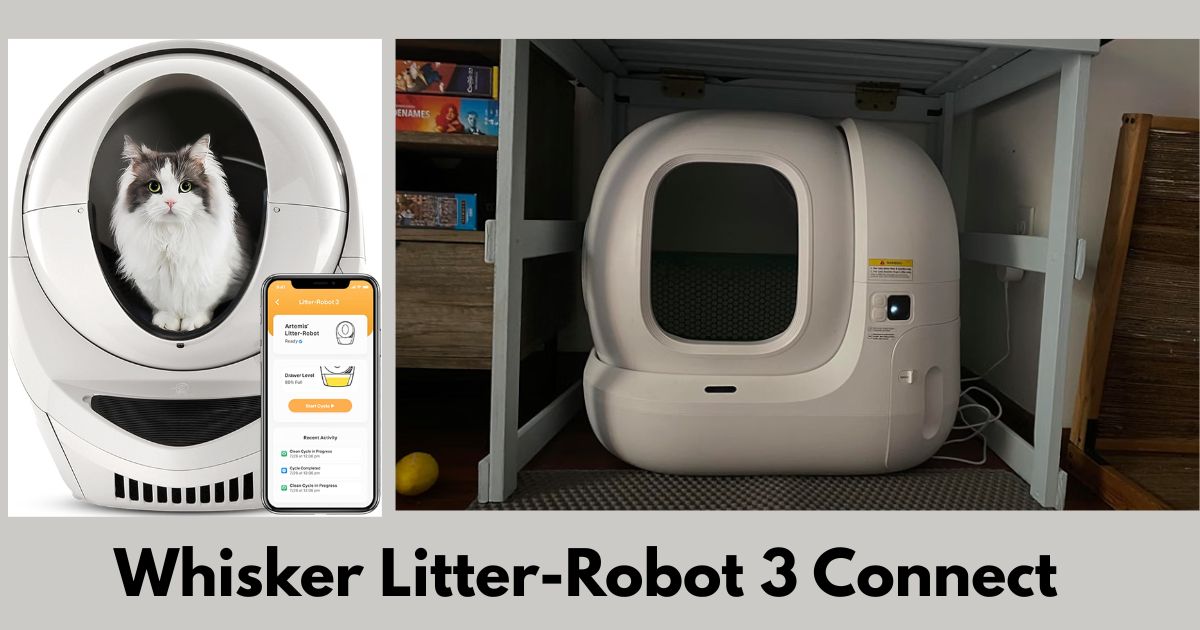
| Whisker Litter-Robot 3 Connect | Owners who want a proven, premium brand | Rotating globe, app connectivity | Smaller waste capacity than newer Litter-Robot models |
| PETKIT PuraMax 2 | Tech-minded owners and multi-cat homes | App control and automatic cleaning | Check the opening size for large cats |
| PetSafe ScoopFree Crystal Pro | A lower-cost, simpler option | Disposable crystal litter trays, rake system | Needs crystal litter trays, higher minimum cat weight |
1. Whisker Litter-Robot 3 Connect
The Litter-Robot is one of the best-known names in self-cleaning litter boxes. The Litter-Robot 3 Connect uses a rotating globe that sifts waste into a drawer below, and connects to an app so you can monitor its status from your phone. Forbes Vetted describes it as a budget option within the Litter-Robot range, with a smaller waste capacity than newer models.
Good for: owners who want an established brand with a long track record.
Things to check: the waste drawer size if you have several cats, and the space it needs in your home.
Check the current price on Amazon
2. PETKIT PuraMax 2
The PuraMax 2 is the successor to the original PETKIT PuraMax. It offers automatic cleaning with app control, making it a popular choice for owners who want smart features. Forbes Vetted noted that the original PuraMax had a small opening that its reviewer's large cats found cramped, so check the entrance size of the PuraMax 2 against your cat's size.
Good for: tech-minded owners and homes with more than one cat.
Things to check: the entrance size, the minimum cat weight and the litter types it accepts.
Advertisement
3. PetSafe ScoopFree Crystal Pro
The ScoopFree Crystal Pro uses a rake to sweep waste into a covered section of a disposable tray filled with crystal litter. Forbes Vetted named it its best budget pick, praising its consistent timing, good odour control and quick cleaning. It cycles 20 minutes after your cat leaves.
The trade-off is that it requires crystal litter trays, which are an ongoing cost, and it has fewer extra features. Forbes Vetted lists a minimum cat weight of 6 to 7 lb (2.7 to 3.2 kg).
Good for: owners who want a simpler, lower-cost self-cleaning option.
Things to check: the ongoing cost of replacement trays, and if your cat accepts crystal litter.
Check the current price on Amazon
You'll also need refills for this model: PetSafe ScoopFree crystal litter.
How to choose the right self-cleaning litter box
1. Check the minimum cat weight
Most boxes rely on weight sensors to detect a cat. If your cat is below the minimum weight, the box may not detect it, which is a safety risk. Kittens should use a traditional litter box until they're big enough.
2. Look for multiple safety sensors
Choose a model with a delayed start and automatic shut-off if a cat enters mid-cycle, as cat behaviour consultant Joey Lusvardi recommends.
3. Check the size and entrance
The Toronto Humane Society recommends a litter box at least 1.5 times the length of your cat from nose to tail. Large cats need a wide entrance and enough room to turn around.
4. Consider noise
If your cat is nervous, look for models reviewers describe as quiet.
5. Check the litter type
Some boxes work with standard clumping litter, while others need crystal litter or brand-specific refills. Factor ongoing costs into your decision.
6. Health monitoring features
Visit tracking, weight tracking and alerts can help you notice changes early. Forbes Vetted highlights models that can alert you if a cat hasn't used the box in 24 hours.
7. Trial period and warranty
Many brands offer trial periods and warranties. Check the return policy, since some cats never accept an automatic box.
How to switch your cat to a self-cleaning litter box
Take it slowly. Forcing the change can lead to your cat toileting elsewhere.
- Keep the old box. The Toronto Humane Society advises keeping a traditional litter box available if you try an automatic one.
- Place the new box beside the old one in a quiet spot your cat already uses.
- Start with the automatic cleaning switched off, if your model allows it, so your cat can get used to the box without noise or movement.
- Use the same litter your cat already likes, if the box allows it.
- Add a scoop of used litter from the old box to help your cat recognise the new one.
- Turn on automatic cleaning once your cat is using the box regularly, ideally when you're home to watch your cat's reaction.
- Remove the old box gradually, only once your cat is consistently using the new one.
- Watch for avoidance. If your cat stops using the box, toilets elsewhere or seems scared, go back a step.
Remember the litter box rule
The Toronto Humane Society recommends one litter box per cat, plus one extra. A self-cleaning box doesn't change that rule, so keep enough boxes for all your cats.
Cost: what to budget for
A self-cleaning litter box costs more than the purchase price alone. Budget for:
- The box itself, which is usually the biggest cost
- Litter, which may be a specific type
- Refills, trays, bags or filters, depending on the model
- Replacement parts over time
- Electricity, for models that plug in
Our guide to cat vet costs can also help you plan for ongoing care.
Is Black Friday a good time to buy?
Big-ticket pet products are often discounted during Black Friday and Cyber Monday sales. If you've been considering a self-cleaning litter box, check prices over sale week, compare the total cost including refills, and confirm the return policy before buying.
Self-cleaning litter box checklist
- [ ] My cat is above the box's minimum weight.
- [ ] The model has a delayed start and automatic shut-off sensors.
- [ ] The box and entrance are big enough for my cat.
- [ ] I know which litter and refills it needs, and the ongoing cost.
- [ ] I'll keep a traditional litter box available during the switch.
- [ ] I'll still check my cat's waste and toilet habits regularly.
- [ ] I know the signs that need a vet, such as straining or blood in urine.
- [ ] I've checked the trial period, warranty and return policy.
Frequently asked questions
Are self-cleaning litter boxes worth it?
They can be for busy owners, multi-cat homes and people with limited mobility. But they're expensive, not every cat accepts them, and experts warn they can make it easier to miss signs of illness. Choose a safe model and keep monitoring your cat's toilet habits.
Are self-cleaning litter boxes safe for cats?
Cat behaviour consultant Joey Lusvardi warns that robotic litter boxes carry a risk of injury. Choose a model with a delayed start and automatic shut-off if a cat enters mid-cycle, and check the minimum cat weight.
Can kittens use a self-cleaning litter box?
Usually not until they're bigger. Most models have minimum weights, such as about 3 lb for Litter-Robot models and 6 to 7 lb for the PetSafe ScoopFree Crystal Pro, according to Forbes Vetted. Use a traditional litter box for kittens.
Do self-cleaning litter boxes scare cats?
Some cats are startled by the noise and movement. The Toronto Humane Society notes they can lead some cats to toilet outside the box. Introduce the box slowly, keep a traditional box available, and choose a quiet model.
Will I miss signs that my cat is sick?
It's possible. A veterinarian quoted by Forbes Vetted warns that the hands-off design can cause owners to miss early warning signs. Choose a model that tracks visits, and still check your cat's waste regularly.
How many litter boxes do I need with a self-cleaning box?
The Toronto Humane Society recommends one litter box per cat, plus one extra. A self-cleaning box counts as one box, so keep enough boxes for all your cats.
Which self-cleaning litter box is best?
It depends on your cat, budget and space. Premium models like the Litter-Robot offer proven designs and app features, while simpler options like the PetSafe ScoopFree Crystal Pro cost less upfront but need ongoing tray refills.
Related guides
Sources
- Forbes Vetted, Best automatic litter boxes
- Toronto Humane Society, How to choose a litter box for your cat
Product details, prices and availability can change, so always check the current listing before you buy. This guide is general information only and is not a substitute for advice from your vet.
Advertisement