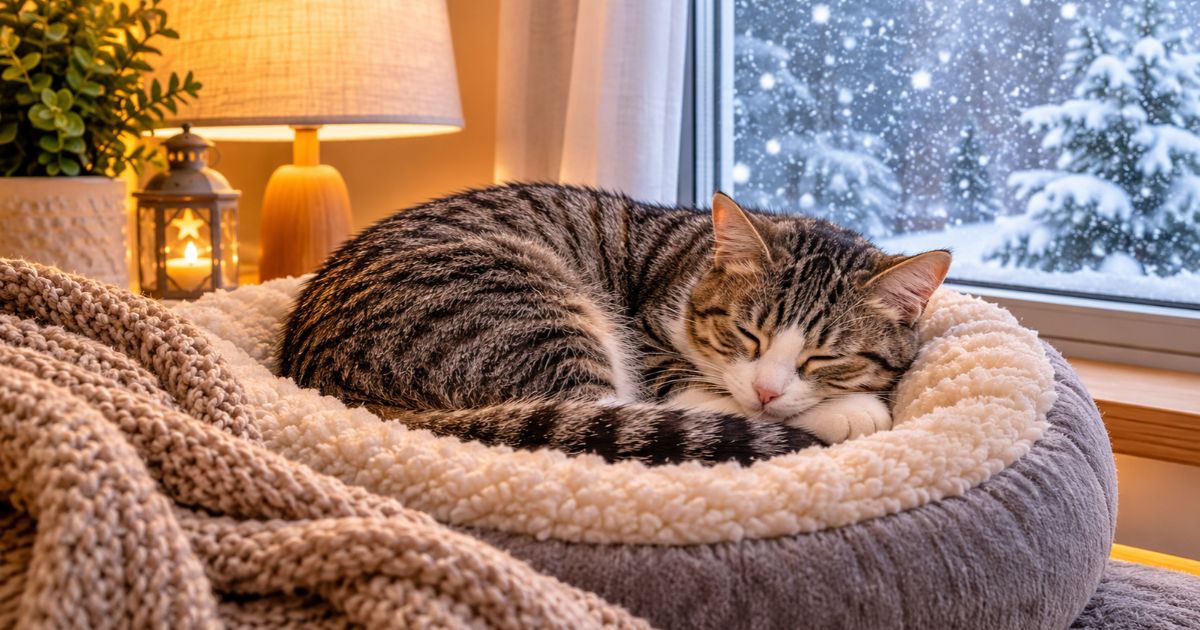
Are heated cat beds safe? Electric vs self-warming beds, what a vet says about the risks, which cats benefit most, and five popular heated cat beds and houses worth considering.
This article contains affiliate links. As an Amazon Associate, we earn from qualifying purchases, at no extra cost to you. Learn more.
Advertisement
Cats are experts at finding the warmest spot in the house. The sunny windowsill, the laptop keyboard, the pile of fresh laundry, the top of the radiator. When the weather turns cold, that search for warmth becomes a full-time job.
A heated cat bed gives your cat its own warm place to curl up, and it can be especially comforting for senior cats, thin-coated cats and cats recovering from illness. But many owners worry: are heated beds safe to leave plugged in? Could my cat overheat?
Below you'll find the difference between electric and self-warming beds, what a veterinarian says about the safety risks, which cats benefit most, how to choose the right bed, and five popular heated cat beds and houses to consider this winter.
Quick answer: are heated cat beds safe?
Yes, heated cat beds designed for cats are generally safe when used correctly. Choose a low-wattage bed made specifically for cats, with a thermostat and a chew-resistant cord, and make sure your cat can always move off the heat. Self-warming beds, which reflect your cat's own body heat and use no electricity, are an even simpler option.
Catster's vet-reviewed guide, reviewed by veterinarian Dr Maxbetter Vizelberg, warns never to use a human heating pad for your cat, and says a heated bed may not suit a cat that has difficulty moving on its own.
Electric vs self-warming cat beds
| Feature | Electric heated bed | Self-warming bed |
|---|---|---|
| How it warms | A low-wattage heating pad, often with a thermostat | Reflects your cat's own body heat with an insulating layer |
| Warmth | Warmer, steady heat | Gentle, milder warmth |
| Electricity | Needs a power outlet | None |
| Cord | Yes, should be chew-resistant | No cord |
| Works in a power cut | No | Yes |
| Best for | Senior and arthritic cats, very cold rooms, thin-coated cats | Healthy adult cats, travel, budget buyers, homes with cord chewers |
| Outdoor versions | Some are rated for covered outdoor use | Usually indoor only |
Catster notes that self-warming beds don't get as warm as electric beds, so electric beds may suit senior cats, cats with joint problems or very cold climates. Self-warming beds have the advantage of no cord, and they keep working during a power cut.
Which cats benefit most from a heated bed?
According to Catster's vet-reviewed guide:
- Older cats can benefit from heat to help circulation as their bodies age.
- Hairless or shaved cats, such as the Sphynx, lose heat more easily.
- Cats recovering from surgery or illness may appreciate extra warmth.
Other cats that may enjoy a heated bed include:
- Cats with arthritis or stiff joints, which often seek out warm spots
- Thin or small cats with less body fat to keep warm
- Cats in cold homes, especially overnight
- Outdoor and community cats in winter, using beds designed for outdoor use
Heated cat bed safety: what a vet says
Catster's guide, reviewed by Dr Maxbetter Vizelberg, highlights these risks and safety tips.
The risks
- Overheating and dehydration. A cat may not sense when it's getting too hot. Young, old, overweight and post-surgery cats are at higher risk.
- Cats that can't move away. If your cat has difficulty moving independently, a heated bed may not be the right choice. Never put a heated bed in a crate or confined space where your cat can't escape the heat.
- Burns. Microwaveable heat pads can get very hot and can burn skin, especially on hairless or shaved cats.
- Cords. Cats that chew cords or scratch at heating elements create a fire risk.
- Human heating pads. These aren't designed for cats. Don't use them.
Safety tips
- Use only beds designed for cats, with low wattage and a thermostat.
- Make sure your cat can always move off the heat. Place the bed somewhere with room for your cat to get up and leave.
- Choose a bed with a chew-resistant cord, and check the cord regularly.
- Watch your cat for the first few hours of use.
- Unplug the bed when you're away, unless it has an automatic shut-off.
- Follow the manufacturer's instructions for settings and washing.
- Keep fresh water nearby, since warm cats can become thirsty.
Five popular heated cat beds and houses
These options cover electric beds, self-warming beds and an outdoor house. Prices change often, especially around Black Friday and Cyber Monday, so check the current price and listing details before you buy.
| Bed | Type | Best for |
|---|---|---|
| K&H Thermo-Kitty Fashion Splash | Electric, open bed | Indoor cats and kittens |
| K&H Igloo-Style Heated Cat Pad | Electric, enclosed | Cats that like to hide |
| Hepper Nest Cat Bed | Self-warming nest | A stylish, cord-free bed |
| Furhaven ThermaNAP Self-Warming Bed | Self-warming pad | A budget-friendly option |
| PETYELLA Heated Cat House | Electric, insulated house | Covered outdoor areas |
1. K&H Thermo-Kitty Fashion Splash Indoor Heated Cat Bed
K&H is one of the best-known names in heated pet beds. According to Catster, this round indoor bed has a 4-watt heater with a dual thermostat, a microfleece surface and a removable cover. Catster named it its best pick for kittens, noting that kittens may eventually outgrow it.
Good for: indoor cats and kittens, cats that like an open bed.
Check the current price on Amazon
2. K&H Igloo-Style Heated Cat Pad
This enclosed, igloo-style bed combines a cosy hideaway with a thermostat-controlled heating pad. Catster named it its premium choice. It's ideal for cats that like to tuck themselves away.
Good for: shy cats, cats that love enclosed beds, chilly rooms.
Things to know: it needs a power outlet nearby.
Check the current price on Amazon
3. Hepper Nest Cat Bed
This self-warming nest bed needs no electricity. Catster named it best overall, highlighting its foam shell and removable, machine-washable Sherpa liner. Catster notes it may be a tight fit for cats over about 17 lb (7.7 kg).
Good for: owners who want a stylish, cord-free bed for a small or medium cat.
Check the current price on Amazon
4. Furhaven ThermaNAP Self-Warming Cat Bed
A simple, self-warming bed lined with heat-reflecting material. Vetstreet named it its best budget pick, noting it's machine washable and comes in two sizes. Catster notes that it isn't very thick and can be a little crinkly.
Good for: budget buyers, travel, multi-cat homes, cats that chew cords.
Check the current price on Amazon
5. PETYELLA Heated Cat House
Advertisement
Vetstreet named this its best outdoor pick. It's an insulated house with a heating pad, a timer and a chew-proof cord, suitable for indoor use or covered outdoor areas. Vetstreet describes it as water-resistant rather than fully waterproof, so place it under shelter.
Good for: outdoor or community cats in a covered porch or garage.
Check the current price on Amazon
For a cheaper DIY option for outdoor cats, see our guide to building a DIY winter cat shelter.
How to choose the right heated cat bed
1. Electric or self-warming?
Choose electric for senior or arthritic cats, very cold rooms and thin-coated cats. Choose self-warming for healthy adult cats, homes with cord chewers, and owners who'd rather avoid electricity.
2. Thermostat and wattage
Electric beds made for cats are usually low wattage, and many include a thermostat. Avoid any heated product not designed for pets.
3. Cord protection
Look for a chew-resistant or wrapped cord. Catster notes that some beds have unwrapped cords, which matters if your cat chews.
4. Size and shape
Watch how your cat sleeps. Curled-up cats like round beds and nests. Stretchers prefer flat pads. Hiders love enclosed caves and igloos.
5. Washable cover
Cats shed. A removable, machine-washable cover makes life much easier.
6. Indoor or outdoor
Only use beds rated for outdoor use outside, and keep them under cover. Never use an indoor electric bed outdoors.
Introducing your cat to a new heated bed
Some cats move in straight away, while others are suspicious of anything new. To help your cat accept its new bed:
- Place it where your cat already sleeps, rather than in a new spot.
- Add something familiar, such as a blanket or t-shirt that smells like you or your cat.
- Turn on electric beds before your cat tries them, so the surface is already warm.
- Sprinkle a little catnip or silver vine on the bed, or leave a treat on it.
- Be patient. Some cats take a few days to claim a new bed.
Cleaning and caring for a heated bed
A clean bed is more comfortable and lasts longer.
- Unplug electric beds before cleaning, and remove the heating pad if the design allows.
- Wash removable covers according to the care label, usually on a gentle cycle.
- Never put the heating element in the washing machine unless the manufacturer says it's safe.
- Let everything dry completely before plugging the bed back in.
- Check the cord and pad for damage, chewing or scratches each time you clean, and stop using the bed if you see any.
- Vacuum or lint-roll fur between washes.
Where to put a heated cat bed
- In a quiet, draught-free spot your cat already likes.
- Away from busy walkways, so cords aren't tripped over.
- Near, but not right beside, food and water.
- On a stable surface, not on top of another heat source.
- With room around it, so your cat can step off easily.
Many cats prefer to sleep up high. A window perch or cat tree platform with a self-warming pad can make a perfect winter nest. See our guide to cat window perches.
Other ways to keep your cat warm in winter
- Offer several cosy spots, such as blankets in cardboard boxes and covered beds.
- Block draughts near your cat's favourite resting places.
- Keep indoor cats inside on cold nights.
- Groom regularly. A well-groomed coat insulates better than a matted one.
- Watch older cats closely. If your cat seems stiff, lethargic or less active in winter, talk to your vet, since arthritis is common in older cats.
Heated cat bed checklist
- The bed is designed for cats, not people.
- Electric beds have a thermostat and a chew-resistant cord.
- My cat can always move off the heat.
- The bed isn't inside a crate or confined space.
- I've watched my cat use it for the first few hours.
- I unplug it when I'm out, unless it has an automatic shut-off.
- Outdoor beds are rated for outdoor use and placed under cover.
- Fresh water is available nearby.
Frequently asked questions
Are heated cat beds safe to leave on overnight?
Many heated cat beds are designed for continuous use, with low wattage and a thermostat. Follow the manufacturer's instructions, check the cord regularly, and make sure your cat can move off the bed if it gets too warm.
Can I use a human heating pad for my cat?
No. Catster's vet-reviewed guide says not to use a human heating pad for your cat. Use a bed designed specifically for pets.
Do self-warming cat beds really work?
Yes, but they're milder than electric beds. They reflect your cat's own body heat back towards it. Catster notes they don't get as warm as electric beds, so they suit healthy cats better than seniors in very cold rooms.
Are heated beds good for older cats?
Often, yes. Catster's vet-reviewed guide notes that older cats can benefit from heat to help circulation as their bodies age. But a heated bed may not suit a cat that has difficulty moving on its own, since it needs to be able to move away from the heat.
Can kittens use heated cat beds?
Yes, with care. Kittens are at higher risk of overheating, so choose a low-wattage bed with a thermostat, make sure the kitten can move off the heat, and supervise early use.
Can I use a heated cat bed outside?
Only if it's designed for outdoor use, and only in a covered area. Indoor electric beds should never be used outdoors.
What's the difference between a heated bed and a self-warming bed?
A heated bed uses electricity to produce warmth, usually through a low-wattage pad. A self-warming bed uses no electricity, and instead reflects your cat's own body heat with an insulating layer.
Related guides
Sources
- Catster, Are heated cat beds safe? (reviewed by Dr Maxbetter Vizelberg, DVM)
- Catster, Best heated cat beds
- Vetstreet, Heated cat beds
Product details, prices and availability can change, so always check the current listing before you buy. This guide is general information only and is not a substitute for advice from your vet.
Advertisement