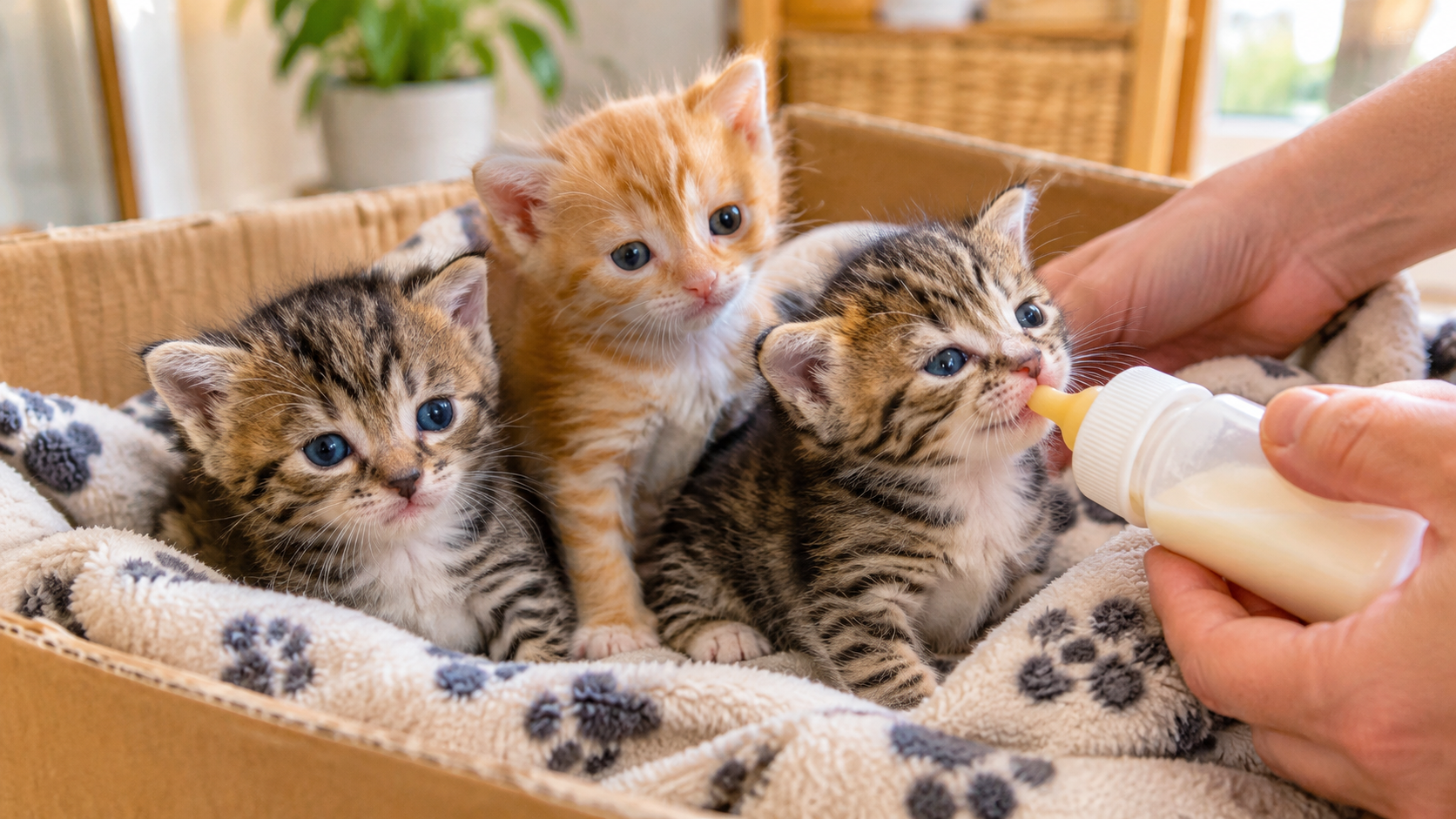
Found kittens in your garden or under a car? Learn when to wait for the mother, when to step in, how to tell a kitten's age and how to keep it safe until it gets help.
You hear a tiny meow from under the deck, behind the shed or in a pile of garden mulch. Then you see them: a litter of kittens, apparently alone. It's a moment that happens to thousands of Australians every spring and summer, and the first few decisions you make can save those kittens' lives.
Advertisement
The surprising truth is that the best thing to do is often nothing at all, at least for a few hours. Many kittens that look abandoned have a mother nearby. Taking them too soon can do more harm than good.
Below you'll find what Australian RSPCA organisations recommend when you find kittens, how to tell their age, when to step in, how to keep them warm and fed safely, and who to call for help.
Quick answer: what to do if you find a kitten
- Don't pick them up straight away. Watch from a distance to see if the mother returns.
- Wait three to six hours if the kittens are safe, warm and quiet. RSPCA NSW and RSPCA ACT both recommend waiting several hours before acting.
- Step in immediately if the kittens are in danger, injured, cold or crying constantly.
- Keep them warm before anything else. Never feed a cold kitten.
- Never give cow's milk. Use kitten milk replacer from a vet or pet store.
- Call your local RSPCA, animal shelter, council or vet for help and advice.
Why it's kitten season in Australia right now
If you're finding kittens in November, you're not alone. RSPCA NSW explains that cats are seasonal breeders. They start breeding around August as the days get longer, and kitten season runs from about mid-October through spring, summer and most of autumn.
The numbers are huge. RSPCA NSW reported taking in more than 13,000 cats in a single year, and about two-thirds of them were kittens. It also notes that a female cat can start breeding at about four months old and can have up to two litters in a season.
That's why so many people find kittens at this time of year, and why shelters and rescue groups are often stretched to capacity.
Step 1: check if the mother is nearby
Why the mother matters
For very young kittens, their mother is their best chance of survival. RSPCA ACT says kittens under four weeks old have the best chance of survival if they stay with their mum. She feeds them, keeps them warm, cleans them and helps them go to the toilet.
Mother cats often leave their kittens for hours at a time to find food. RSPCA ACT notes this is normal. She may also be hiding nearby because she's wary of you.
How to check for the mother
- Step back. Watch from a distance, or from inside your house. If you stay close, the mother may not come back.
- Wait several hours. RSPCA NSW suggests waiting three to six hours. RSPCA ACT recommends monitoring for six hours.
- Use the flour trick. RSPCA NSW suggests sprinkling a little flour around the nest. If you see paw prints later, the mother has been back.
- Check whether the kittens look cared for. Clean, plump, quiet, sleeping kittens are probably being fed. Dirty, thin kittens that cry constantly may have been left alone for too long.
If the mother comes back
Leave the family where it is, as long as it's safe. You can quietly put out food and water a short distance from the nest for the mother. Once the kittens are around eight weeks old, contact a shelter or rescue group about desexing the mother and finding homes for the kittens.
Step 2: decide if the kittens need help now
RSPCA NSW says you should only remove kittens if they're in danger or visibly injured. Step in straight away if:
- The kittens are in immediate danger, such as on a road, in a drain, under a car or exposed to dogs
- They're out in hot sun, heavy rain or cold weather
- They're injured, bleeding or have discharge from their eyes or nose
- They're cold to the touch, limp or very quiet
- They've been crying constantly for hours
- The mother hasn't returned after six hours
- You know the mother has died or been hit by a car
If you're unsure, call your local RSPCA, a shelter or a vet clinic and describe what you see. They can tell you whether to wait or act.
Step 3: work out how old the kittens are
A kitten's age decides almost everything about its care: how warm it needs to be, what it eats and how often. Cats Protection, the UK's leading cat charity, publishes a kitten ageing chart.
| Age | Typical weight | Signs to look for |
|---|---|---|
| Newborn | About 100 g | Eyes closed, ears folded, can't stand |
| 1 week | About 200 g | Eyes closed, not moving much |
| 2 weeks | About 300 g | Eyes open, ears open, baby teeth starting, wobbly first steps |
| 3 weeks | About 400 g | Ears point upwards, walking more confidently |
| 4 weeks | About 500 g | Walking, running and playing |
| 5 weeks | About 600 g | Eyes start changing from baby blue, stalking and pouncing |
| 6 weeks | About 700 g | Playful, grooms itself well |
| 7 weeks | About 800 g | Adult eye colour (green, yellow or grey) |
| 8 weeks | About 900 g | Ready for a new home once weaned, socialised and vaccinated |
Cats Protection notes that kittens' eyes usually open between 5 and 14 days old. A kitchen scale is the easiest way to estimate age, and your vet can confirm it.
Step 4: keep the kittens warm
Very young kittens can't control their own body temperature. A cold kitten is in danger, even in an Australian spring.
How to warm kittens safely
The UK vet charity PDSA recommends keeping very young kittens at 29 to 32°C for the first seven to ten days, then gradually lowering the temperature to normal room temperature, about 21°C, over four to six weeks.
To keep kittens warm:
- Put them in a cardboard box or pet carrier lined with soft towels or fleece.
- Use a heat pad or a wrapped hot water bottle, with plenty of padding between it and the kittens so they can't get burnt.
- Place the heat source under only half the box, so kittens can move away if they get too warm. PDSA stresses that kittens must be able to move away from the heat.
- Keep the box in a quiet, draught-free room, away from pets and children.
Warm first, feed second
VCA Animal Hospitals explains that cold kittens won't feed well, and that warming them before feeding improves feeding success. Never try to feed a kitten that feels cold. Warm it slowly first, and call a vet if it doesn't improve.
In hot weather
Australian summers bring the opposite risk. Kittens found in hot sun, sheds, cars or under metal sheeting can overheat quickly. Move them to a cool, shaded spot and call a vet if they're panting, limp or very hot. See our guide to keeping cats cool in summer.
Step 5: feed the kittens safely
Never give cow's milk
This is one of the most common mistakes. VCA Animal Hospitals explains that cow's milk has less than half the protein of a mother cat's milk, is lower in calories, fat and taurine, and contains more lactose. It recommends commercial kitten milk replacer, saying it's superior to cow's milk and homemade mixtures.
You can buy kitten milk replacer and kitten feeding bottles from vet clinics and pet stores. RSPCA NSW suggests asking your local vet for advice on the best products to use.
How often kittens need feeding
| Age | Feeding guide |
|---|---|
| Under 1 week | Kitten milk replacer every 2 to 4 hours, day and night (VCA) |
| 1 to 3 weeks | Bottle-feeding about every 2 to 3 hours, including overnight (PDSA) |
| 3 to 4 weeks | Milk feeds about every 3 hours, start offering wet kitten food at 4 weeks (PDSA) |
| 5 weeks | Milk from a saucer, wet kitten food and fresh water (PDSA) |
| 6 to 7 weeks | Fully weaned onto kitten food and water (PDSA) |
Feeding tips
- Warm the formula to about 38°C, as VCA recommends. Test it on your wrist, where it should feel warm, not hot.
- Feed with the kitten on its tummy, never on its back, to reduce the risk of milk going into the lungs.
- Let the kitten feed at its own pace. Don't squeeze milk into its mouth.
- Throw away leftover formula after an hour at room temperature, as VCA advises, and keep made-up formula in the fridge for no more than 24 hours.
- Weigh kittens daily. PDSA says kittens should gain weight every day.
Advertisement
Step 6: help with toileting
Young kittens can't go to the toilet on their own. VCA explains that kittens can't eliminate without help until about three weeks of age. The mother normally licks them to stimulate this.
After each feed, gently rub the kitten's bottom and genital area with a warm, damp cotton ball or soft cloth until it wees and poos. Keep a note of when each kitten goes, since PDSA lists not passing urine or faeces as a warning sign.
Warning signs: when to see a vet urgently
PDSA lists these signs that a kitten needs veterinary help:
- Diarrhoea or constipation
- Low energy, weakness or not moving much
- Twitching or fits
- Refusing to feed
- Not passing urine or faeces
- Feeling cold
PDSA advises contacting your vet straight away for diarrhoea, and arranging an emergency appointment for a weak kitten. Very young kittens can go downhill fast, so don't wait to see if things improve.
Even healthy-looking kittens should see a vet soon after you find them. A vet can estimate their age, check for fleas, worms, eye infections and dehydration, and scan for a microchip. Our guide on how to tell if your cat is sick explains other signs to watch for.
Who to call in Australia
Who you contact depends on where you live and the kittens' age and health.
- RSPCA in your state or territory. RSPCA WA, for example, runs a Welfare Hotline for kittens that are too young to survive alone or need urgent treatment.
- Your local council. In many areas, councils manage stray and lost cats. RSPCA WA notes that in Western Australia, local governments are responsible for lost or stray cats under the Cat Act 2011.
- Local cat rescue groups. Many run foster programs for orphaned kittens.
- Your local vet clinic. Vets can check the kittens' health and point you to local rescue groups.
RSPCA NSW warns that shelters often don't have the space or resources to care for every orphaned kitten on-site, especially at the peak of kitten season. If you can foster the kittens yourself with a rescue group's support, you may give them the best chance.
Older kittens and stray cats
Kittens aged around four to eight weeks may be eating solid food and toileting on their own. RSPCA NSW says these kittens may still be with their mother, so check for her first.
If you find a single older kitten or friendly cat, it may belong to someone. Ask a vet or your council to scan for a microchip, check local lost-pet pages, and ask neighbours before assuming it's a stray. Each state has its own rules for stray cats, so check with your council. Our guide to cat laws in Australia explains the rules where you live.
Thinking of keeping the kittens?
If you decide to adopt a kitten you found, you're taking on a commitment that can last many years. Your new kitten will need:
- A full vet check, including worming and flea treatment
- Vaccinations. RSPCA NSW says kittens can start F3 vaccinations from four weeks of age.
- Microchipping and registration, as required in your state
- Desexing. RSPCA NSW notes that kittens can be desexed once they reach 1.2 kg.
- Kitten food, a litter tray, scratching posts, toys and a safe indoor space
Budget for these costs before you commit. Our guides to cat vet costs in Australia and whether cat insurance is worth it can help.
Prevent more unwanted litters
The kitten season problem starts with undesexed cats. RSPCA NSW estimates that a single undesexed pair of cats could lead to 50 cats in two years, and more than 30,000 after six years.
You can help by:
- Desexing your own cats
- Talking to neighbours about desexing their cats, and helping them reach a vet if cost or transport is a barrier
- Supporting local desexing programs and rescue groups
Found-a-kitten checklist
- [ ] I watched from a distance for three to six hours before acting, unless the kittens were in danger.
- [ ] I checked for the mother using the flour trick.
- [ ] I estimated the kittens' age by weight, eyes and ears.
- [ ] I kept the kittens warm in a box with a padded heat source under half of it.
- [ ] I warmed any cold kitten before trying to feed it.
- [ ] I used kitten milk replacer, never cow's milk.
- [ ] I helped young kittens go to the toilet after each feed.
- [ ] I weighed the kittens daily.
- [ ] I contacted the RSPCA, a shelter, my council or a vet.
- [ ] I booked a vet check, including a microchip scan.
Frequently asked questions
Should I move kittens I found outside?
Only if they're in danger. RSPCA NSW says you should only remove kittens if they're in danger or visibly injured. Otherwise, watch from a distance for three to six hours, because the mother is often nearby finding food.
How long can kittens survive without their mother?
It depends on their age, the weather and their health. Very young kittens need feeding every few hours and can't keep themselves warm, so they can become weak quickly. RSPCA ACT suggests acting if the mother hasn't returned after six hours.
Can I give a kitten cow's milk?
No. VCA Animal Hospitals explains that cow's milk has less protein, fat and taurine than a mother cat's milk, and more lactose. Use kitten milk replacer from a vet clinic or pet store instead.
How do I know how old a found kitten is?
Weigh it. Cats Protection says kittens weigh about 100 g at birth and gain about 100 g a week for the first two months. Eyes open between 5 and 14 days, and adult eye colour appears from about seven weeks.
Will the mother reject her kittens if I touch them?
This is a common worry, but the bigger risk is staying close and scaring the mother away. RSPCA ACT advises not staying near the kittens, because your presence may stop the mother returning. Handle them only if you need to.
Can I keep a stray kitten I found?
Often yes, but check first that it doesn't belong to anyone. Ask a vet or your council to scan for a microchip, and check local lost-pet listings. Each state has its own rules for stray cats, so contact your council for advice.
When can kittens leave their mother?
Cats Protection says kittens are ready for a new home at around eight weeks old, once they're weaned, socialised and vaccinated.
Related guides
Sources
- RSPCA NSW, What to do when you find kittens
- RSPCA NSW, Kitten season
- RSPCA ACT, What to do if I find some newborn kittens
- RSPCA WA, I have found a litter of stray kittens, what should I do?
- Cats Protection, Kitten ageing chart
- VCA Animal Hospitals, Feeding orphaned kittens
- PDSA, Hand-rearing kittens
This guide is general information only and is not a substitute for advice from your vet. If a kitten is cold, weak or unwell, contact a vet immediately.
Advertisement