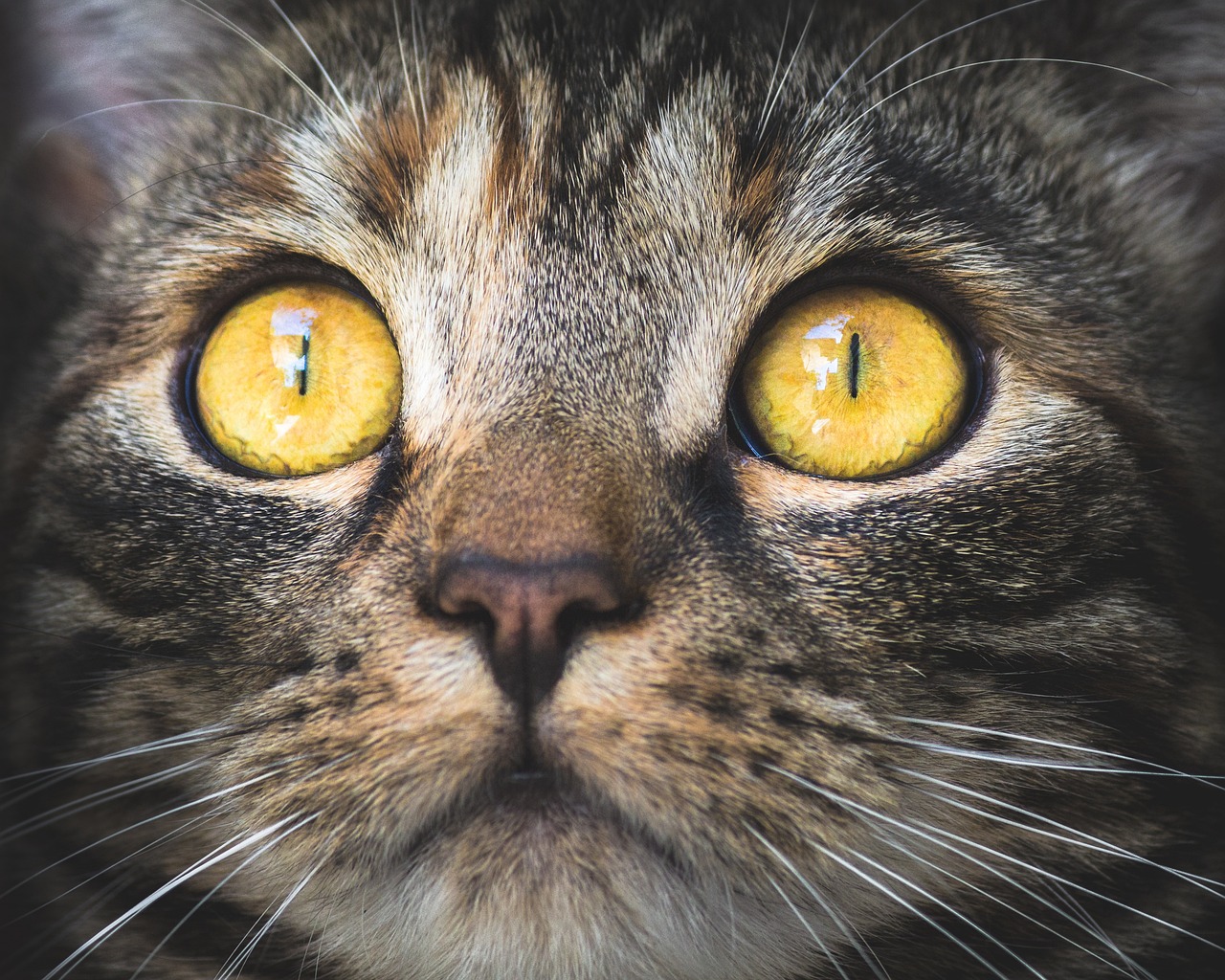
A female cat in heat can yowl for days, roll on the floor and try every door to get outside. Here's what's happening, when it starts, how long it lasts, why cats are so loud when they breed, what entire male cats do, and why vets recommend desexing early.
If you've ever lived with an undesexed female cat, you'll know when she's in heat. The yowling, rolling and constant attempts to get outside can be startling, especially the first time. If you've heard cats outside at night, you'll also know how loud breeding cats can be.
Advertisement
This guide explains the feline heat cycle, the signs a cat is in heat, why cats are so noisy when they breed, how entire male cats behave, what happens if a cat becomes pregnant, and why vets recommend desexing cats before they reach puberty.
What is "heat"?
"Heat", or oestrus, is the part of a female cat's reproductive cycle when she's ready to mate. An undesexed female cat is often called a queen, and an undesexed male a tom.
When does it start?
Female cats reach puberty, shown by their first heat, at an average of about eight to nine months of age, but the range is wide, from around four months to 18 months. Puberty generally comes when a cat reaches about 80% of her adult body weight. RSPCA Australia notes that many cats have reached puberty by four months of age, which is why it recommends desexing before then.
When in the year?
Cats are seasonal breeders. They come into heat repeatedly during the breeding season, which is triggered by longer days in spring and summer, and usually stop cycling in the shorter days of late autumn and winter. Cats kept indoors under artificial light for long hours each day may keep cycling all year round.
How long does heat last?
Each heat usually lasts about a week, often between five and 10 days. If the cat doesn't become pregnant, she'll usually come back into heat every two to three weeks throughout the breeding season. That means an undesexed indoor cat can be in heat for a large part of the year.
Signs your cat is in heat
A cat in heat isn't sick or in pain, but her behaviour changes dramatically:
- Loud, persistent vocalising. Yowling, howling and calling, often at night. It can sound like a cat in distress.
- Restlessness. Pacing and being unable to settle.
- Extra affection. Rubbing against people, furniture and doorways much more than usual.
- Rolling on the floor.
- The mating posture. When stroked along the back, she may crouch with her front low, her rear raised, and her tail held to one side, and tread with her back legs.
- Trying to get outside. Many cats in heat try hard to escape, and can slip out through doors or windows they'd normally ignore.
- Urine marking. Some females spray urine to signal to males.
- A change in appetite. Some cats eat less during heat.
There's usually little or no visible discharge, unlike dogs.
If you're unsure whether your cat is in heat or unwell, for example if she seems to be in pain, straining, or is lethargic, see your vet.
Why are cats so loud when they breed?
The loud calling before breeding is the female advertising that she's ready, and males calling and competing in reply.
The scream or cry often heard at the end of mating has a physical explanation. The male cat's penis has small, backward-pointing spines. Most explanations link the female's cry to discomfort as the male withdraws. The stimulation is also thought to help trigger ovulation. Cats were long described as "induced ovulators", meaning they release eggs in response to mating, although more recent research shows that some female cats can also ovulate without mating.
After mating, the female often turns on the male and swats or hisses at him, then rolls and grooms herself. She may accept another mate soon afterwards, and may mate several times, sometimes with different males, during one heat. That's why kittens in the same litter can have different fathers.
What about male cats?
Entire male cats don't have heat cycles, but they're strongly drawn to females in heat, and their behaviour reflects it:
- Roaming. Toms travel long distances looking for females, which exposes them to traffic, dogs and getting lost.
- Fighting. Toms fight over territory and females, leading to bite wounds, abscesses, and the spread of feline immunodeficiency virus (FIV) through bites.
- Spraying. Entire males often spray strong-smelling urine to mark territory, including inside the house.
- Yowling. Toms call and yowl at night, especially when a female nearby is in heat.
Desexing (castration) reduces or stops these behaviours in most male cats. Veterinary sources estimate that it reduces spraying in around 85% of male cats and roaming in around 90%, and it also reduces fighting. See our guide to cats peeing outside the litter tray for help with spraying.
Pregnancy
Cats breed very efficiently, which is a big part of why unwanted kittens fill Australian shelters every year.
- Pregnancy length: about nine weeks. Research averages are around 65 days, with a normal range of roughly 63 to 67 days.
- Litter size: about four kittens on average, though first litters are often smaller.
- Fast return to heat: a female can come back into heat soon after giving birth, sometimes while she's still feeding kittens.
If you think your cat is pregnant, see your vet. They can confirm the pregnancy, check her health, and talk you through care and your options. Pregnant cats need a complete and balanced kitten or growth food in the later stages of pregnancy and while feeding kittens.
Why desexing matters
For your cat's health
- Mammary cancer. In female cats, desexing early greatly reduces the risk of mammary (breast) cancer, which is usually malignant in cats. A 2005 study by Overley and colleagues found that cats spayed before six months of age had a 91% lower risk of mammary carcinoma than undesexed cats, and those spayed before one year an 86% lower risk.
- Uterine infections. Desexing removes the uterus, so a desexed female can't develop a uterine infection (pyometra).
- Fewer injuries and infections. Desexed males fight and roam less, so they're less likely to suffer bite wounds, abscesses, FIV and road injuries.
For your household
- No more heat cycles, with the yowling, restlessness and escape attempts.
- Much less spraying and marking indoors.
- No unplanned litters to care for and rehome.
For the community
Advertisement
Desexing reduces the number of unwanted kittens, strays and feral cats, and the pressure on shelters and wildlife. See our guide to feral cats in Australia.
The law
Desexing is required by law in several parts of Australia, including the ACT, South Australia (for cats born after 1 July 2018), Western Australia and Tasmania, unless the owner has a breeder permit or exemption. In NSW, cats not desexed by four months need an annual permit, and many Victorian councils require desexing for registration. See our guide to cat laws in Australia.
When should I desex my cat?
RSPCA Australia recommends desexing cats before puberty, by four months of age, and advocates desexing all cats before puberty as routine practice. Its research report says the scientific evidence strongly supports desexing cats before puberty.
- Pre-pubertal desexing is usually done between 12 and 16 weeks of age.
- Early-age desexing, at eight to 12 weeks, is common in shelters, for kittens that are healthy and close to 1 kg.
The RSPCA notes that desexing young cats also has shorter surgery and recovery times than desexing at the traditional age of five and a half to six months.
Most kittens from shelters and registered breeders are already desexed before they go home. If yours isn't, book it in with your vet when you first visit.
Can you desex a cat in heat?
Yes, many vets will desex a cat while she's in heat, though some prefer to wait until the heat has ended. Ask your vet. Keep her strictly indoors and away from entire males in the meantime.
Common myths about desexing
- "She should have one litter first." There's no evidence that a cat benefits from having a litter before she's desexed. Waiting simply means more heat cycles, a higher risk of mammary cancer, and more kittens needing homes.
- "Desexing will make my cat fat and lazy." Desexed cats tend to eat more, and a study published in PLOS ONE found that weight gain after desexing came mainly from increased food intake. Measuring meals and keeping up play prevents it.
- "Indoor cats don't need to be desexed." An undesexed indoor female will still come into heat repeatedly, and an undesexed indoor male will often spray. Indoor cats also escape.
- "Male cats don't need desexing because they can't have kittens." Entire males father many of the unplanned litters in a neighbourhood, and they roam, fight and spray much more than desexed males.
What to expect after desexing
Desexing is a routine operation done under general anaesthetic, and most cats go home the same day. In the first week or two:
- Keep your cat indoors and quiet, and discourage jumping and rough play while the wound heals.
- Check the wound daily for redness, swelling, discharge or the wound opening, and stop your cat licking it. Your vet may send your cat home with a cone or a body suit.
- Offer a smaller first meal on the evening after surgery, as some cats feel a little nauseous after an anaesthetic.
- Go back for any check-up your vet recommends, and call them if your cat stops eating, seems in pain or is very lethargic.
- Adjust portions in the weeks after desexing to prevent weight gain.
Heat or a health problem?
Heat is normal, but some signs suggest something else is going on. See your vet if your cat:
- is straining in the litter tray or passing little or no urine
- has a discharge from her vulva, especially if it's bloody or smells bad
- seems lethargic, drinks much more than usual, or stops eating
- has a swollen belly, or vomits.
An undesexed female cat that seems unwell after a heat can have a uterine infection, which needs urgent treatment.
Managing a cat in heat until she's desexed
If your cat is in heat and can't be desexed straight away:
- Keep her strictly indoors, and check doors, windows and screens. Cats in heat are determined escape artists.
- Keep her away from entire male cats, including those of neighbours and friends.
- Play with her. Wand toys and interactive play can help burn energy and distract her. See our guide to interactive cat toys.
- Give her a warm, comfortable place to rest. Many cats in heat seek warmth.
- Keep the litter tray clean, and clean any marked areas with an enzyme cleaner.
- Be patient. She isn't misbehaving. Her behaviour is driven by hormones.
- Book desexing as soon as your vet can do it.
Don't give your cat any human medication or hormone treatment unless your vet prescribes it.
Frequently asked questions
How long is a cat in heat?
Usually about a week. Without a pregnancy, she'll usually come back into heat every two to three weeks during the breeding season.
At what age do cats go into heat?
On average at about eight to nine months, but some kittens come into heat as young as four months. That's why vets recommend desexing by four months.
Why do cats scream at night?
Often because a female is in heat, or entire males are calling and fighting over territory. Desexing stops most of this noise. If a desexed cat suddenly starts yowling, especially an older cat, see your vet, as it can be a sign of illness or confusion.
Do male cats go into heat?
No. Male cats don't have heat cycles, but entire males are attracted to females in heat and may roam, fight, spray and yowl.
Can a cat get pregnant while she's still feeding kittens?
Yes. A cat can come back into heat and become pregnant again soon after giving birth. Keep her away from entire males and talk to your vet about desexing.
Does desexing change a cat's personality?
Desexing removes behaviours driven by sex hormones, such as calling, roaming, spraying and fighting. Your cat's basic personality usually stays the same. Some desexed cats gain weight more easily, so watch portions. See our guide to how often to feed your cat.
Advertisement