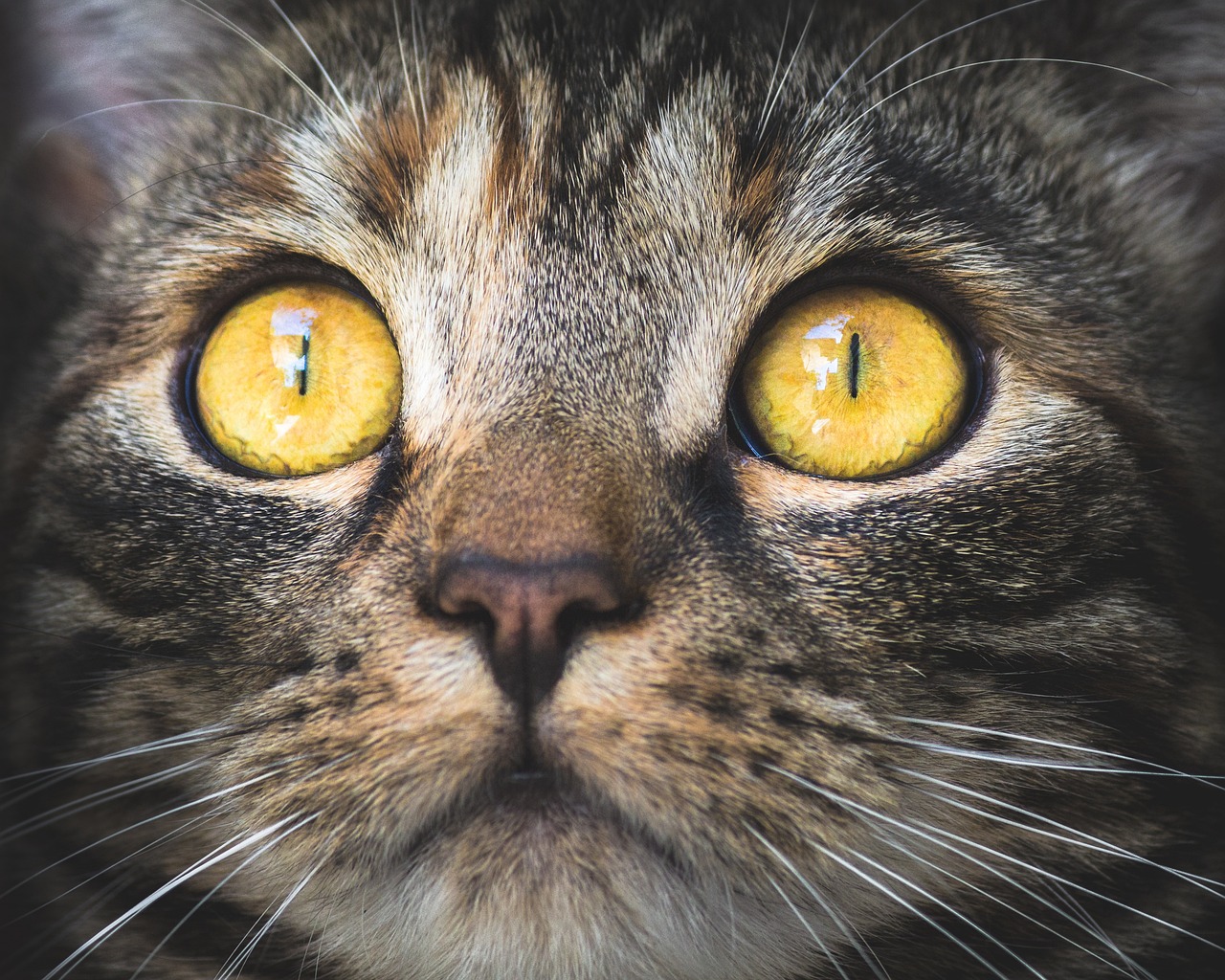
Cats can't taste sweetness, hear sounds far beyond our range, and slow-blink to say hello. Here are surprising facts about cats' history, senses, bodies, genes and behaviour, each one backed by research, plus what cats mean for Australia's wildlife.
Cats share our homes, our beds and, often, our dinner plans, yet they're still full of surprises. Many "cat facts" that circulate online are exaggerated or simply wrong, so every fact in this article is one that research supports.
Advertisement
They're grouped into cats' history with people, their senses, their bodies and genes, how they communicate and bond, and cats in Australia.
Cats and people: a long history
1. People and cats were buried together 9,500 years ago
In 2004, archaeologists described a grave at Shillourokambos, a Neolithic village on Cyprus, where a person had been buried with a cat about 9,500 years ago. Cats aren't native to Cyprus, so people must have brought them over by boat. The burial is some of the oldest evidence of a close bond between people and cats, thousands of years before the cats of ancient Egypt.
2. Pet cats descend from a wild cat that still exists
Domestic cats are descended from the African wildcat, a small, tabby-coloured wild cat of North Africa and the Middle East. Cats most likely started living alongside people in early farming villages, where stored grain attracted rodents. Our article on why cats hate water explains how that dry-country ancestry still shapes their behaviour.
3. Ancient Egypt had a cat goddess
The Egyptian goddess Bastet was first worshipped as a lioness and later as a cat. Her cult centre was Bubastis, in the Nile delta, and in the Late and Ptolemaic periods huge cemeteries of mummified cats were created there and at Memphis. The Greek historian Herodotus wrote that when an Egyptian house caught fire, people were more worried about saving the cats than putting out the fire.
Senses
4. Cats can't taste sweetness
Cats lack a working sweet-taste receptor. In 2005, researchers found that the gene for one half of the receptor, Tas1r2, is broken in cats, so the receptor can't form. The same defect was found in tigers and cheetahs. It fits with cats being strict meat-eaters with no need to find sugary food.
5. Their hearing range is one of the widest of any mammal
In a 1985 study, cats heard sounds from about 48 Hz up to about 85 kHz at moderate volume. People usually top out around 20 kHz. That high-frequency hearing lets cats pick up the squeaks and rustles of small rodents that we can't hear at all.
6. A mirror behind the eye helps them see in dim light
Cats have a reflective layer behind the retina called the tapetum lucidum. It bounces light back through the retina, giving the light-sensitive cells a second chance to catch it. That's why cats' eyes shine in torchlight and why they see far better than we do in dim light. They can't see in total darkness, though. Our article on whether cats can see in the dark explains more.
7. Whiskers are sense organs
Whiskers aren't just long hairs. The base of each whisker is packed with nerves, and whiskers pick up tiny air movements and touch, helping cats judge gaps, sense nearby objects and move in poor light. Vets advise never trimming a cat's whiskers, because it can leave the cat disoriented.
8. Cats have a second sense of smell
When a cat sniffs something and then pauses with its mouth slightly open and upper lip raised, it's not pulling a face. This is the flehmen response. The cat is drawing scent molecules towards the vomeronasal organ in the roof of its mouth, which analyses chemical signals such as pheromones from other cats.
9. Catnip doesn't work on every cat, but there are alternatives
In a 2017 study of 100 domestic cats, about two-thirds responded to catnip. Almost 80% responded to silver vine, a plant from Asia, and about half to Tatarian honeysuckle or valerian root. Most of the cats that ignored catnip still responded to silver vine.
Bodies and genes
10. Their tongues are covered in tiny hollow scoops
A cat's tongue is covered in hundreds of backward-facing spines called papillae. A 2018 study found the tips are scoop-shaped and hollow, so they wick up saliva and deliver it deep into the fur as the cat grooms. That's how cats clean right down to the skin, and the evaporating saliva also helps them cool down.
11. Many cats favour one paw, and it may depend on sex
In a 2009 study, researchers watched pet cats reach for food in a jar. Most cats had a clear paw preference, and it split by sex: females tended to use their right paw, and males their left.
12. Tortoiseshell and calico cats are almost always female
The main gene for orange fur sits on the X chromosome. Female cats have two X chromosomes, so they can carry both orange and black versions and end up with a patchy tortoiseshell or calico coat. Males have only one X, so they're usually either orange or not. The rare male tortoiseshell or calico usually has an extra X chromosome and is almost always sterile.
13. Ginger cats are more often male
The same X-chromosome inheritance explains why ginger cats are more often male. A male needs only one copy of the orange version to be ginger, while a female needs two. The geneticist Clarence Cook Little worked out this pattern in 1912, but the gene itself, ARHGAP36, was only pinned down in 2024 by separate teams in Japan and the United States.
14. Kittens' eyes start out blue
Kittens open their eyes with blue irises because the pigment hasn't developed yet. The adult eye colour gradually appears over the following weeks and months. Breeds such as the Siamese keep their blue eyes for life.
15. Cats purr in a way scientists didn't expect
For decades, purring was thought to need the brain to send a rapid nerve signal to the voice box for every vibration. A 2023 study found that a cat's larynx can produce purring-range sounds without that repeated signal, possibly helped by special pads in the vocal folds. How cats purr is still not completely understood. Our article on what your cat's purring means covers why cats purr.
16. A cat's normal temperature is higher than ours
Advertisement
A healthy cat's normal temperature is about 38.1 to 39.2°C, and an adult cat's heart beats around 140 to 220 times a minute at rest. That's one reason a cat feels warm on your lap, and why a hairless Sphynx feels so hot to touch.
17. Cats twist to land on their feet, but falls still hurt them
Kittens develop the "righting reflex", which lets them twist in mid-air to land feet first, during their first couple of months. It doesn't make cats immune to falls, though. Vets regularly treat cats injured after falling from balconies and windows, so screens and secure balconies matter in apartments.
18. Most adult cats sleep 12 to 16 hours a day
Cats are built for short bursts of hunting, separated by long periods of rest. Most adult cats sleep somewhere between 12 and 16 hours a day, and kittens and older cats often sleep more. A cat that suddenly sleeps much more than usual, or seems lethargic, should see a vet.
19. Cats must get taurine from their food
Taurine is an amino acid that cats can't make in large enough amounts themselves, so it has to come from their diet. It's found in meat and fish, not in plants. Without enough taurine, cats can develop a serious heart disease, dilated cardiomyopathy, and a form of retinal degeneration that leads to blindness. The heart damage can sometimes be reversed if it's caught early, but the eye damage can't. Taurine deficiency is uncommon today because commercial cat foods add it, but it's one reason cats can't safely live on a vegetarian diet or on homemade food that hasn't been balanced. Our guide to the best cat food brands in Australia explains how to check that a food is complete.
Communication and bonding
20. Adult cats rarely meow at each other
Kittens meow to get their mother's attention, but adult cats rarely meow to communicate with other cats. Most adult meowing is aimed at people, and cats learn which meows get a response from their owners.
21. Cats recognise their own names
A 2019 study from Japan found that pet cats can tell their own name apart from other, similar-sounding words, even when a stranger says it. Cats often respond with only a twitch of the ear or head, which may be why they seem to ignore us.
22. A slow blink is a friendly hello
A 2020 University of Sussex study found that cats were more likely to slow-blink back at people who slow-blinked at them, and more likely to approach an unfamiliar person who had slow-blinked first. Try it with your own cat: look softly, narrow your eyes and blink slowly.
23. A raised tail is a greeting
A cat that approaches with its tail held straight up, often with a slight hook at the tip, is being friendly. Researchers studying cat behaviour have found that the tail-up signal is used in friendly approaches between cats, often just before they rub against each other. Our guide to cat body language explains other signals.
24. Many cats prefer people to food
In a 2017 study, cats were offered a choice between food, toys, scents and interaction with a person. Preferences varied, but social interaction with a person was the most popular choice, ahead of food.
25. Cats form secure bonds with their owners
A 2019 study used an attachment test originally designed for human infants. About two-thirds of kittens and adult cats were securely attached to their owners, greeting them when they returned and then relaxing. That's similar to the rate seen in human infants. Our article on how to bond with your cat explains how to build that trust.
Cats in Australia
26. Feral cats live across almost all of Australia
A 2017 study that combined almost 100 surveys found feral cats across more than 99.8% of Australia's land area, including on many islands. The study estimated the feral cat population at between 2.1 and 6.3 million, depending on conditions, far fewer than older estimates of up to 20 million. Our article on how many feral cats there are in Australia covers the numbers in more detail.
27. Cats kill hundreds of millions of birds a year in Australia
A 2017 study estimated that cats kill about 377 million birds a year in Australia. Most of these are killed by feral cats, but pet cats account for an estimated 61 million a year. About 99% of the birds killed are native species. It's one of the main reasons Australian councils and states are moving towards keeping pet cats contained. See cat laws in Australia.
Frequently asked questions
Can cats taste sweet things?
No. Cats lack a working sweet-taste receptor because one of the genes needed for it is broken.
Do cats know their names?
Research suggests many do. A 2019 study found pet cats could tell their own name apart from similar-sounding words.
Why are tortoiseshell cats female?
The gene for orange fur is on the X chromosome. A cat needs two X chromosomes, which females have, to show both orange and black patches. Male tortoiseshells are rare and usually have an extra X chromosome.
How long do cats sleep?
Most adult cats sleep between 12 and 16 hours a day. Kittens and older cats often sleep more.
Can cats see in total darkness?
No. They see much better than we do in dim light, but they still need some light to see.
Do all cats like catnip?
No. In one study, about two-thirds of cats responded to catnip. Many of those that didn't still responded to silver vine.
Why do cats' eyes glow in the dark?
A reflective layer behind the retina, the tapetum lucidum, bounces light back through the eye so the light-sensitive cells get a second chance to catch it. When torchlight or a camera flash hits that layer, it reflects back as eyeshine.
Advertisement